L
O
A
D
I
N
G


Zoho, Odoo, ERPNext, Dynamics 365 and custom ERP, delivered by one accountable team.

Store receipts to consumers are outside the current rollout, but retailers are still deeply affected: corporate and wholesale sales, franchise billing and every supplier invoice move to structured e-invoices through an ASP.
B2C sales to consumers are outside the current UAE e-invoicing rollout under Ministerial Decisions 243 and 244 of 2025, so a store receipt does not trigger an e-invoice. Retailers are still affected: corporate, wholesale and franchise sales, B2B sales at the POS where a customer gives its TRN, and every supplier invoice move to PINT AE e-invoices through an Accredited Service Provider. Check the latest MoF and FTA guidance.
UAE e-invoicing for retail companies is often misunderstood. Under Ministerial Decisions No. 243 and 244 of 2025, the national e-invoicing system covers business-to-business and business-to-government transactions, while business-to-consumer sales are outside the current rollout until a separate decision brings them in. A shopper buying shoes in a mall does not trigger an e-invoice today. That does not mean a retailer can ignore the mandate.
Most UAE retailers have a B2B side that is larger than it looks. Corporate customers buy gift cards, uniforms or bulk electronics. A business customer at the POS asks for a tax invoice with its TRN. Wholesale or franchise arms sell stock to other businesses. And on the buying side, every supplier, landlord, logistics provider and marketing agency will eventually send e-invoices through your Accredited Service Provider (ASP). For a chain with thousands of SKUs and hundreds of suppliers, accounts payable is where e-invoicing changes the most.
Timing follows revenue: businesses at or above AED 50 million appoint an ASP by 30 October 2026 and go live from 1 January 2027, and others appoint by 31 March 2027 and go live from 1 July 2027, under current decisions. Check the latest Ministry of Finance and FTA guidance, because dates and B2C scope may change. The overall framework is summarised on our UAE e-invoicing hub. This page is general information, not tax advice.
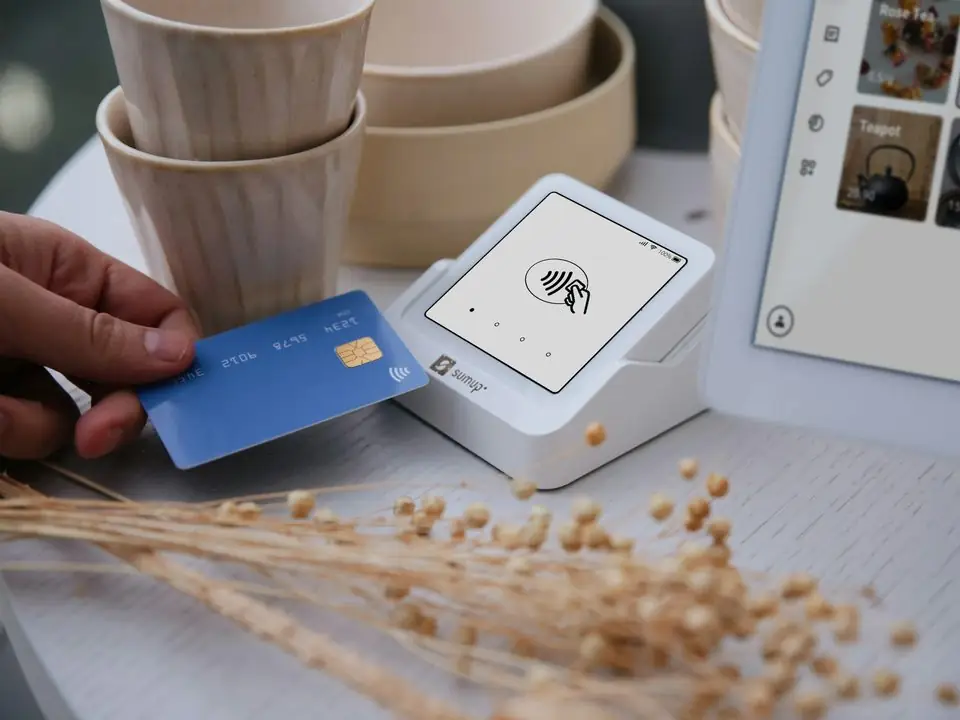
These are the retail-specific areas we review first. Confirm the treatment of each with your tax advisor.
Simplified tax invoices and receipts to consumers continue under existing VAT rules for now. Design your POS so that adding B2C e-invoicing later, if a decision requires it, is a configuration change rather than a rebuild.
When a business customer asks for a full tax invoice with its TRN, that sale is B2B. Your POS must capture the customer details and pass the transaction to the ERP so an e-invoice can be issued through the ASP rather than a printed receipt with a TRN written on it.
Retail AP handles purchase invoices, consignment settlements, listing fees, promotional support and volume rebates. Each needs a proper e-invoice or e-credit note so input VAT and margins stay correct.
Returns of B2B sales need e-credit notes linked to the original e-invoice. Consumer returns stay within your existing receipt and refund process.
Keep e-invoices, POS data and credit notes for at least 5 years under Cabinet Decision 74 of 2023, in a form you can retrieve by store, supplier and date.
General information, not tax or legal advice. Rules change; confirm current FTA, MOHRE and Ministry of Finance guidance with your advisor.
Run through this list for each retail entity, including wholesale and franchise companies in the group. The field-level detail is on our e-invoice fields page, and the full delivery plan is in the implementation guide.
Most retail POS systems are not built to talk to an ASP directly, so we route business sales through the ERP. See ERP and POS integration for the technical side.
One shared database: every step updates stock, finance and reports in real time.
A quick guide to the transaction types a typical UAE retail group handles. Scope statements reflect the current decisions and should be checked against the latest guidance.
| Transaction | In current e-invoicing scope? | What to configure |
|---|---|---|
| Consumer sale at the till | No, B2C is outside the current rollout | Keep existing receipt and VAT process; keep POS ready for change |
| Business customer asks for tax invoice | Yes, it is a B2B sale | Business customer flow at POS and ERP e-invoice |
| Corporate bulk order or gift cards | Yes, where sold to a business | Sales order and invoice in ERP; confirm VAT on vouchers with your advisor |
| Wholesale or franchise stock sales | Yes | Price lists, delivery notes and invoicing per franchisee |
| Supplier purchase invoice | Yes, received through your ASP | Auto-match to PO and GRN by store or warehouse |
| Supplier rebate or promotional support | Yes, as e-invoice or e-credit note | Rebate agreements and claim tracking |
| Online sale to a consumer | No, under current scope | Ecommerce order sync for VAT reporting |
| Online sale to a business buyer | Yes | Capture TRN at checkout and invoice from ERP |
Not tax advice. Scope may change if the Ministry of Finance issues a decision on B2C.
Groups with many stores should pilot the business-customer POS flow in a few locations first. Durations are typical ranges.
Durations are typical ranges; your plan is agreed after discovery.
Quantify B2B sales by channel, list supplier volumes and confirm the go-live date for each entity.
Collect TRNs and electronic addresses, clean the vendor master and set up corporate customer accounts.
Add the business-customer flow at POS, sync to ERP, and configure e-invoice generation and credit notes.
Test outbound B2B invoices and inbound supplier e-invoices with realistic volumes and rejections.
Pilot in selected stores, train cashiers and supervisors, then roll out to the remaining branches.
On-site workshops in Dubai, Abu Dhabi and Sharjah, and remote or on-site delivery across the Northern Emirates and free zones.
Official sources and references
Facts on this page were checked against these sources in October 2026. Rules change, so confirm current requirements before acting.
Still have a question? Our consultants are happy to help.
Ask an ExpertYour sales may be outside the current scope, but your purchases are not. Suppliers will send you e-invoices through an ASP, and under current rules each in-scope business appoints an ASP for both issuing and receiving. Confirm your position with your tax advisor and the latest guidance.
Usually not directly. The cleaner design is for the POS to capture the business customer and send the sale to the ERP, which issues the e-invoice. Our retail POS software page explains which POS setups handle this well.
Rebates and promotional support should be documented with an e-credit note from the supplier or an e-invoice from you, depending on what the agreement says and how it is taxed. Netting them informally against payments leaves gaps in VAT and margin reporting.
Consumer orders are outside the current rollout. If business buyers order online, capture their TRN at checkout and have the ERP issue the e-invoice. See ERP for retail and ecommerce for how online and store data come together.
Odoo and Dynamics 365 offer POS and ERP in one platform, ERPNext has POS and stock in one system, and Zoho suits smaller retailers with Zoho Inventory and Books. We implement all four. Platform-specific detail is on Zoho UAE e-invoicing and the other platform pages.
The current decisions leave room for a later decision on B2C. Nobody can say when, so build POS and ERP so the change would be manageable, and follow official announcements from the Ministry of Finance.
Related Solutions
Related ERP Platforms
We map your B2B sales, POS flows and supplier invoices against the e-invoicing rules and show what to change first.
Dubai, United Arab Emirates