
L
O
A
D
I
N
G


Zoho, Odoo, ERPNext, Dynamics 365 and custom ERP, delivered by one accountable team.

A practical checklist that turns the ERP selection process into five gates. Tick each gate before moving on, and you will not sign a contract with open questions.
An ERP selection checklist for a UAE company confirms the selection process was done properly through five gates: business readiness, demo proof of critical processes, UAE VAT, corporate tax and e-invoicing coverage, total cost, and contract terms. Each item has an owner and evidence, and open items are recorded as accepted risks so the steering committee signs with no unanswered questions.
An ERP selection checklist is the control sheet the steering committee uses to confirm that the selection has been done properly. It does not list every feature you need; that belongs in the ERP requirements checklist. Instead it asks whether the right work has been completed at each stage: is the business ready, did the demo prove the critical processes, are UAE tax and e-invoicing obligations covered, is the cost understood, and is the contract safe to sign.
We organize the checklist as five gates. A gate is passed when every item is ticked or consciously accepted as a risk with an owner. This structure suits UAE companies where the owner or managing director makes the final call and wants a one-page view of what has and has not been verified.
Use it alongside the other buying guides. When the gates are passed and the contract is signed, the work moves to the ERP implementation checklist, which picks up where this one stops.
Why gates rather than one long list? In UAE selections the pressure to decide usually comes from outside the project: an auditor's management letter, a VAT penalty, an e-invoicing deadline, or a legacy system that is about to lose support. Under that pressure, teams jump from the first good demo straight to the contract. Gates slow the process just enough to confirm that the demo proved the hard scenarios, that finance has reviewed tax outputs, and that the contract matches what was promised.
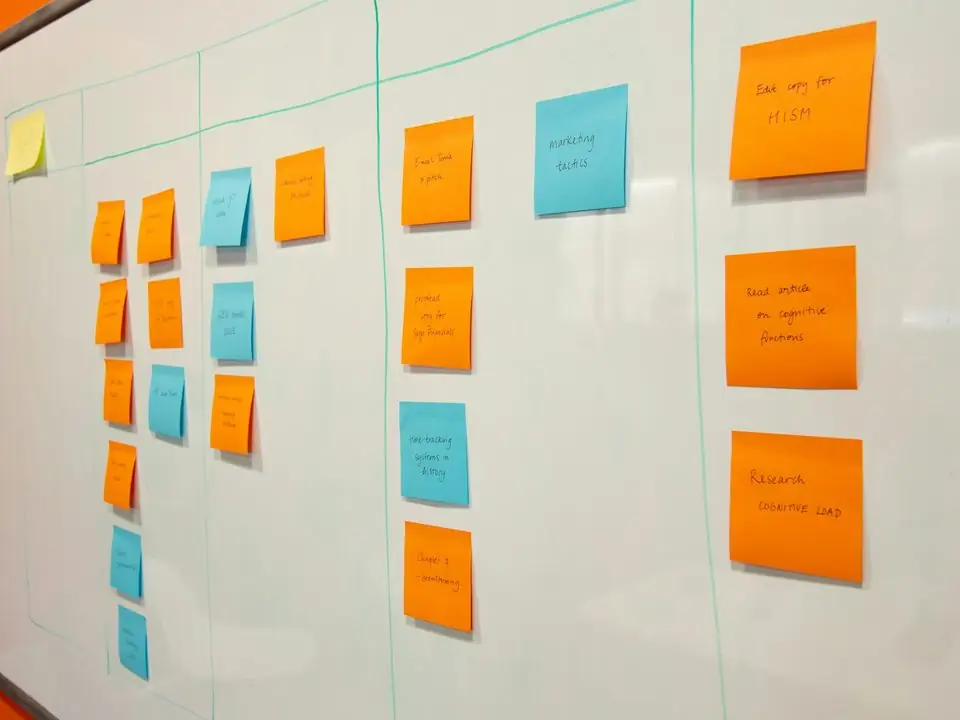
The checklist works best as a short, regular meeting rather than one long review at the end.
Usually the finance manager or a project lead. They chase evidence, update the sheet and present it at each steering meeting.
A tick needs a reference: the demo recording time, the proposal page, the reference call notes. 'Vendor said yes' is not evidence.
Walk through readiness first, then demo results, then compliance, then cost, then the contract. Do not open the contract gate while demo gaps are unresolved.
If an item cannot be ticked, write down why, who owns the risk and what the mitigation is, for example a planned customization or a phase-two module.
The sponsor signs each gate. This creates a short decision record that is useful later for auditors, new managers and the implementation team.
Store the signed gates, demo scores and accepted risks with the contract. When questions arise during implementation about what was promised or why a platform was chosen, this file answers them quickly.
These are the items we see skipped most often in UAE selections. Each one is cheap to check now and expensive to discover later.
Use this table as the cover sheet of your selection file. It shows at a glance which gates are complete.
| Gate | Key question | Typical owner | Evidence to file |
|---|---|---|---|
| 1. Readiness | Is the business ready to choose and to implement? | Sponsor (MD or GM) | Steering committee list, process maps, time commitments |
| 2. Demo proof | Did each platform prove our critical processes? | Department heads | Demo script, scores per scenario, recordings |
| 3. UAE compliance | Are VAT, corporate tax, WPS and e-invoicing covered? | Finance manager, tax advisor | Sample invoices, VAT return mapping, e-invoicing approach note |
| 4. Cost and value | Do we understand five-year cost and expected benefits? | CFO or finance manager | TCO model, ROI assumptions, budget approval |
| 4b. Data and integrations | Do we know what moves, what connects and who does it? | IT lead or project lead | Migration scope, integration list (bank, e-commerce, POS), responsibility matrix |
| 5. Contract | Is the agreement safe to sign? | Sponsor with legal adviser | Final proposal, SOW, SLA, change-request and exit terms |
| 6. Handover | Is the implementation team set up to start well? | Project lead | Evidence file, accepted-risk register, kickoff date and named consultants |
Five-year cost guidance is in our ERP total cost of ownership page.
Indicative durations for a mid-sized UAE company. Smaller firms can compress them; groups with several entities usually need longer.
Durations are typical ranges; your plan is agreed after discovery.
Form the committee, confirm time commitments and finish process maps.
Scripted demos for two or three platforms, scored by the people who will use the system.
Finance and the tax advisor review invoice layouts, VAT mapping and e-invoicing approach.
TCO model completed and budget approved.
Negotiation, legal review and signature.
The value of a selection checklist is in what it prevents.
Every must-have has been seen working, so 'yes, it can do that' is replaced by evidence.
Each gate has an owner and a signature, which keeps the decision moving and documented.
VAT, corporate tax and e-invoicing questions are answered before the contract, not during go-live.
The evidence file becomes the starting point for the implementation team's design phase.
We configure the system for the rules UAE businesses report against, and test it before go-live.
General information, not tax or legal advice. Confirm current requirements with the FTA, MOHRE or your advisor. See all UAE compliance guides.
On-site workshops in Dubai, Abu Dhabi and Sharjah, and remote or on-site delivery across the Northern Emirates and free zones.
Official sources and references
Facts on this page were checked against these sources in October 2026. Rules change, so confirm current requirements before acting.
Still have a question? Our consultants are happy to help.
Ask an ExpertThe requirements checklist lists what the system must do. The selection checklist confirms the selection process itself was done well: readiness, proof, compliance, cost and contract. You need both, and the selection checklist refers back to the requirements.
You can make them lighter, but not skip them. A 10-user company can complete readiness and demo proof in a few days, yet still needs a valid tax invoice, a migration plan and a clear support agreement.
The sponsor signs every gate, with the gate owner confirming the evidence. For the compliance gate, involve your tax advisor; for the contract gate, involve whoever handles legal review.
Record it, then decide whether the gap is closed by configuration, an add-on, custom development or a process change. If the gap affects a must-have and the fix is expensive to maintain, that is often a reason to choose a different platform.
Yes. Under the UAE e-invoicing framework, businesses with revenue of AED 50 million or more face a mandatory date of 1 January 2027 and others 1 July 2027, with ASP appointment deadlines before that. Check the latest Ministry of Finance and FTA guidance, as dates have been amended before.
The selection checklist ends at signature. The evidence file then feeds the implementation checklist, so decisions and accepted risks carry into project design.
Related Solutions
Related Industries
Related ERP Platforms
We can run the scripted demos, review your evidence and flag open items before you sign, whichever platform you are leaning toward.
Dubai, United Arab Emirates










