L
O
A
D
I
N
G
Zoho, Odoo, ERPNext, Dynamics 365 and custom ERP, delivered by one accountable team.

Procurement is about who you buy from and on what terms, before any purchase order is raised. We set up sourcing, supplier control and spend reporting inside your ERP.
Procurement software in the UAE covers sourcing before any purchase order: onboarding suppliers with documents, TRN and expiry tracking, sending RFQs to several suppliers and comparing bids side by side, setting blanket agreements so contract prices flow into orders, and scoring suppliers on delivery, quality and price. It can be set up inside Odoo, ERPNext, Zoho or Dynamics 365.
Procurement software UAE buyers need covers the strategic side of buying: finding and vetting suppliers, running requests for quotation, comparing bids fairly, agreeing contract prices and checking whether suppliers deliver what they promised. It sits upstream of the everyday purchase cycle.
In many UAE companies, sourcing still happens in email threads and WhatsApp groups. Three quotes are collected for a tender but nobody can find them six months later. A supplier's trade license expires without anyone noticing. A contractor in Abu Dhabi agrees annual rates for steel or MEP materials, yet site teams keep buying at spot prices because the agreement lives in a PDF. Spend by category is a guess.
This page is about sourcing and supplier management. For the transactional cycle of requisitions, purchase orders, goods receipts and three-way matching, see purchase management software. If you mainly need sign-off rules, our page on approval workflow software goes deeper.

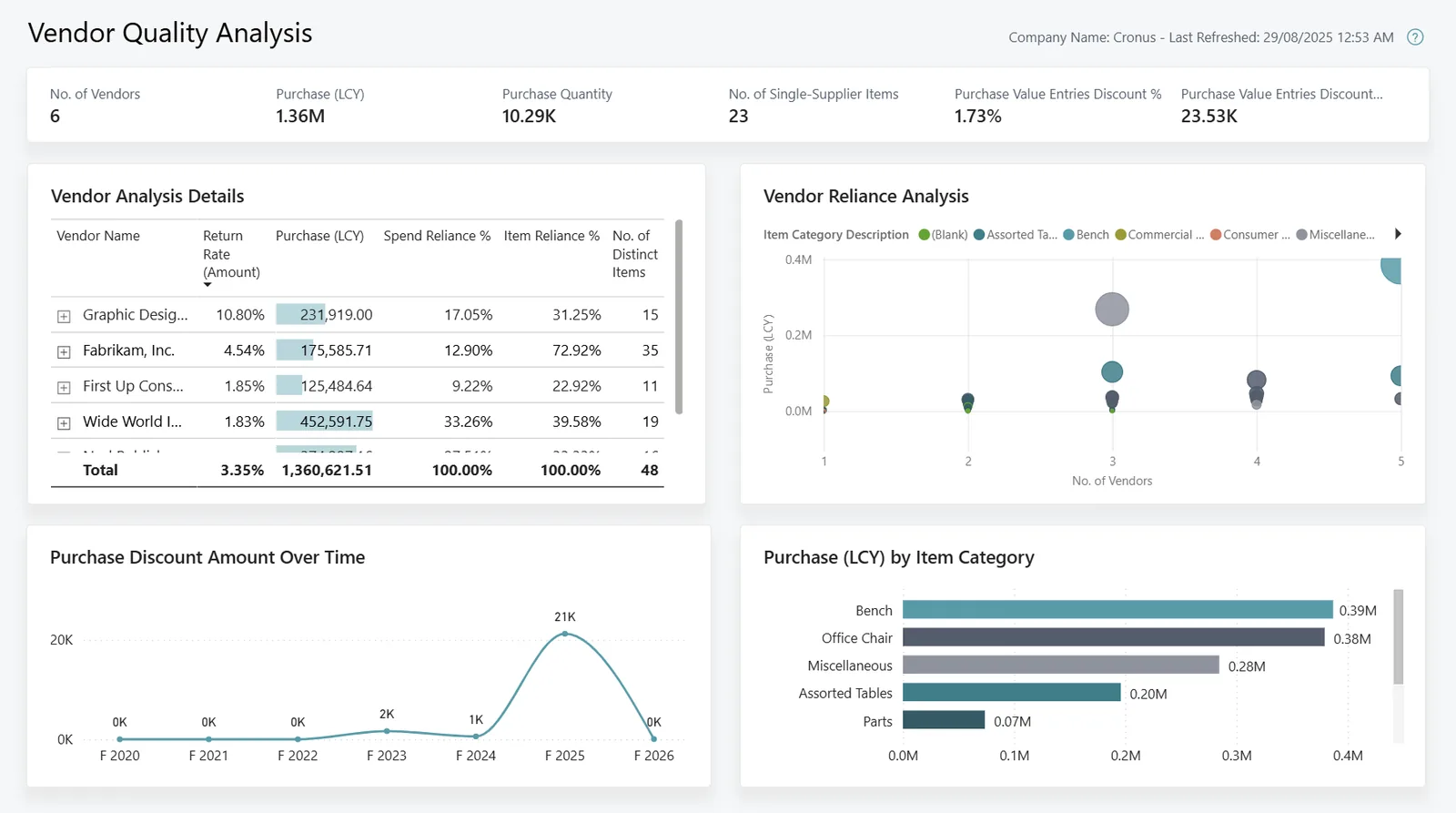
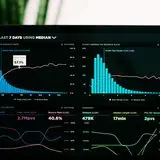
This dashboard shows category spend, live sourcing events and supplier performance in one place, so the team spends time negotiating rather than collecting data.
Each step leaves a record in the ERP, so the reason a supplier was chosen can be shown to management or auditors later.
One shared database: every step updates stock, finance and reports in real time.
These six capabilities are what we prioritize when procurement is the main pain point.
Self-registration or internal forms collecting trade license, TRN certificate, bank letter and insurance, with reminders before documents expire.
Send one request to several suppliers, collect responses through email or a portal, and keep every quote linked to the request.
Compare price, lead time, payment terms and currency side by side, with the award decision and its reason recorded.
Annual or framework prices that apply automatically to purchase orders, with tracking of quantity and value consumed.
Score suppliers on on-time delivery, rejected goods and price variance using data the ERP already captures.
Spend by category, supplier, project and entity to find consolidation opportunities and off-contract buying.
All four support basic purchasing. Sourcing depth is where they differ, and where configuration or custom work may be needed.
| Zoho | Odoo | ERPNext | Dynamics 365 | |
|---|---|---|---|---|
| Supplier onboarding | Vendor records in Zoho Books; onboarding forms often built in Zoho Creator | Vendor records with documents; portal access | Supplier records with supplier portal | Vendor cards with approval workflows |
| RFQ process | Usually custom in Zoho Creator or via estimates | RFQs that convert into purchase orders | Request for Quotation and Supplier Quotation documents | Purchase quotes; deeper sourcing in Supply Chain Management |
| Price agreements | Price lists | Purchase agreements, blanket orders and calls for tender (edition dependent) | Supplier price lists and blanket orders | Blanket purchase orders and price agreements |
| Supplier evaluation | Custom reports or Zoho Analytics | Vendor performance reporting | Supplier Scorecard feature | Vendor performance reports and Power BI |
| Fit | Smaller teams with simple sourcing | Mid-sized buyers wanting sourcing tied to stock | Teams wanting scorecards and portals without heavy licensing | Larger procurement functions with formal policies |
Feature availability varies by edition and version. We confirm before scoping.
Sourcing data is only useful when it reaches the people buying and the people paying.
Good procurement records also protect your VAT and corporate tax position. Confirm specific rules with your tax advisor.
Input VAT can generally only be recovered with a valid tax invoice from a VAT-registered supplier. Recording and checking each supplier's TRN at onboarding reduces later disallowed claims.
Services and goods bought from abroad may fall under the reverse charge mechanism. Flagging supplier country and type at onboarding lets the ERP apply the right tax code automatically.
Under the corporate tax law, purchases from related parties should be on arm's length terms. Tagging related suppliers in the master data makes these transactions easy to report.
As e-invoicing phases in from 2027, supplier invoices will increasingly arrive through Accredited Service Providers. Check the latest Ministry of Finance and FTA guidance for your timeline.
General information, not tax or legal advice. Rules change; confirm current FTA, MOHRE and Ministry of Finance guidance with your advisor.
Explore purchasing, contracts and platform-specific options.
We configure the system for the rules UAE businesses report against, and test it before go-live.
General information, not tax or legal advice. Confirm current requirements with the FTA, MOHRE or your advisor. See all UAE compliance guides.
On-site workshops in Dubai, Abu Dhabi and Sharjah, and remote or on-site delivery across the Northern Emirates and free zones.
Official sources and references
Facts on this page were checked against these sources in October 2026. Rules change, so confirm current requirements before acting.
Still have a question? Our consultants are happy to help.
Ask an ExpertProcurement covers sourcing: choosing suppliers, running RFQs, negotiating agreements and reviewing performance. Purchase management is the transactional cycle that follows, from requisition to purchase order, receipt and invoice matching. Most companies need both, and in an ERP they share the same supplier and item records.
Yes. Odoo and ERPNext include supplier portals, and on Zoho we often build a quotation form in Zoho Creator. Suppliers enter prices and lead times directly, which removes re-keying and keeps every bid on record.
Blanket agreements or price lists make the contracted price the default on purchase orders, and approval rules can flag orders that use a different supplier or higher price. Spend reports then show remaining off-contract buying by department.
Very much. Contractors run frequent RFQs for materials and subcontract packages, and need bids tied to project budgets. We link procurement to project costing so committed costs are visible against each project as soon as an order is awarded.
Adding supplier onboarding, RFQs and agreements to an existing ERP often takes four to eight weeks. If it is part of a full ERP rollout, it is phased alongside purchasing and accounting.
Related Solutions
Related Industries
Related ERP Platforms
Related Guides
Tell us how your team sources today and we will show how it would run inside your ERP.
Dubai, United Arab Emirates