L
O
A
D
I
N
G


Zoho, Odoo, ERPNext, Dynamics 365 and custom ERP, delivered by one accountable team.

Turn ERP dashboards from charts people forget to open into a tool that answers questions, points out what changed and explains why.
An AI ERP dashboard lets UAE managers ask questions in plain language, receive alerts when sales, margin, costs or stock move unusually, and read short auto-written weekly summaries of what changed and why. It sits on a governed ERP data model with agreed KPI definitions and carries ERP role permissions into every answer, so payroll and HR data stay restricted. Zoho Analytics and Power BI often support this.
An AI ERP dashboard UAE managers actually use does three things a normal dashboard does not. It answers questions typed in plain language, such as 'which customers in Abu Dhabi bought less this quarter than last'. It watches the numbers and alerts you when something unusual happens, such as a margin drop on one product line. And it writes a short summary of what changed this week, so the owner reads three sentences instead of studying twelve charts.
The foundation is still a well-built dashboard on clean ERP data. If you have not yet defined your core views, start with ERP dashboard solutions: finance, sales, stock and operations KPIs with agreed definitions. AI then sits on top, reading the same data model and the same permissions, so a sales manager cannot ask their way into payroll.
Functional dashboards such as the finance dashboard, warehouse dashboard or sales dashboard remain the place for detailed daily work. The AI layer is most valuable for owners and general managers who need answers across departments without waiting for an analyst.

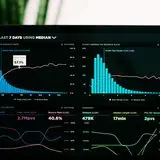
An example of the cross-department view an owner of a UAE trading and distribution company might see, with AI alerts in the table.
Revenue by emirate
Margin by product line
AI alerts this week
| Alert | Area | What changed | Suggested owner |
|---|---|---|---|
| Margin drop | Sales | Building materials discounts above usual range | Sales manager |
| Payment slowdown | Finance | Two key accounts paying later than their pattern | Credit controller |
| Stock build-up | Inventory | Cable items received ahead of demand | Purchase manager |
| Unusual adjustments | Warehouse | Repeated negative adjustments in one bin range | Inventory controller |
Most UAE companies already have some dashboards. The problem is getting value from them.
Managers open a dashboard with twenty tiles and cannot tell what matters this week. They go back to asking the accountant.
A question slightly different from the standard report means a request to the analyst and a wait of days.
A margin leak or rising overdue balance is visible in the data but nobody looks until month end.
CRM, ERP, payroll and e-commerce data sit in different tools, so cross-department questions cannot be answered in one place.
When two reports show different revenue figures because of different definitions, people stop using both.
AI reads governed data and suggests actions; people decide and act in the ERP.
One shared database: every step updates stock, finance and reports in real time.
These work today on major platforms or BI tools, with differences in depth and licensing.
Ask in plain English and get a chart or table built from the governed data model, with the query visible so you can check it.
Detects unusual movements in sales, margin, costs or stock against the normal pattern and sends an alert with the drivers.
Drafts a weekly management note: what changed, why and what needs a decision, for the GM to review and share.
Answers respect ERP roles, so HR data, salaries and entity-level figures are visible only to authorized users.
Breaks a change into its causes, such as which customers, products or branches explain a revenue drop.
Key alerts and answers reach managers on mobile or through a chat assistant, linked to the AI chatbot for ERP where available.
Each platform has its own analytics path. Many companies also use Power BI. Check current editions.
| Zoho | Odoo | ERPNext | Dynamics 365 | |
|---|---|---|---|---|
| Dashboard tool | Zoho Analytics with prebuilt connectors to Zoho apps | Odoo dashboards and spreadsheet views | Built-in dashboards and Frappe Insights | Power BI with Business Central or Finance and Operations |
| Natural-language Q&A | Ask Zia in Zoho Analytics | AI features in recent versions; check edition | External LLM over reports via API | Copilot in Power BI and in Dynamics 365 apps (licensing dependent) |
| Anomaly and insights | Zia Insights (edition dependent) | Mostly rule-based alerts; AI options vary | Custom scripts or BI tool | Power BI anomaly detection and smart narratives |
| Cross-system data | Many connectors including non-Zoho sources | Odoo modules in one database; external via connectors | Frappe apps plus API imports | Broad connector library through Power BI |
| Typical fit | SMEs on the Zoho suite | Companies running most operations in Odoo | Self-hosted teams with developers | Microsoft 365 organizations and multi-entity groups |
General overview only; confirm features and licensing for your edition and region.
An AI dashboard sees across departments, so access and data handling need care.
Salaries, WPS files and employee records are personal data under the UAE PDPL. Exclude them from general AI questions or restrict to HR and finance roles.
Check where the AI service processes queries. Microsoft and Zoho offer UAE-hosted options for many services; confirm for each service you enable.
Use the same revenue, VAT and margin definitions as your statutory reports so management figures reconcile with what is filed through EmaraTax.
Log questions, alerts and actions on sensitive data, so you can show who saw what and what was decided.
General information, not tax or legal advice. Rules change; confirm current FTA, MOHRE and Ministry of Finance guidance with your advisor.
Build trust in the numbers first, then add AI.
Define revenue, margin, overdue and stock value once, and document them. This step prevents most later disputes.
Create the management view and department views on clean ERP data, using ERP dashboard software suited to your platform.
Give natural-language Q&A and alerts to the GM and two or three managers, and log the questions they ask.
Adjust thresholds and remove noisy alerts in the first month. Too many alerts are ignored as quickly as too many charts.
Add weekly summaries, mobile alerts and links to actions such as collection tasks, building on ERP AI automation.
Benefits to observe in the first months of use.
Managers get answers to new questions without waiting for a custom report.
Margin, cash and stock problems trigger alerts when they start.
Written summaries focus discussion on decisions, not on reading charts.
People who never opened dashboards start asking questions of the system.
We configure the system for the rules UAE businesses report against, and test it before go-live.
General information, not tax or legal advice. Confirm current requirements with the FTA, MOHRE or your advisor. See all UAE compliance guides.
On-site workshops in Dubai, Abu Dhabi and Sharjah, and remote or on-site delivery across the Northern Emirates and free zones.
Official sources and references
Facts on this page were checked against these sources in October 2026. Rules change, so confirm current requirements before acting.
Usually yes. If your dashboards are in Zoho Analytics or Power BI, AI Q&A and insights can often be enabled on the same data model. Custom dashboards may need an assistant built on the ERP API.
They are only as good as the data model and definitions. Good tools show the query or filters behind each answer, so users can verify it. We recommend checking any number before acting on it.
Yes, through the analytics layer. This is where AI dashboards overlap with AI business intelligence, which covers deeper cross-system analysis.
Not strictly, since Business Central and Finance have built-in reports and Copilot features, but Power BI is the usual route for management dashboards and AI visuals.
Use enterprise features that respect ERP permissions and published data handling terms, check where processing happens, and keep payroll and personal data restricted.
A core management dashboard with AI Q&A and a few alerts often takes 4-8 weeks, depending on data quality and the number of systems connected.
Related Solutions
Related Industries
Related ERP Platforms
We will review your current reports and show how an AI dashboard could work on your ERP data.
Dubai, United Arab Emirates