
L
O
A
D
I
N
G


Zoho, Odoo, ERPNext, Dynamics 365 and custom ERP, delivered by one accountable team.

Connect your web store and marketplaces to one inventory, reconcile COD, gateway and marketplace payouts, and close the books without a week of spreadsheets.
An ERP for ecommerce companies in the UAE connects Shopify or WooCommerce stores, Amazon.ae and noon to one stock pool, then reconciles card gateway payments, courier cash-on-delivery remittances and marketplace settlements to individual orders. Zoho Books with Zoho Inventory suits new Shopify brands, while Odoo fits multi-channel sellers. Most brands keep their existing storefront and run stock and accounts in the ERP.
An ERP for ecommerce companies in the UAE solves a problem every growing online brand meets: orders arrive from a Shopify or WooCommerce store, Amazon.ae, noon and sometimes Instagram or WhatsApp, but stock, payments and accounting live in separate places. Overselling, unmatched payouts and a VAT return built from exported CSV files are the usual symptoms.
Money is the harder part. A single order can be paid by card through a gateway, collected as cash on delivery by a courier, or settled by a marketplace weeks later after commission, fulfillment fees and returns are deducted. Without an ERP that understands each settlement type, finance teams spend days matching bank deposits to orders.
We connect online channels to Odoo, Zoho, ERPNext or Dynamics 365 so that every order, shipment, return and payout posts to one ledger. This page is for brands whose main business is selling online. If you are a store-led retailer adding a website, start with our retail ERP overview, and for platform detail see ecommerce ERP integration.

These issues grow with order volume and the number of channels.
The same stock is listed on the website and two marketplaces, but updates run on a delay or by hand. Popular items sell twice and one order has to be canceled, hurting seller ratings.
Couriers remit cash on delivery collections in batches, net of their fees, sometimes days later. Matching each remittance line to the right order is slow and errors go unnoticed.
Settlements combine sales, commissions, fulfillment fees, advertising charges and refunds. Booking only the net payout hides the real cost of selling on each marketplace.
Returned parcels sit unopened, are not inspected, and never make it back into sellable stock or a write-off. Inventory and refunds drift apart.
Part of the stock sits in a marketplace fulfillment center. Without tracking it as a separate location, total stock and valuation are wrong.
Sales come from several systems with different tax settings. Preparing the VAT return means combining exports and hoping nothing was missed.
Every channel feeds the same order, stock and accounting flow in the ERP.
One shared database: every step updates stock, finance and reports in real time.
These modules connect order capture to cash in the bank.
Integrations with Shopify, WooCommerce, Amazon.ae and noon to import orders and push stock and prices back.
A single order queue across channels with status, payment method and courier assignment.
Own warehouse, marketplace fulfillment centers and returns area tracked as separate locations.
Pick lists, barcode-verified packing and shipping label printing so the right item goes in every parcel.
Shipment creation, airway bill numbers and delivery status from your local couriers.
Gateway, COD and marketplace settlements imported and matched to orders, with fees posted to expense accounts.
Return authorization, inspection, grading and restock or write-off, linked to the original order and refund.
Channel-level profit and loss and VAT return figures built from posted sales and refunds.
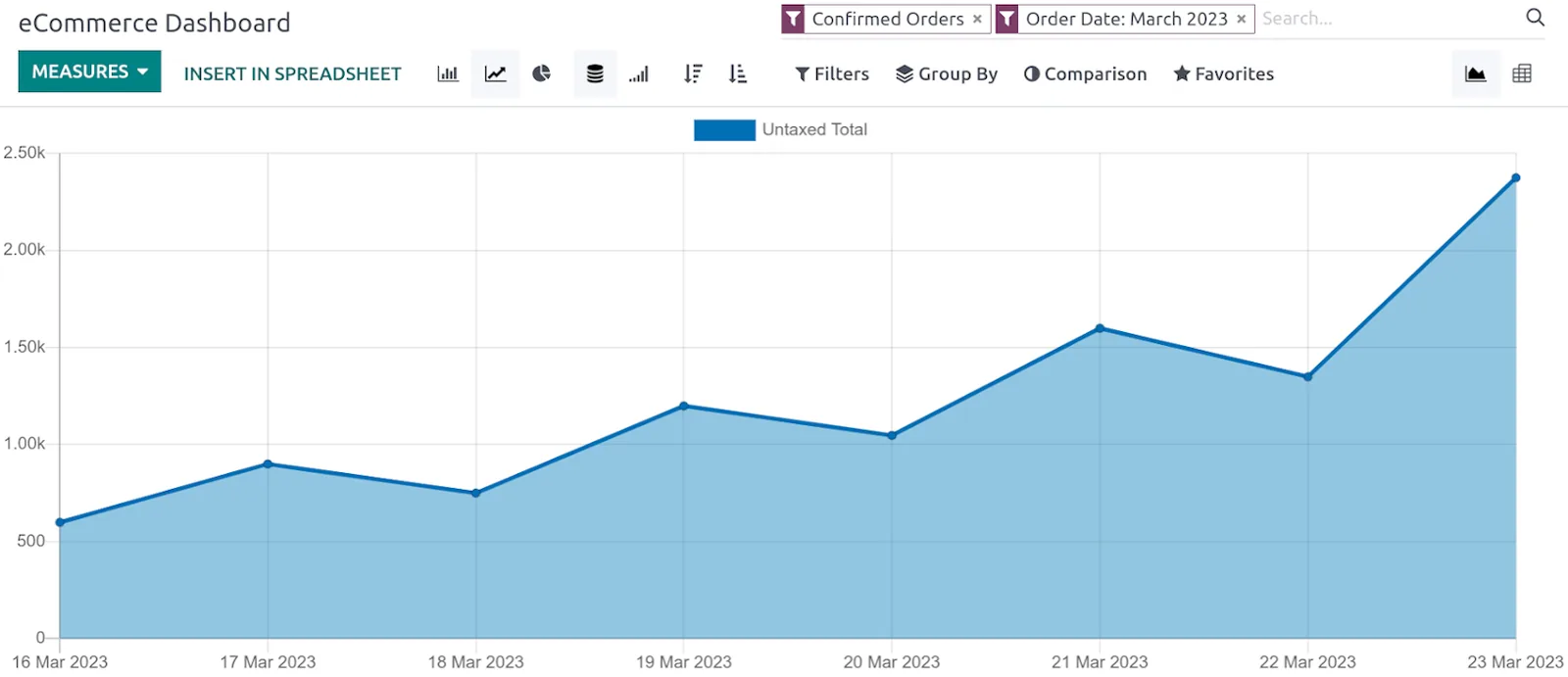
Founders and operations heads check this view several times a day.
The best choice depends on your channels, order volume and how much you want the ERP to also run the storefront.
| Ecommerce profile | Often a good fit | Why | Watch-outs |
|---|---|---|---|
| New D2C brand on Shopify | Zoho Books and Zoho Inventory | Established Shopify connection, simple stock and accounting for a small team. | Check sync frequency and how bundles are handled. |
| Multi-channel seller on web plus marketplaces | Odoo | Own ecommerce option, marketplace connectors via apps, inventory and accounting in one place. | Marketplace connectors are often third-party; test them carefully. |
| High-volume seller with own warehouse | Odoo or Dynamics 365 | Warehouse picking, barcode packing and courier integration at scale. | Warehouse layout and process must be designed, not just installed. |
| Brand that also manufactures its products | ERPNext or Odoo | Manufacturing, purchasing and ecommerce stock in one system. | Plan production and online stock buffers together. |
| Platform business with unusual order logic | Custom ERP | Subscriptions, rentals or marketplace models that standard flows do not cover. | Needs a long-term support plan and documentation. |
We configure the ERP to support these points. They are not tax advice; confirm with your tax advisor.
Domestic online sales are generally standard-rated at 5%. Exports outside the GCC and sales to customers in other countries may be treated differently, so tax rules should be set per channel and destination.
Each refund or partial refund needs a credit note that reverses VAT correctly, including marketplace-initiated refunds.
Orders from business customers will fall under the UAE e-invoicing framework using PINT AE through an Accredited Service Provider. Revenue-based mandatory dates apply from 2027; check the latest Ministry of Finance and FTA guidance.
Many online brands import their goods. Recording customs duty and import VAT against each shipment keeps landed cost and input VAT accurate.
Channel-level profit and loss and clear fee accounting support corporate tax filing at the 9% rate above AED 375,000 of taxable income.
General information, not tax or legal advice. Rules change; confirm current FTA, MOHRE and Ministry of Finance guidance with your advisor.
We design for these improvements and measure them with each client rather than promising figures upfront.
Stock updates flow to every channel from one pool, reducing the chance of selling the same item twice.
Every COD remittance and marketplace payout is matched to orders, so missing amounts are spotted and chased.
Commissions, fulfillment fees and returns are posted separately, showing which channel actually earns money.
Sales and refunds from all channels sit in one ledger with consistent tax codes, cutting manual consolidation.
Typical ranges for a multi-channel seller. We schedule go-live away from big sale events such as White Friday and Ramadan campaigns.
Durations are typical ranges; your plan is agreed after discovery.
We map every channel, payment method, courier and settlement report, and how finance currently reconciles them.
SKUs are matched across channels, bundles defined and opening stock confirmed per location.
Channel, courier and gateway integrations are built and tested, along with reconciliation rules for each settlement type.
Orders flow through the ERP alongside the old process briefly, then switch over fully once totals agree.
We review channel margins and returns data with you and adjust automation as volumes grow.
More on ecommerce integration, warehousing and delivery.
We configure the system for the rules UAE businesses report against, and test it before go-live.
General information, not tax or legal advice. Confirm current requirements with the FTA, MOHRE or your advisor. See all UAE compliance guides.
On-site workshops in Dubai, Abu Dhabi and Sharjah, and remote or on-site delivery across the Northern Emirates and free zones.
Official sources and references
Facts on this page were checked against these sources in October 2026. Rules change, so confirm current requirements before acting.
Still have a question? Our consultants are happy to help.
Ask an ExpertYes, through marketplace connectors or custom API integrations, depending on the platform. We check which connectors are available and maintained for your chosen ERP before recommending one.
We import courier remittance reports and match each line to an order by airway bill or order number. Courier fees are posted as expenses, and unmatched amounts are flagged for follow-up.
No. Most ecommerce clients keep Shopify or WooCommerce as the storefront and use the ERP for stock, fulfillment and accounting behind it.
It is set up as a separate stock location. Transfers to the fulfillment center are recorded, and marketplace inventory reports are used to reconcile what they hold.
We integrate couriers that offer an API or reliable file exchange. Many UAE couriers do, but capabilities vary, so we confirm this for your couriers during the review.
Related Solutions
Related Industries
Related ERP Platforms
Talk to us about connecting your store, marketplaces, couriers and accounts in one ecommerce ERP.
Dubai, United Arab Emirates