L
O
A
D
I
N
G


Zoho, Odoo, ERPNext, Dynamics 365 and custom ERP, delivered by one accountable team.

Record hours against clients, projects and tasks, approve them weekly, and bill or cost them without spreadsheets in between.
Time tracking software for UAE consultancies, engineering firms, IT service companies and agencies records hours against clients, projects and tasks, routes them for weekly approval, and turns billable time into invoices and project costs. Configured on Zoho Projects, Odoo, ERPNext or Microsoft Dynamics 365, it applies billing and cost rates per person or contract and records write-offs.
Consultancies in DIFC, engineering firms in Abu Dhabi, IT service companies in Dubai Internet City and agencies across the country share one weakness: time that was worked but never billed. Time Tracking Software UAE firms choose should make it easier to log time than to forget it, and should carry that time straight into invoices and project margins.
Time tracking is different from attendance. Attendance answers whether someone was at work. Time tracking answers what they worked on, for which client, at what rate, and whether the client will pay for it. Many companies need both, and we connect them, but the design goals are different.
We configure timesheets on Zoho Projects, Odoo, ERPNext and Microsoft Dynamics 365. The result is a weekly rhythm: staff log hours, managers approve them, finance invoices the billable portion, and partners see utilization and project profitability. For the wider project picture see project management ERP.

The products we configure, integrate and support on projects like this one.

 Odoo Timesheets
Product names and logos are trademarks of their respective owners and are shown only to identify the software we implement.
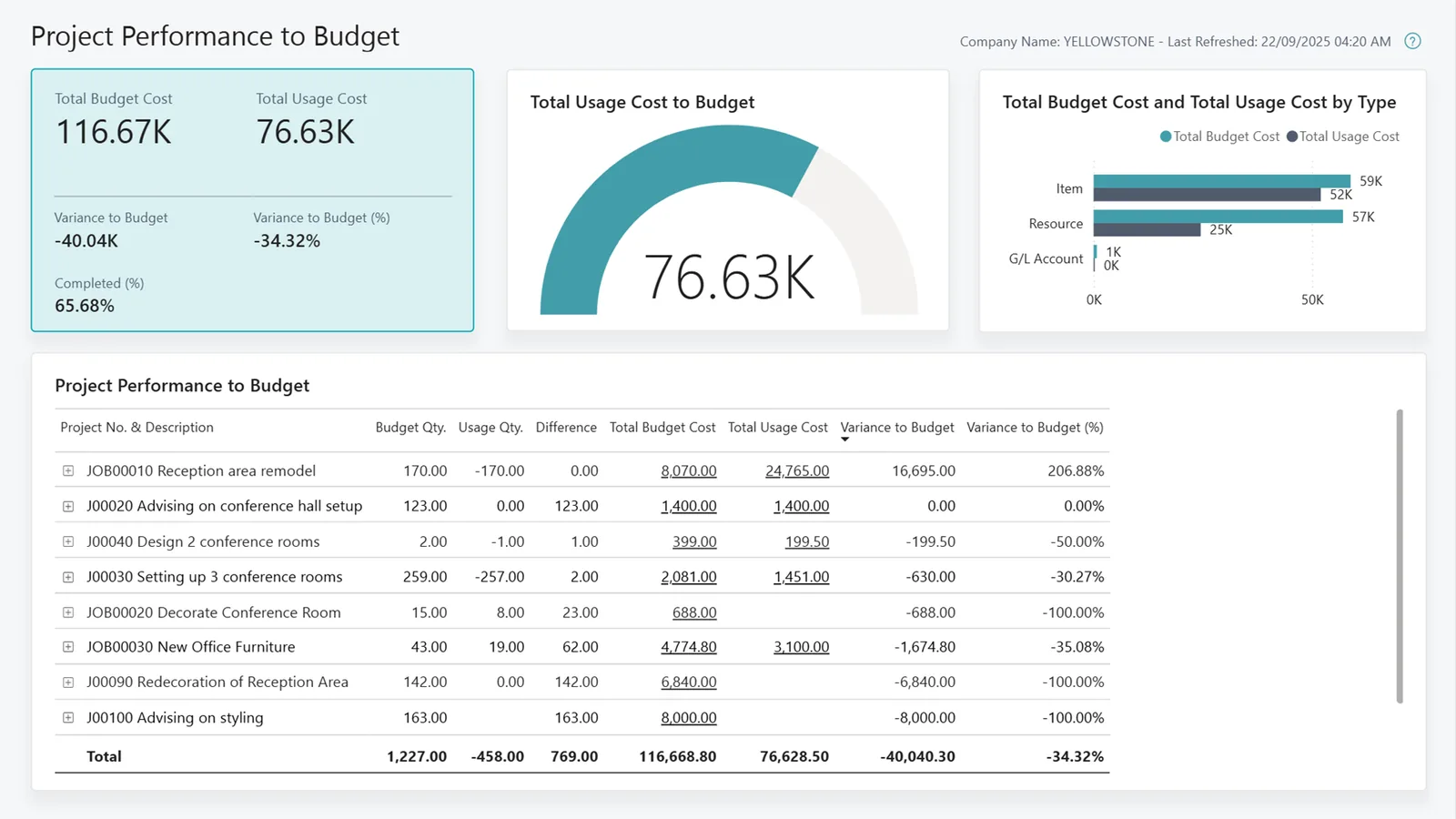
Time data becomes useful when it shows what is billable, what is stuck and who is overloaded.
A consistent cycle matters more than any feature. This is the sequence we build and train teams to follow.
One shared database: every step updates stock, finance and reports in real time.
These are the capabilities that separate a useful time system from a reporting chore.
Staff start a timer from a task, or fill a weekly grid, on web or mobile, so time is recorded close to when work happens.
Billing rates can vary by employee, role, client contract or activity, and cost rates are kept separately for margin reporting.
Time and materials, fixed fee with hour budgets, retainers and capped engagements each treat logged hours differently.
Approved periods are locked so invoiced hours cannot be quietly edited afterward.
Billable hours against available hours show who is overloaded and who has capacity for the next engagement.
Approved hours flow into a draft invoice with descriptions the client can understand, ready for review and tax treatment.
Each platform tracks time well. They differ in how billing works and how deeply time connects to accounting.
| Zoho | Odoo | ERPNext | Dynamics 365 | |
|---|---|---|---|---|
| Main app | Zoho Projects timesheets | Odoo Timesheets with Project | Timesheet with Projects | Business Central projects (jobs) time sheets; Project Operations for larger firms |
| Timer and mobile | Timer and mobile app | Timer, web and mobile | Web and mobile; timer on task | Time sheet entry; mobile via Business Central app |
| Billing rates | Billing rates per user or project | Pricing through sales order lines and employee rates | Activity Type and Activity Cost rates | Resource prices and project price lists |
| Invoicing | Through Zoho Books or Zoho Invoice | Invoice from sales order based on timesheets | Sales Invoice created from timesheet | Project invoicing from planning lines |
| Costing | Cost reporting with Zoho Books | Cost per employee posted to analytic accounts | Costing rate per activity | Resource unit cost posted to project ledger |
| Best fit | Agencies and consultancies wanting an easy start | Service companies running sales and accounting in Odoo | Engineering and IT firms on a budget | Firms needing detailed project accounting |
Odoo Timesheets is part of Odoo Enterprise. Edition details are confirmed against your licensing during scoping.
Time logged once should serve billing, costing, payroll and client reporting.
Invoicing time is a taxable supply of services, so the invoice and records need to be right. We configure the setup; your tax advisor confirms the treatment.
Services billed to UAE clients are generally subject to 5% VAT, while some services supplied to clients outside the UAE may qualify for zero rating under specific conditions. We set tax codes per client and contract so the invoice applies the treatment your advisor confirms.
Invoices built from timesheets still need the prescribed tax invoice details, including your TRN. Templates are set up once so every time-based invoice carries them.
Groups that charge staff time between UAE entities or to overseas affiliates should keep clear records of hours and rates. Corporate tax transfer pricing rules may apply; confirm with your tax advisor.
From 1 January 2027 (revenue of AED 50 million or more) or 1 July 2027 (others), B2B invoices are expected to be exchanged through an Accredited Service Provider using PINT AE. Check the latest Ministry of Finance and FTA guidance.
General information, not tax or legal advice. Rules change; confirm current FTA, MOHRE and Ministry of Finance guidance with your advisor.
Time tracking sits between projects, billing and HR. These pages cover the connected areas.
We configure the system for the rules UAE businesses report against, and test it before go-live.
General information, not tax or legal advice. Confirm current requirements with the FTA, MOHRE or your advisor. See all UAE compliance guides.
On-site workshops in Dubai, Abu Dhabi and Sharjah, and remote or on-site delivery across the Northern Emirates and free zones.
Official sources and references
Facts on this page were checked against these sources in October 2026. Rules change, so confirm current requirements before acting.
Still have a question? Our consultants are happy to help.
Ask an ExpertIt helps when both live on the same platform, because you can compare hours present with hours logged. But they serve different purposes, so we design them as separate records that can be reconciled rather than one combined form.
Make entry quick, send automatic reminders, and make missing timesheets visible to managers. Some firms link timesheet completion to expense reimbursement or performance reviews. A simple, consistent weekly deadline matters more than the tool.
Yes. Time is still logged against the project for costing and budget control, but invoices follow milestones or a fixed schedule. Comparing hours used with the fee shows which fixed-fee engagements are losing money.
Most platforms support a client portal or timesheet report attached to the invoice. We usually show approved hours with task descriptions, and hide internal cost rates and non-billable notes.
No. Contracts can carry their own currency, and invoices are raised in that currency while the ledger records the AED equivalent. Rate cards can be held in each currency so no conversion happens at billing time.
If projects and clients are already in the system, timesheets and billing rules often take 3-6 weeks to set up and roll out. Migrating open projects and unbilled work from another tool adds time.
Related Solutions
Related Industries
Related ERP Platforms
Show us how your teams record and bill time today, and we will design a timesheet flow that fits your contracts.
Dubai, United Arab Emirates