L
O
A
D
I
N
G


Zoho, Odoo, ERPNext, Dynamics 365 and custom ERP, delivered by one accountable team.

We help UAE rent-a-car and leasing companies tie every booking, deposit, toll, fine and repair to the right vehicle and the right customer.
An ERP for car rental companies in the UAE ties every agreement to a plate and customer so Salik and Darb tolls, traffic fines, fuel differences, excess kilometres and damage charges arriving later are recovered from the customer or deposit. It also manages the fleet as assets, covering purchase, registration, insurance, servicing and disposal, across daily, monthly, leasing and chauffeur lines.
ERP for car rental companies in the UAE has to follow the money that arrives after the car comes back. The rental fee is only part of the revenue. Salik toll gates in Dubai and Darb in Abu Dhabi, traffic fines registered against the plate, fuel differences, extra kilometers and damage charges all appear days or weeks after the agreement closes. If they are not matched to the right agreement and recovered from the customer or deposit, they become the company's cost.
A typical UAE rental business runs several lines at once: daily and weekly rentals to tourists at airport and hotel counters, monthly rentals to residents, long-term leases to corporates and government entities, and chauffeur services. Each line has different pricing, deposit rules and billing cycles, but they share one fleet. The fleet itself must be purchased, registered, insured, serviced and eventually sold, so asset management matters as much as bookings.
Specialist rental front-office tools exist, and some operators keep them. Our role is usually the back office: accounting, fleet costing, recharges, leasing contracts and reporting, either replacing a basic system or connecting to the booking engine you already use. For fleet tracking specifically, see fleet management software.
These are the leaks that show up when we review a rental company's books.
Salik and fines arrive against the plate, not the renter. Matching them to the agreement by date and time is slow by hand, so many are never recovered.
Card pre-authorizations or cash deposits are refunded before late charges arrive. The company then chases customers who may have left the country.
Without consistent check-out and check-in photos and checklists, damage claims become one person's word against another's.
Cars sit idle at one branch while another turns customers away. Without a live view of availability, the fleet is bigger than it needs to be.
Depreciation, insurance, registration, servicing and resale value are tracked separately from rental income. Nobody can say which models actually earn their keep.
Each step feeds the next so post-rental charges are never orphaned.
One shared database: every step updates stock, finance and reports in real time.
We combine standard ERP modules with targeted customization for UAE recharges.
Bookings by branch, vehicle group and period, converted to agreements with rates, extras and insurance options.
Card pre-authorizations and cash deposits held against the agreement until the recharge window closes.
Imported toll and fine data matched to the agreement active at that timestamp, with admin fees added.
Mobile check-out and check-in with photos, fuel level, odometer and damage marks signed by the customer.
Each vehicle as an asset with purchase cost, depreciation, registration and insurance expiry, and disposal.
Scheduled services by kilometer or date, accident repairs and downtime tracked per vehicle.
Corporate lease contracts with monthly invoicing, replacement vehicles and kilometer allowances.
Revenue by branch and product line, VAT, deposits as liabilities and bank reconciliation.
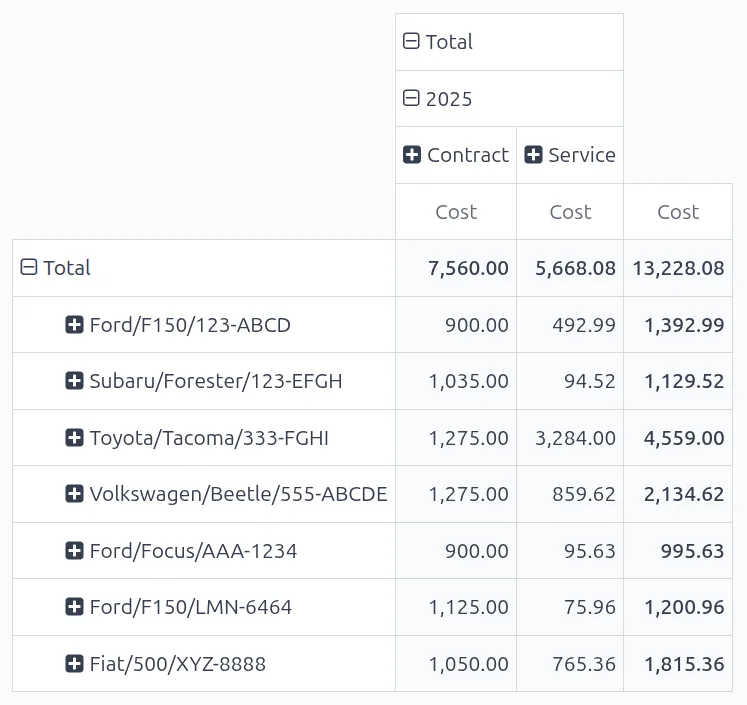
Operations and finance share the same live view of the fleet.
We implement all of these, and the choice often depends on whether you keep a separate booking engine.
| Rental company profile | Often a good fit | Why |
|---|---|---|
| Small rent-a-car with one or two branches | Odoo (Rental, Fleet, Accounting) | Rental orders, fleet records and invoicing are available in one system without heavy development. |
| Monthly rental and corporate leasing focus | Zoho One with Zoho Creator or Odoo | Recurring billing and contract tracking with custom recharge logic. |
| Operator keeping a specialist booking system | Dynamics 365 Business Central or ERPNext | Strong finance and fixed assets, integrated with the front-office system. |
| Large fleet with complex recharge rules | Custom ERP module plus core accounting | Recharge matching and deposit logic built exactly to your process. |
Toll and fine data access depends on the authority's current portals and file formats; we design imports around what is available to you.
We configure the ERP to support these rules. Confirm the VAT treatment of recharges with your tax advisor.
Rentals are standard-rated at 5%. Whether a recharged toll or fine is a disbursement or part of your taxable supply depends on how it is charged, so agree the tax codes with your advisor before go-live.
Registration and insurance expiry dates are held on each vehicle, with alerts so no car is rented out with lapsed documents.
Fleet depreciation in the ERP supports corporate tax calculations at 9% above AED 375,000 of taxable income. Your advisor confirms any tax adjustments.
B2B lease invoices will move to structured PINT AE e-invoices through an Accredited Service Provider from 2027. Check the latest Ministry of Finance and FTA guidance.
General information, not tax or legal advice. Rules change; confirm current FTA, MOHRE and Ministry of Finance guidance with your advisor.
Goals we design toward; actual results depend on fleet size and data access.
Automated matching means more charges reach the right customer before the deposit is released.
Live availability across branches helps move cars to demand rather than buying more.
Photo-based inspections signed at check-out and check-in give clear evidence.
Per-vehicle profit shows which models to keep, sell early or stop buying.
Indicative durations for a single-entity operator.
Durations are typical ranges; your plan is agreed after discovery.
Review rental products, deposit rules, recharge process and fleet lifecycle.
Define vehicle groups, rate structures, recharge matching rules and accounting for deposits.
Configure rental and fleet modules, inspection app, imports for tolls and fines, and reports.
Import vehicles with book values, open agreements, leases and deposits held.
Train counter staff and the recharge team, then monitor the first full recharge cycle.
Fleet, rental and leasing resources across our platforms.
We configure the system for the rules UAE businesses report against, and test it before go-live.
General information, not tax or legal advice. Confirm current requirements with the FTA, MOHRE or your advisor. See all UAE compliance guides.
On-site workshops in Dubai, Abu Dhabi and Sharjah, and remote or on-site delivery across the Northern Emirates and free zones.
Official sources and references
Facts on this page were checked against these sources in October 2026. Rules change, so confirm current requirements before acting.
Still have a question? Our consultants are happy to help.
Ask an ExpertYes, when the data is imported with plate number and timestamp. The ERP finds the agreement active at that moment and creates the recharge, flagging any that do not match for review.
Deposits are held as a liability linked to the agreement. They are released, partly applied or fully applied once the recharge window closes and final charges are known.
Yes. Daily and weekly rentals run as rental agreements, while leases run as contracts with recurring monthly invoices from the same fleet.
No. Most booking engines can send reservations to the ERP through an API, or we can use the ERP's own website tools if you prefer one system.
Per-vehicle reports combine rental income, running costs, depreciation and estimated resale value, helping you decide the right point to dispose of each car.
Inspections run on a phone or tablet through the platform's mobile app or a web form, with photos stored against the agreement.
Related Solutions
Related Industries
Related ERP Platforms
Show us your current recharge process and we will design an ERP flow that recovers charges before deposits are released.
Dubai, United Arab Emirates