L
O
A
D
I
N
G


Zoho, Odoo, ERPNext, Dynamics 365 and custom ERP, delivered by one accountable team.

We set up ERP for delivery-only kitchens that run several virtual brands from shared stock, so each brand's real profit is visible after commissions and packaging.
An ERP for cloud kitchens in the UAE sets up each virtual brand with its own menu, price list and analytic account while stock stays in one shared kitchen. Every sale consumes shared ingredients but reports against its brand, delivery-app payout statements post commissions and discounts, and rent and staff costs are allocated at month-end by orders, revenue or kitchen hours.
A cloud kitchen in Al Quoz or Business Bay might cook for five brands from one line: a burger concept, a bowl concept, a dessert label and a couple of others. Orders arrive almost entirely through delivery apps and the brand's own ordering site. The ingredients are shared, the staff are shared and the rent is shared, yet each brand has its own menu, pricing, commission rate and marketing spend. ERP for cloud kitchens UAE work starts with one question: how do we see the true margin of each brand when most of the cost sits in a common pool?
Generic restaurant software is built around the dining room. A cloud kitchen has no tables, no waiters and often no walk-in customers. Its pain points are different: order volume spikes at lunch and late evening, aggregator statements arrive weekly with deductions that are hard to trace, and packaging can be a large share of each order's cost. A cloud kitchen ERP treats each brand as a sales channel and cost center, each delivery app as a customer account with its own settlement rules, and the kitchen as one inventory location feeding everything.
If you also run dine-in outlets, our restaurant ERP page covers front-of-house needs. This page is about delivery-first operators, including those who rent stations in shared kitchen facilities.
These come up in almost every cloud kitchen discovery session we run.
Revenue per brand is easy to see in the app portals, but cost per brand is not. Without recipe-based consumption and agreed rules for shared overheads, a weak brand can survive for months on the back of a strong one.
Payouts are net of commission, platform-funded and kitchen-funded discounts, refunds and adjustments. Booking only the net amount hides the real cost of each platform.
Cloud kitchens test new items and brands quickly. Each change needs a recipe, a cost and a price, or margin reports drift out of date within weeks.
Containers, bags, cutlery and stickers differ by brand and by item. If they are not part of the recipe, food cost looks healthy while overall cost per order does not.
Sauces, marinated proteins and bases are prepared in bulk and used across brands. Without prep batches in the system, yield loss and over-production stay invisible.
Opening another site, in Sharjah or Abu Dhabi for example, doubles purchasing, transfers and reconciliations. Manual processes that worked at one site stop working at two.
This is the flow we configure for a multi-brand kitchen, with each step posting to stock or accounts automatically.
One shared database: every step updates stock, finance and reports in real time.
The emphasis is on order intake, recipes and settlements rather than table service.
Orders from delivery apps and your own website flow into one queue, through a middleware or the POS, tagged by brand and channel.
Station screens that show tickets by brand and prep stage, so cooks work one queue regardless of which app the order came from.
Each menu item consumes ingredients, sub-recipes and its container set, so cost per order is complete.
Batch recipes for sauces, doughs and marinades, with expected yield and actual output recorded per batch.
One stock pool per kitchen, par levels for fast movers and purchase orders to produce, meat and packaging suppliers.
Each delivery platform set up as a customer with its own commission and payout rules, so receivables clear correctly.
Revenue, direct cost, commissions and marketing tagged by brand, with shared costs allocated on rules you choose.
Separate locations and cost centers for each site, with central purchasing and inter-kitchen transfers.
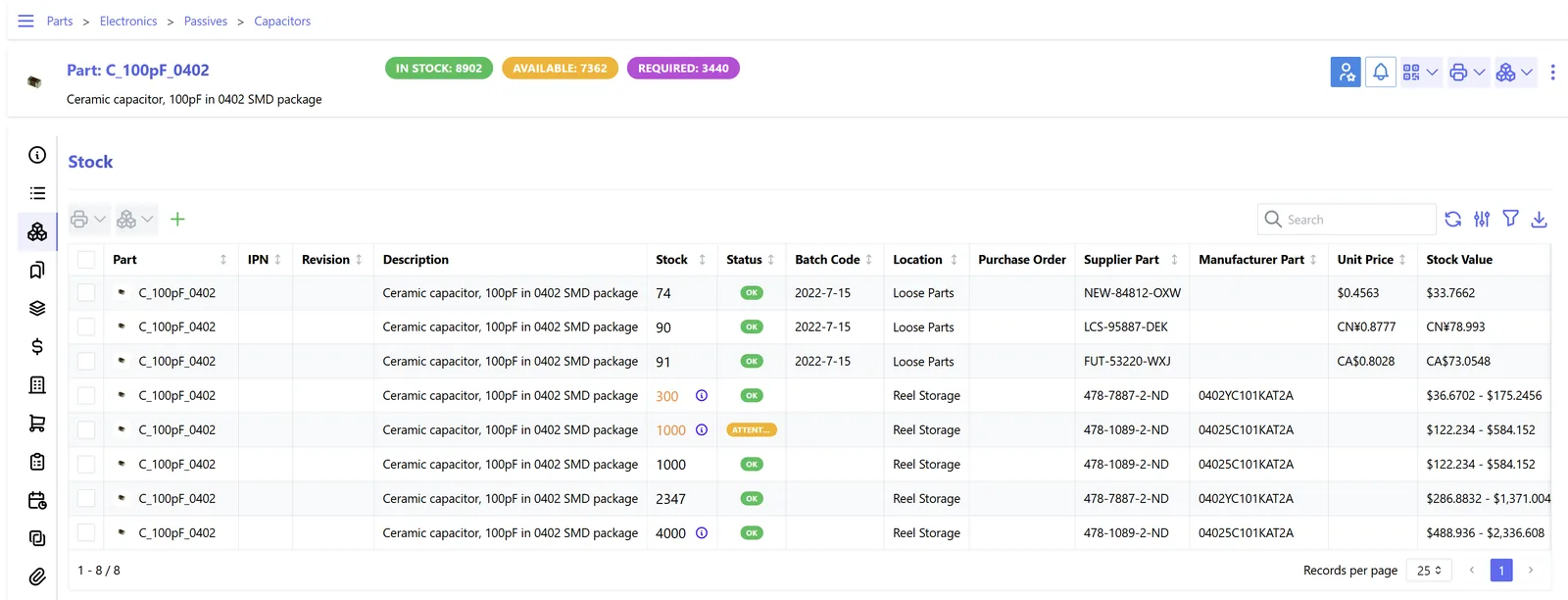
The dashboard focuses on what drives cloud kitchen profit: ingredients, packaging and channel cost.
We implement all of the platforms below and recommend based on brand count, order volume and growth plans.
| Kitchen profile | Often a good fit | Why |
|---|---|---|
| One kitchen, one or two brands | Zoho Books plus a delivery-focused POS | Accounting, VAT and payout matching without a heavy system; POS handles orders. |
| One or two kitchens, three or more brands | Odoo | POS, kitchen display, inventory, manufacturing for prep and analytic accounts per brand in one platform. |
| Operator wanting full control of code | ERPNext | Open-source stock, accounting and manufacturing with custom apps for aggregator imports. |
| Group with dine-in, franchise or GCC kitchens | Microsoft Dynamics 365 Business Central | Multi-company consolidation and dimension-based reporting, with POS and order middleware integrated. |
| Kitchen-as-a-service landlord renting stations | Custom ERP or Odoo with extensions | Tenant billing, shared utilities and station usage alongside food operations. |
Order aggregation usually relies on a middleware or POS connector; we confirm the options available for your platforms during discovery.
We configure the ERP to support these rules. Your tax advisor should confirm the treatment for your contracts.
Prepared food sold to consumers is generally standard-rated at 5%. Your agreement with each platform decides who is the supplier to the customer, which changes how sales and commission are recorded.
Platform commission invoices usually carry VAT. Recording them gross, rather than netting them off sales, keeps input VAT recoverable and your VAT return accurate.
Corporate tax is assessed per legal entity, not per brand. If brands sit in different entities, intercompany recharges for shared kitchen costs need to be documented.
Corporate catering and B2B sales will fall under the PINT AE e-invoicing model through an Accredited Service Provider, with mandatory dates from 2027 depending on revenue. Check the latest Ministry of Finance and FTA guidance.
General information, not tax or legal advice. Rules change; confirm current FTA, MOHRE and Ministry of Finance guidance with your advisor.
Outcomes depend on data discipline in the kitchen, but these are the usual gains.
Owners can retire, reprice or relaunch a brand based on its contribution, not its gross sales.
Commissions and promotions become visible costs instead of silent reductions in revenue.
Batch yields and par levels highlight where the team cooks more than the orders need.
A new kitchen copies an existing setup, with central purchasing and consolidated reporting from day one.
Typical ranges; brand count and integration options affect the schedule.
Durations are typical ranges; your plan is agreed after discovery.
Brands, menus, platforms, payout formats and allocation rules for shared costs agreed.
Ingredients, sub-recipes, packaging sets and prep batches created and costed for every brand.
Order middleware, POS, kitchen display and payout imports connected and tested with real statements.
Kitchen switches to the new flow, with daily checks on stock and order sync in the first week.
Weekly variance reviews, allocation tuning and the first full brand P&L cycle.
Hospitality ERP, POS and platform pages relevant to delivery-only food businesses.
We configure the system for the rules UAE businesses report against, and test it before go-live.
General information, not tax or legal advice. Confirm current requirements with the FTA, MOHRE or your advisor. See all UAE compliance guides.
On-site workshops in Dubai, Abu Dhabi and Sharjah, and remote or on-site delivery across the Northern Emirates and free zones.
Official sources and references
Facts on this page were checked against these sources in October 2026. Rules change, so confirm current requirements before acting.
Still have a question? Our consultants are happy to help.
Ask an ExpertYes. Brands are set up as separate menus, price lists and analytic accounts, while stock stays in one kitchen location. Each sale consumes shared ingredients but reports against its own brand.
You choose the rule, for example by order count, revenue or kitchen hours. The ERP applies it at month-end so each brand carries a fair share of overheads.
Usually through a middleware or POS that receives app orders. Payout statements are imported separately so commissions and discounts post correctly.
We recommend it. Containers and bags are a real cost per order, and including them gives a true cost of goods for each item.
For one brand, often yes; good accounting software and a POS may be enough. ERP pays off once you run multiple brands or sites.
Yes. Our office is in Dubai and we support cloud kitchens across the UAE on-site and remotely.
Related Solutions
Related Industries
Related ERP Platforms
Talk to us about setting up brand-level costing and payout matching for your cloud kitchen.
Dubai, United Arab Emirates