
L
O
A
D
I
N
G


Zoho, Odoo, ERPNext, Dynamics 365 and custom ERP, delivered by one accountable team.

For phones, laptops, appliances, machinery and medical devices, one unit is not the same as another. Serial tracking ties each unit to its supplier invoice, customer, warranty and service history.
Serial number tracking in an ERP gives each unit its own record, captured by scanning at goods receipt and again at dispatch. Each serial links to the supplier invoice, the customer and invoice it was sold on, its warranty end date and any service history. UAE electronics, equipment and medical device distributors use this to verify returns, support warranty claims and trace installed units.
An ERP for serial number tracking in the UAE gives every individual unit its own identity. Instead of knowing that you hold 40 units of a printer model, you know which 40 serial numbers are on the shelf, which supplier invoice each one came on, which customer bought each sold unit and when its warranty ends. For electronics traders in Deira and Dubai Silicon Oasis, equipment dealers in Sharjah and Abu Dhabi, and medical device distributors, that is the difference between a quick service decision and an argument at the counter.
The pain usually shows up after the sale. A customer returns a laptop claiming it is faulty and within warranty, but the serial on the unit does not match anything you sold them. A supplier refuses a warranty claim because you cannot show the unit came from their shipment. A technician visits a site and nobody knows when the installed compressor was delivered. Without serial records, staff rely on box stickers and memory.
Serial tracking is different from batch tracking, where many units share one lot number. This page focuses on unit-level control for high-value and warranty-bearing goods. Electronics businesses can read more on ERP for electronics trading, and dealers of parts on spare parts management.
These issues come up repeatedly in electronics, IT distribution, equipment and medical device companies.
A customer returns an older or damaged unit in a new box. Without a record of the serial sold, the counter staff cannot refuse it and the business absorbs the loss. Our return management page covers the wider returns flow.
Manufacturers ask for the purchase invoice and the serial before accepting a claim. If serials were never captured at the GRN, the claim is rejected or delayed.
Long IMEI or alphanumeric serials typed manually produce errors. One wrong character breaks the history of that unit for good.
Equipment sold with installation, such as AC units, generators or lab analyzers, needs a service history per unit. Service teams keep this in separate spreadsheets that sales and finance never see.
Demo units sent to customers or exhibitions such as GITEX are moved without documents. At year end they show as stock but nobody can find them.
Each step records the serial against a document, so the unit's full history can be read from one screen.
One shared database: every step updates stock, finance and reports in real time.
Serial tracking delivers most value when service and sales use the same serial record as the warehouse.
Items flagged for serial control, with rules for whether serials are captured on receipt, on dispatch or both.
Bulk scanning of serials per GRN line, with checks for duplicates and serials already in stock.
Counter and B2B sales select or scan the exact serial sold, which prints on the tax invoice or delivery note.
Warranty start from the sale or installation date, with the end date visible to service and customer support.
Repair tickets, replacement units and supplier returns linked to the original serial.
Technicians see the installed unit, its history and parts replaced at the customer site, often through field service management software linked to the ERP.
Demo, loan and rental units moved through dedicated locations so they never disappear from view.
Serial history, serials in stock by age, sold serials by customer and warranty expiring soon.
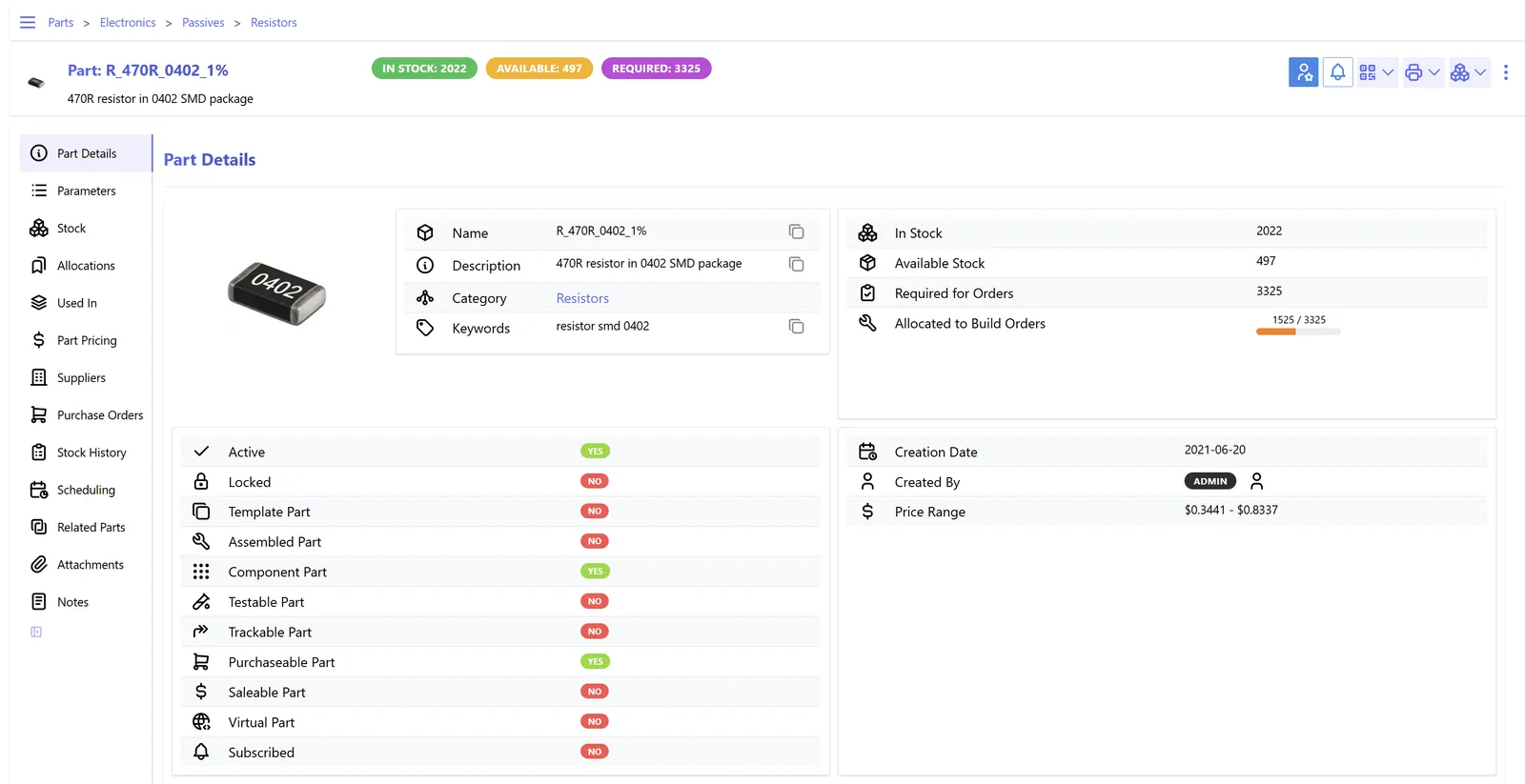
This view helps the warehouse, sales counter and service desk work from the same unit records.
Each platform supports serial control. The difference is mainly in how far serials connect to service, warranty and field operations. Check current features for your edition.
| Zoho | Odoo | ERPNext | Dynamics 365 | |
|---|---|---|---|---|
| Serial control per item | Serial number tracking per item in Zoho Inventory | Tracking 'by unique serial number' on the product | 'Has Serial No' on the Item, with optional naming series | Serial tracking via item tracking codes or tracking dimensions |
| Capture method | Entered or scanned on receives and packages | Scanned in the Barcode app or entered on operations | Serial and batch bundle on receipts and deliveries in recent versions | Assigned on receipt lines; scanning via mobile warehouse apps |
| Warranty | Typically via Zoho Desk or custom fields | Warranty handling usually via Repairs, Helpdesk or customization | Warranty Claim and warranty expiry fields on Serial No | Service items and contracts in Business Central or Field Service |
| Repair and RMA | Returns via sales returns; repairs often in Zoho Desk or Creator | Repairs app linked to serial | Warranty Claim and maintenance documents | Service orders and returns linked to serials |
| Field service link | Zoho FSM can be connected | Odoo Field Service (Enterprise) | Maintenance Visit against the serial | Dynamics 365 Field Service with customer assets |
| Best fit | Retailers and traders wanting simple serial control | Traders with repairs and service in one system | Distributors wanting warranty records without license cost per module | Equipment companies with large service operations |
Names and availability vary by version and edition. We verify against your products during a demo.
Serials are only reliable when they are scanned, not typed. These connections make that practical, and our barcode integration page explains the scanner side.
Serial tracking supports compliance indirectly. Confirm regulated-product rules with the authority concerned and tax rules with your advisor.
Warranty replacements, refunds and supplier credits each have VAT consequences. Linking the credit note to the serial and the original tax invoice keeps the audit trail clear; confirm treatment with your tax advisor.
UAE consumer protection rules give buyers warranty and after-sales rights. A serial-linked invoice is the simplest proof of what was sold and when.
Distributors of medical devices may need to trace units to hospitals or clinics for field safety notices. Serial records by customer make this possible.
Sales and purchase records linked to serials should be kept for at least five years under UAE tax record-keeping rules.
General information, not tax or legal advice. Rules change; confirm current FTA, MOHRE and Ministry of Finance guidance with your advisor.
Results vary by business. These are the improvements teams typically report after go-live.
Counter staff can check that the returned serial was sold to that customer and is in warranty.
Purchase invoice, receipt date and serial are available in one record for the manufacturer.
Technicians see past repairs and replaced parts for the exact installed unit.
Demo and loan units are always in a named location with a responsible person.
Typical ranges only; scanning hardware and the number of serialized SKUs drive the effort.
Durations are typical ranges; your plan is agreed after discovery.
Agree which product lines need serials and where serials are captured.
Configure items, receipt and dispatch scanning, warranty fields and RMA flow.
Scan every serialized unit on hand to load opening stock by serial.
Connect helpdesk or field service so tickets reference serials.
Counter, warehouse and service staff learn to scan rather than type.
We configure the system for the rules UAE businesses report against, and test it before go-live.
General information, not tax or legal advice. Confirm current requirements with the FTA, MOHRE or your advisor. See all UAE compliance guides.
On-site workshops in Dubai, Abu Dhabi and Sharjah, and remote or on-site delivery across the Northern Emirates and free zones.
Official sources and references
Facts on this page were checked against these sources in October 2026. Rules change, so confirm current requirements before acting.
Still have a question? Our consultants are happy to help.
Ask an ExpertYes. An IMEI is treated as the serial number. Some businesses also store a second IMEI or the box serial in an additional field when the device has dual SIM.
Capturing at receipt is best because it links each unit to the supplier invoice for warranty claims. Some retailers capture only at sale for low-value items, but they lose supplier traceability.
On some platforms an item can have both, for example medical devices with a lot and a unit serial. Most businesses choose one; we check the requirement with your suppliers.
The returned serial is received into a repair or supplier-return location and the new serial is issued to the customer, with both linked to the warranty claim.
Transfers move specific serials, so the receiving branch knows exactly which units arrived. See our page on warehouse transfers for the full process.
Usually not. Track serials where warranty, theft risk or service history matter. For accessories, item-level or batch tracking is normally enough.
Related Solutions
Related Industries
Related ERP Platforms
Show us your product lines and returns process and we will map a serial tracking setup for your counters, warehouse and service team.
Dubai, United Arab Emirates