
L
O
A
D
I
N
G


Zoho, Odoo, ERPNext, Dynamics 365 and custom ERP, delivered by one accountable team.

Built around the class timetable for yoga, pilates, CrossFit, martial arts, swimming and kids' academies that sell credits and terms rather than open-gym access.
An ERP for fitness centres in the UAE is built around the class timetable rather than gym floor access. It links rooms, venues, capacity and instructors to class packs, academy terms and corporate bundles, values each credit at its real price, and calculates instructor pay per class. That lets owners of pilates, yoga, martial arts and swimming businesses see profit per class slot.
An ERP for fitness centers in the UAE looks different from a gym system because the unit of sale is a class, not floor access. A reformer pilates studio in Jumeirah Lake Towers sells ten-class packs. A martial arts academy in Khalifa City bills school-term fees for children. A swimming school rents pool time at a compound in Mirdif and pays instructors per lesson. Revenue depends on how full each class is and what each slot costs to run.
That changes what the back office must track. Each class has a room or venue, a capacity, an instructor with a pay rate and a set of members using credits of different values. Some credits were bought at a discount, some came with a corporate wellness contract and some will expire unused. Unless the ERP links the timetable to these values, the owner cannot answer a basic question: did the 7 pm Tuesday class make money?
We are a Dubai-based ERP partner working with multi-discipline studios and academies across the UAE. This page is about class-led businesses; if you run a membership gym with open floor access, our page on ERP for gyms covers that model. Instructor scheduling and pay draw on our time tracking and payroll experience.

These issues show up most when a studio adds a second discipline, a second venue or a kids' program.
A credit from an introductory offer, a fifty-class pack and a corporate bundle are each worth a different amount. Treating them as equal overstates revenue from discounted members and hides who is really paying for each class.
Instructors may earn a flat rate, a rate plus a per-head bonus, or a share of revenue. Many are freelancers who invoice monthly. Calculating pay from attendance sheets is slow and leads to errors.
Kids' swimming, football and martial arts academies bill per term with sibling discounts, make-up sessions and kit fees. Refunds and transfers between terms are hard to track without a proper ledger.
Many programs run in school halls, compound pools or hotel studios rented by the hour. Without allocating that cost to classes, venue decisions are made on instinct.
Companies buy class bundles or on-site sessions for staff. Billing them accurately, with usage reports they can check, needs data from the timetable that the accounts team rarely sees.
We configure this flow for studios selling packs and academies selling terms, with small differences at the purchase step.
One shared database: every step updates stock, finance and reports in real time.
We tailor this list to the disciplines and programs you run.
Recurring timetables, rooms and external venues, capacity limits, waitlists and substitute instructors.
Packs, introductory offers and bundles with their value per credit, expiry rules and transfer policies.
Term enrolments for children's programs, sibling discounts, make-up sessions and kit charges.
Contracts for employed and freelance instructors, pay rules per class type and certification expiry dates.
Wellness agreements with companies, monthly usage statements and invoicing against agreed bundles.
Hourly or monthly venue rental costs allocated to the classes held there.
Employed instructors paid through WPS payroll, freelancers through approved supplier bills.
Deferred revenue for unused credits, discipline and venue P&L, and class profitability reports.
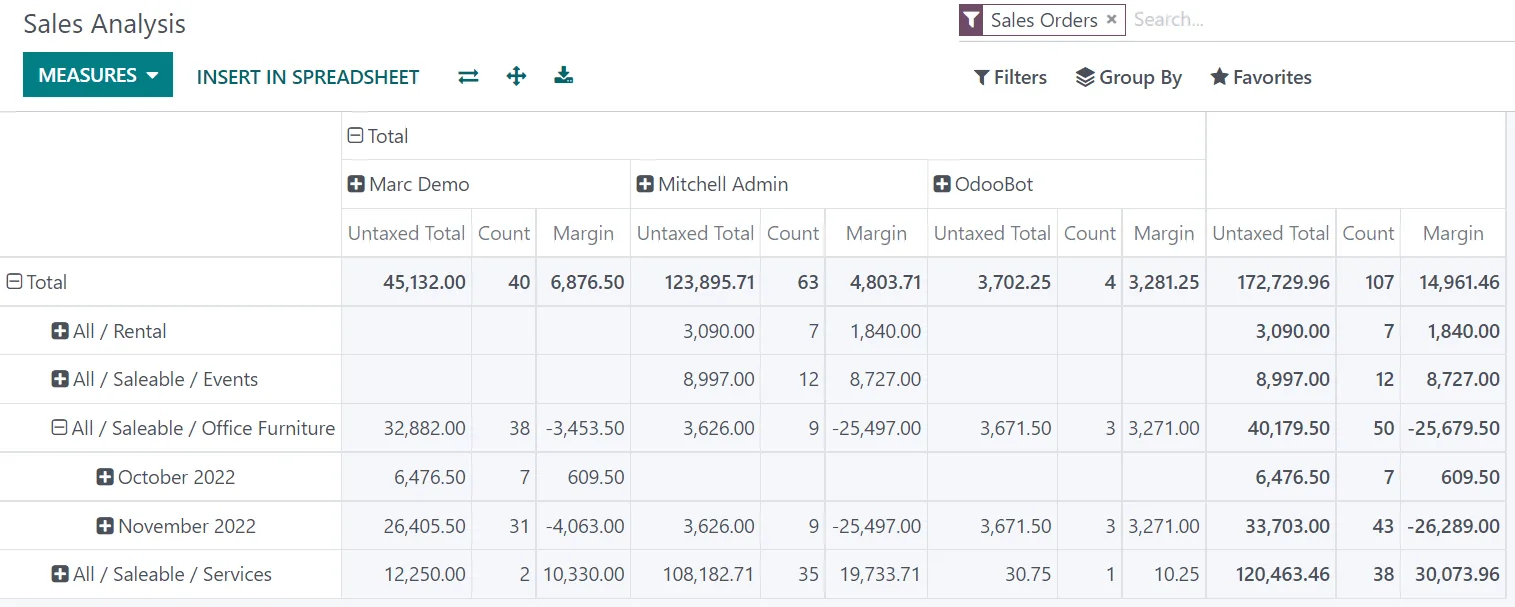
An analytics view built from the timetable, bookings and costs, so programming decisions use real numbers.
Choose based on how many disciplines and venues you run and whether a booking app already serves your members well.
| Center profile | Platform that usually fits | Why it fits | Watch-out |
|---|---|---|---|
| Boutique studio with one discipline and a booking app | Zoho Books with Zoho Analytics | Light accounting and reporting fed by booking app exports or API | Credit valuation logic may need a custom function or Zoho Creator |
| Multi-discipline center with several rooms | Odoo | Appointments, events-style scheduling, subscriptions, POS, HR and accounting in one system | Class rules and credit values should be designed before configuration starts |
| Kids' academy running terms across rented venues | ERPNext or Zoho Creator on Zoho Books | Flexible enrolment and fee structures, close to how schools bill | Parent-facing booking may still need a dedicated app |
| Wellness operator with several brands | Dynamics 365 Business Central or custom ERP | Multi-company reporting and tailored class costing | Higher setup effort; justified mainly for larger groups |
We implement Zoho, Odoo, ERPNext, Dynamics 365 and custom ERP, and integrate existing class booking apps where an API is available.
These shape how fees, credits and instructors are set up. Confirm the specifics with your tax advisor.
Fitness classes and academy fees are generally standard-rated at 5%. Prepaid packs and terms raise timing questions, so the system records both the sale and each redemption with its value.
Employed instructors must be paid through WPS under MOHRE rules. Freelance instructors invoice you, and those registered for VAT should issue tax invoices with their TRN.
Academies working with children usually keep consent forms, medical notes provided by parents and emergency contacts. The ERP stores these with restricted access and clear retention rules.
Year-end balances of unused credits and term fees affect taxable income. Keep schedules that support your corporate tax filing on EmaraTax.
General information, not tax or legal advice. Rules change; confirm current FTA, MOHRE and Ministry of Finance guidance with your advisor.
Benefits we aim for with class-led businesses. Actual results depend on booking discipline and data quality.
Owners can drop, move or reprice classes that are full but unprofitable, or quiet but cheap to run.
Pay is calculated from check-ins and class rules instead of attendance sheets.
Unused credits and term fees are valued correctly, which keeps monthly results honest.
Usage statements give HR teams the evidence they need to renew wellness contracts.
Indicative ranges. The number of disciplines, venues and booking integrations drives the effort.
Durations are typical ranges; your plan is agreed after discovery.
List disciplines, class types, pack and term structures, instructor contracts and venues.
Agree credit valuation, pay rules, venue cost allocation and the chart of accounts.
Set up scheduling, credits, payroll and accounting, and connect the booking app and payment gateway.
Load active members, unused credits, term enrolments and instructor details, then reconcile.
Run the first month live, review instructor pay and class profitability, and adjust rules.
More reading for fitness center owners and finance managers.
We configure the system for the rules UAE businesses report against, and test it before go-live.
General information, not tax or legal advice. Confirm current requirements with the FTA, MOHRE or your advisor. See all UAE compliance guides.
On-site workshops in Dubai, Abu Dhabi and Sharjah, and remote or on-site delivery across the Northern Emirates and free zones.
Official sources and references
Facts on this page were checked against these sources in October 2026. Rules change, so confirm current requirements before acting.
Still have a question? Our consultants are happy to help.
Ask an ExpertGym software centers on access memberships. A fitness center ERP centers on the class timetable, credit values, instructor pay and venue costs, which is what drives profit in studios and academies.
Yes. Each pack carries a value per credit, so when a member redeems a credit from a discounted pack, the class is credited with that lower value rather than the list price.
Yes. Freelancers are set up as suppliers, and their monthly bill is generated from the classes they taught under their agreed rates. Employed instructors go through payroll and WPS.
Yes. We set up terms, sibling discounts, make-up sessions and kit charges, along with parent contact and consent records stored with restricted access.
Yes. With credits valued correctly, instructor pay calculated and venue costs allocated, each class slot gets its own margin, which can be grouped by discipline, instructor or venue.
Not necessarily. If your current booking app works well, we connect it. If you are starting fresh, Odoo can provide online booking alongside the back office.
Related Solutions
Related Industries
Related ERP Platforms
Tell us about your disciplines, venues and instructor contracts, and we will map out a practical ERP setup.
Dubai, United Arab Emirates