L
O
A
D
I
N
G


Zoho, Odoo, ERPNext, Dynamics 365 and custom ERP, delivered by one accountable team.

Managing units for landlords means handling other people's money with precision. We set up ERP so every lease, cheque, deposit and expense lands on the right unit and the right owner statement.
An ERP for property management companies in the UAE links property, unit, lease, tenant and owner in one data model. It keeps landlord money separate from management income, runs a post-dated cheque register with deposits, bounces and replacements, generates owner statements from the ledger, and tracks renewals and Ejari or Tawtheeq registration deadlines per unit.
ERP for property management companies in the UAE has to do something most accounting systems were not designed for: keep money that belongs to landlords separate from the manager's own income, while running hundreds or thousands of leases at once. A typical portfolio mixes residential apartments, villas, retail units and offices across Dubai, Sharjah and Abu Dhabi, each with its own tenancy terms, cheque schedule and owner.
The daily work is heavy on documents. Tenancy contracts must be registered on Ejari in Dubai or Tawtheeq in Abu Dhabi. Rent is still widely paid with post-dated cheques that have to be stored, deposited on the right date and followed up when they bounce. Security deposits must be held and returned. Owners expect a clear monthly statement showing rent collected, maintenance spent, management fees deducted and the amount remitted.
We configure ERP so the property, building, unit, lease and owner are linked records, and every transaction carries those links. The result is owner statements generated from the ledger rather than assembled in Excel. Developers who sell as well as lease should also read our ERP for real estate companies page, and maintenance contractors working for you may find ERP for property maintenance companies useful.

These are the issues property management companies describe most often.
Hundreds of post-dated cheques are held for future dates. Missing a deposit date, or failing to chase a returned cheque quickly, hurts both the owner's cash and your reputation.
Statements are often compiled from rent sheets, maintenance invoices and bank records each month. Errors and delays lead to difficult conversations with landlords.
Lease expiries, rent changes and required notice periods are easy to miss across a large portfolio. A missed notice can lock in old terms for another year.
Security deposits belong to tenants and must be returned net of agreed deductions. When they sit in general accounts, reconciling them at move-out takes too long.
Residential leases and commercial leases are treated differently for VAT, while your management fee carries VAT. Getting this wrong in invoices or returns creates exposure for both you and the owner.
Each step is a record in the system, so the history of every unit is complete and searchable.
One shared database: every step updates stock, finance and reports in real time.
We combine standard ERP apps with a property layer that many platforms need added or configured.
Buildings, floors and units with type, size, owner, status and registration references.
Tenancy terms, rent schedules, escalations, notice dates and renewal workflows.
Post-dated cheque register, deposit batches, bounced cheque handling and tenant statements.
Per-owner ledgers, management fee calculation, owner statements and remittances.
Security deposits held per lease, with deductions and refunds at move-out.
Tenant requests logged against the unit, assigned to in-house teams or contractors and recharged to owners.
Online access to statements, invoices, receipts and maintenance tickets.
Tenancy contracts, Emirates ID copies, title deeds and inspection reports kept against each record.
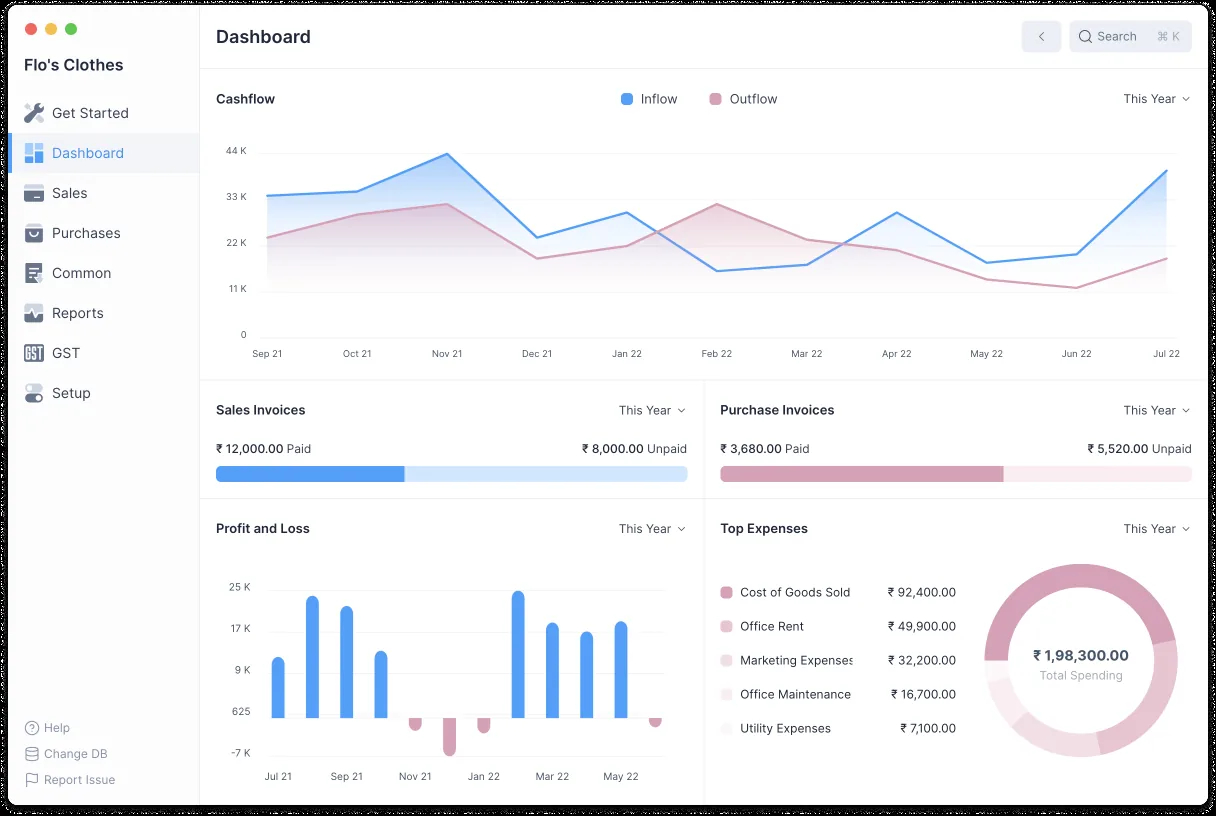
Leasing, collections and owner relations teams all work from the same live portfolio data.
Property management usually needs some configuration on any platform. This is how profiles tend to map.
| Company profile | Usual fit | Why |
|---|---|---|
| Boutique manager with a few hundred units | Zoho (Creator, Books, CRM) | A custom lease and PDC app on Zoho Creator linked to accounting, with modest running cost |
| Mid-size manager across several emirates | Odoo | Accounting, helpdesk, documents and portals in one system, extended with a property and lease module |
| Manager wanting full control of a property app | ERPNext | Custom doctypes for units, leases and cheques on an open-source framework |
| Large landlord or group with owned and managed portfolios | Microsoft Dynamics 365 | Multi-entity finance for owned assets alongside managed portfolios |
Most platforms need a property-specific layer for leases and PDCs. We build it as configuration or a small custom module, documented and owned by you.
ERP should support these requirements. Tax treatment of specific properties and fees should be confirmed with your tax advisor.
Residential leases are generally exempt from VAT, while commercial leases are generally standard-rated at 5%. Your management and leasing fees are generally standard-rated. ERP should hold the correct tax code per unit and fee type.
Tenancy contracts are registered through Ejari in Dubai and Tawtheeq in Abu Dhabi. The system should store the registration reference and remind staff when renewal or cancellation is needed.
Emirate tenancy laws set notice requirements for changing lease terms or ending a tenancy. Lease records should carry notice dates calculated from the rules your legal advisor confirms.
The management company's taxable income is subject to corporate tax at 9% above AED 375,000. Keeping owner funds clearly separated helps show which amounts are your income and which are held for owners.
General information, not tax or legal advice. Rules change; confirm current FTA, MOHRE and Ministry of Finance guidance with your advisor.
We help you track these improvements yourself instead of quoting figures.
Statements come straight from the ledger, so they can be issued early in the month with fewer corrections.
A daily deposit list and returned cheque alerts keep collections on schedule.
Expiry reminders with enough lead time give leasing teams room to negotiate before tenants leave.
Deposits, deductions and final bills are calculated from records, shortening the move-out process.
Typical ranges for a portfolio of several hundred to a few thousand units.
Durations are typical ranges; your plan is agreed after discovery.
Review lease types, owner agreements, fee structures, cheque handling and statement formats.
Configure the property data model, lease workflows, PDC register, owner accounting and portals.
Load units, owners, tenants, active leases, future cheques, deposits and opening balances.
Run one statement cycle in both old and new systems to confirm owner balances match.
Switch over, open portals to owners and tenants, and refine reports after the first few cycles.
Real estate platforms and connected services.
We configure the system for the rules UAE businesses report against, and test it before go-live.
General information, not tax or legal advice. Confirm current requirements with the FTA, MOHRE or your advisor. See all UAE compliance guides.
On-site workshops in Dubai, Abu Dhabi and Sharjah, and remote or on-site delivery across the Northern Emirates and free zones.
Official sources and references
Facts on this page were checked against these sources in October 2026. Rules change, so confirm current requirements before acting.
Still have a question? Our consultants are happy to help.
Ask an ExpertYes. Each cheque is recorded with its number, bank and date against the lease. The system produces a deposit list for each day, tracks clearing, and flags returned cheques so your team can follow up and record replacements.
Every rent receipt, expense and fee is posted with the owner and unit attached. At month-end the system generates a statement per owner showing income, deductions, management fees and the balance remitted.
Direct integration depends on the access the authorities provide at the time. At minimum we store registration numbers and dates against each lease and remind staff of actions due. We review integration options during discovery.
Yes. Each unit carries its own tax treatment, lease type and charge structure, so invoices and VAT returns reflect the mix correctly. Confirm the treatment of specific properties with your tax advisor.
Owner portals are available on most platforms we implement. Owners log in to view statements, invoices and maintenance history, which reduces calls to your team.
Related Solutions
Related Industries
Related ERP Platforms
Related Guides
Book a session with our Dubai team to map your leases, cheques and owner reporting into ERP.
Dubai, United Arab Emirates