L
O
A
D
I
N
G


Zoho, Odoo, ERPNext, Dynamics 365 and custom ERP, delivered by one accountable team.

For ship agents, liner agents and NVOCCs that need port call files, disbursement accounts, container control and clean principal accounting.
An ERP for shipping companies in the UAE must handle money that mostly belongs to principals. Ship agents at Jebel Ali, Khalifa Port, Khor Fakkan or Fujairah need port call files, proforma and final disbursement accounts, and separate principal sub-ledgers, while liner agents and NVOCCs also need bills of lading, container control and automatic detention and demurrage charges, usually via a custom agency layer.
An ERP for shipping companies in the UAE must handle the way agencies and carriers actually make and handle money. A ship agent at Jebel Ali, Khalifa Port, Port Rashid, Khor Fakkan or Fujairah collects funds from principals, pays port dues, pilotage, launch hire and husbandry costs on their behalf, and earns an agency fee. A liner agent or NVOCC also issues bills of lading, manages container equipment and chases detention and demurrage.
Most of the cash that passes through a shipping agency does not belong to it. That makes the accounting different from a normal service business. Each port call needs a proforma disbursement account (PDA) before arrival, a final disbursement account (FDA) after departure, and a clear balance per principal across many voyages and currencies. Spreadsheets struggle once you handle several principals and dozens of calls a month.
This page is for agency, liner and carrier operations. Freight forwarders that book space with carriers should see our ERP for freight forwarding page, and marine repair and service yards are covered under ERP for marine companies.

Finance and operations teams in UAE shipping companies raise these issues most often.
Supplier invoices for pilotage, berth, launches and garbage removal arrive weeks after the vessel leaves. Principals wait for the FDA, and the agency waits for its money.
Advances received from principals sit in the same bank account as agency income. Without separate ledgers, it is hard to show principals exactly what was spent.
Containers stay with consignees past free time, but charges are calculated manually and sometimes not billed at all.
PDAs are quoted in USD, costs are paid in AED, and principals remit in yet another currency. Exchange differences need clean treatment.
Bills of lading, delivery orders, manifests and cargo arrival notices are produced in large volumes, often retyped across systems.
Agency fees are small compared with costs passed through. Without clear reporting per call, loss-making calls go unnoticed.
The core agency process, with each step linked to the port call file.
One shared database: every step updates stock, finance and reports in real time.
Some of these are standard ERP modules; others are typically built as custom apps on top of the ERP core.
A file per vessel call with ETA, berth, services requested, and links to all costs and documents.
PDA templates by port and vessel type, then FDAs built from actual supplier invoices with variance against the estimate.
Sub-ledgers per principal for advances, disbursements, agency fees and balances due.
Container records with status, location, free time and movement history.
Charges calculated from gate-out and gate-in dates against tariff slabs and invoiced automatically.
Bills of lading, delivery orders and arrival notices generated from booking data.
Bank accounts in several currencies, revaluation and clear treatment of exchange differences.
Customer and principal contacts, rate requests and booking history in one place.
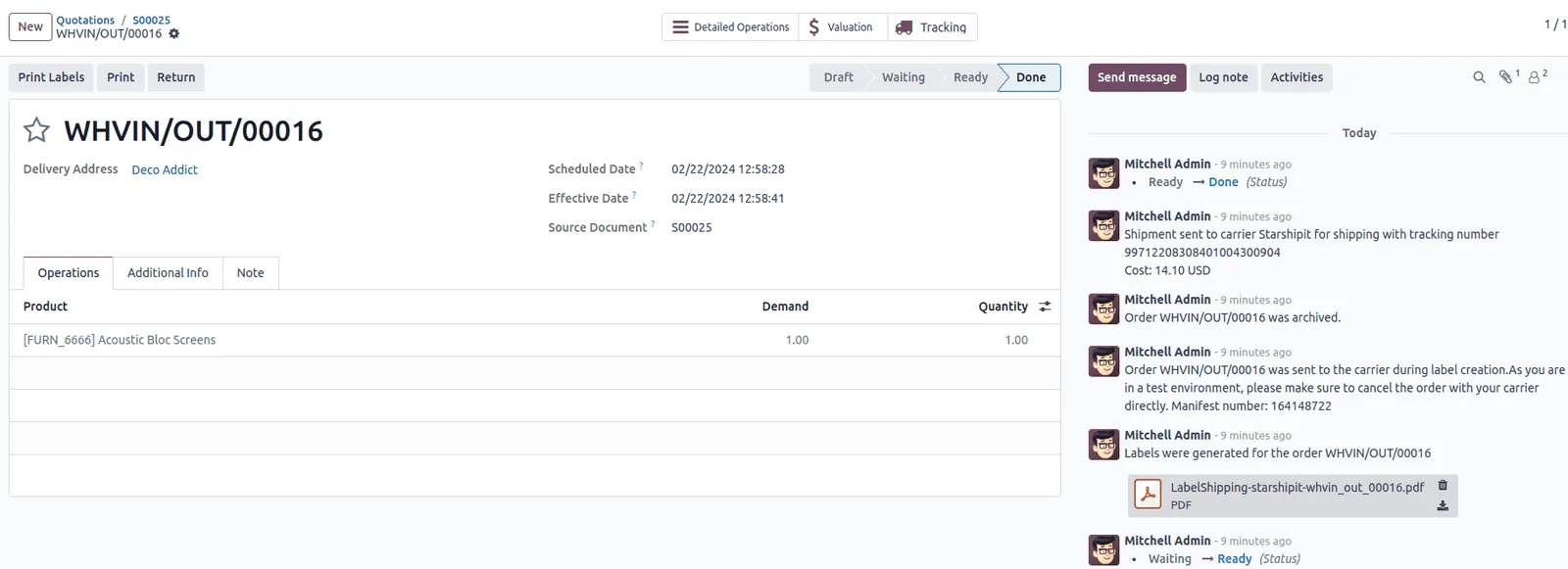
A single view of port calls, containers and money owed.
Shipping agency logic is specialized. Most implementations combine a standard ERP core with a custom agency layer.
| Company profile | Often a good fit | Why |
|---|---|---|
| Ship agency with several principals | Odoo with custom port call app | Accounting with analytic tags per call and principal, plus a custom module for PDA and FDA. |
| NVOCC or liner agent with containers | ERPNext or Odoo with custom container module | Both are open to extension for container tracking and detention rules. |
| Regional group with offices across the GCC | Dynamics 365 Business Central | Multi-company, multi-currency finance and consolidation, extended with agency features. |
| Highly specialized agency processes | Custom ERP | Purpose-built port call and disbursement workflows, integrated with a standard accounting core. |
| Small agency starting out | Zoho Books with Zoho Creator | Low-cost accounting plus a simple custom app for port call files and PDAs. |
Dedicated shipping systems exist from specialist vendors. We implement the platforms listed and integrate with port and carrier systems where APIs or file exchange are available.
International transport and related services have specific VAT rules in the UAE.
UAE VAT law zero-rates certain international transport and related services. Whether a specific agency or port service qualifies depends on the facts. Map each service code to the right tax treatment with your tax advisor.
Costs paid strictly on behalf of a principal may be treated as disbursements rather than your own supplies, if conditions are met. The ERP should separate disbursements from agency fees so the VAT return reflects the right values.
Corporate tax applies at 9% on taxable income above AED 375,000. Clean separation of principal funds from agency income supports accurate taxable income figures.
UAE e-invoicing becomes mandatory in phases from 1 January 2027 for businesses with revenue of AED 50 million or more, and 1 July 2027 for others. Check the latest Ministry of Finance and FTA guidance.
General information, not tax or legal advice. Rules change; confirm current FTA, MOHRE and Ministry of Finance guidance with your advisor.
Common objectives for agency and carrier ERP projects.
Supplier costs post directly to the port call, so the FDA is ready as soon as the last invoice arrives.
Each principal sees what they advanced, what was spent and what is owed, with supporting documents.
Charges are calculated automatically from container movements, reducing leakage.
Agency fees and absorbed costs are visible for every call and principal.
Typical ranges; custom agency modules and carrier integrations add time.
Durations are typical ranges; your plan is agreed after discovery.
Map port call steps, PDA templates, principal accounting, container processes and reports.
Set up chart of accounts, principal ledgers, multi-currency banking and tax codes.
Build or configure port call files, PDA and FDA, container tracking and detention rules.
Load open port calls, principal balances and container inventory, then test with live calls.
Support operations and finance through the first month of live calls.
Logistics, finance and comparison pages.
We configure the system for the rules UAE businesses report against, and test it before go-live.
General information, not tax or legal advice. Confirm current requirements with the FTA, MOHRE or your advisor. See all UAE compliance guides.
On-site workshops in Dubai, Abu Dhabi and Sharjah, and remote or on-site delivery across the Northern Emirates and free zones.
Official sources and references
Facts on this page were checked against these sources in October 2026. Rules change, so confirm current requirements before acting.
Still have a question? Our consultants are happy to help.
Ask an ExpertYes, usually through a custom app on top of the ERP. PDAs are built from port tariffs and service templates, and FDAs are generated from the actual supplier invoices posted to the port call file.
Each principal has its own sub-ledger. Advances, disbursements and agency fees post there, and statements show the running balance per voyage and overall.
Yes. Container movements record gate-out and return dates, and tariff slabs per customer or container type calculate charges once free time ends. Invoices can be raised automatically or reviewed first.
Sometimes, yes. Specialist systems can suit large carriers. Many agencies prefer a flexible ERP with a custom agency layer because finance, HR and CRM sit in the same system. We will tell you honestly which route fits.
Where the port community system or carrier offers APIs or structured files, we can integrate. The scope depends on what each system exposes, which we confirm during discovery.
Related Solutions
Related Industries
Related ERP Platforms
Related Guides
Talk to our Dubai team about ERP for your shipping agency, liner agency or NVOCC.
Dubai, United Arab Emirates