L
O
A
D
I
N
G


Zoho, Odoo, ERPNext, Dynamics 365 and custom ERP, delivered by one accountable team.

Dynamics 365 has no ready-made UAE property module, so we build one on Business Central and Dynamics 365 Sales that fits how landlords, property managers and developers here actually work.
Dynamics 365 has no ready-made UAE property management module. Real estate companies use Business Central or Finance for accounting, fixed assets and approvals, and Dynamics 365 Sales for leasing and sales CRM, then add the tenancy layer, covering units, contracts, rent schedules, post-dated cheques and renewals, through an AppSource property app or a partner-built extension.
Dynamics 365 for real estate in the UAE needs a straight answer up front: Microsoft does not ship a property management module for UAE landlords. Business Central and Finance give you strong accounting, fixed assets, dimensions and approvals, and Dynamics 365 Sales gives you a solid leasing and sales CRM. The tenancy layer, which covers units, contracts, rent schedules, post-dated cheques and renewals, comes from an AppSource property app or an extension we build and maintain.
That combination works well for real estate groups that want Microsoft's finance depth and already use Microsoft 365. A family office with residential towers in Dubai Marina and Al Nahda, a commercial landlord with warehouses in Al Quoz and Mussafah, or a developer selling off-plan units all need the same ledger but very different front-office processes. We design the tenancy or sales layer around those, rather than forcing a generic template.
If you do not need Microsoft-level finance and would rather start with a property module that already exists, compare Odoo for real estate or Zoho for real estate. We implement all three and will recommend the one that matches your portfolio size and budget.

These are the issues landlords, property managers and developers raise most often in our workshops.
Annual rent in the UAE is often paid in one to twelve cheques. When cheque numbers, banks and deposit dates sit in Excel, bounced cheques and missed deposits are noticed late.
Contracts expire without a renewal offer being sent in time. Units sit empty for weeks because nobody had a list of upcoming expiries by building.
Property managers collect service charges and pay building costs on behalf of owners or owners' associations. Producing clear statements per building takes days each quarter.
Repairs are paid but not linked to the unit, building or tenant. Owners cannot see which assets cost the most to run.
Off-plan buyers pay in instalments linked to dates or construction milestones. Tracking each buyer's plan, reminders and escrow deposits manually is error-prone.
For landlords and property managers, this is the cycle each unit goes through. Developers follow a separate booking-to-handover path.
One shared database: every step updates stock, finance and reports in real time.
Some pieces are standard Microsoft products. The tenancy and developer layers are extensions or AppSource apps that we select or build.
Buildings, floors and units with type, area, status and owner, linked to fixed assets and to dimensions for reporting.
Contract terms, rent amounts, payment schedules, deposits and commissions. Renewal alerts are sent ahead of expiry.
Cheque register with numbers, banks and due dates, deposit batches and bounced cheque handling with tenant notices.
Dynamics 365 Sales tracks leads from portals and brokers, viewings, offers and reservations, with unit availability from the ERP.
Rent recognition, deferred income, deposits, owner accounts, bank reconciliation and VAT reporting on one ledger.
Requests logged against units, assigned to in-house teams or vendors, with costs posted to the right building.
Unit bookings, instalment schedules linked to dates or milestones, and receipts tracked against escrow accounts.
A Power Pages portal can let tenants see statements and raise requests, and let owners view their units' income and costs.
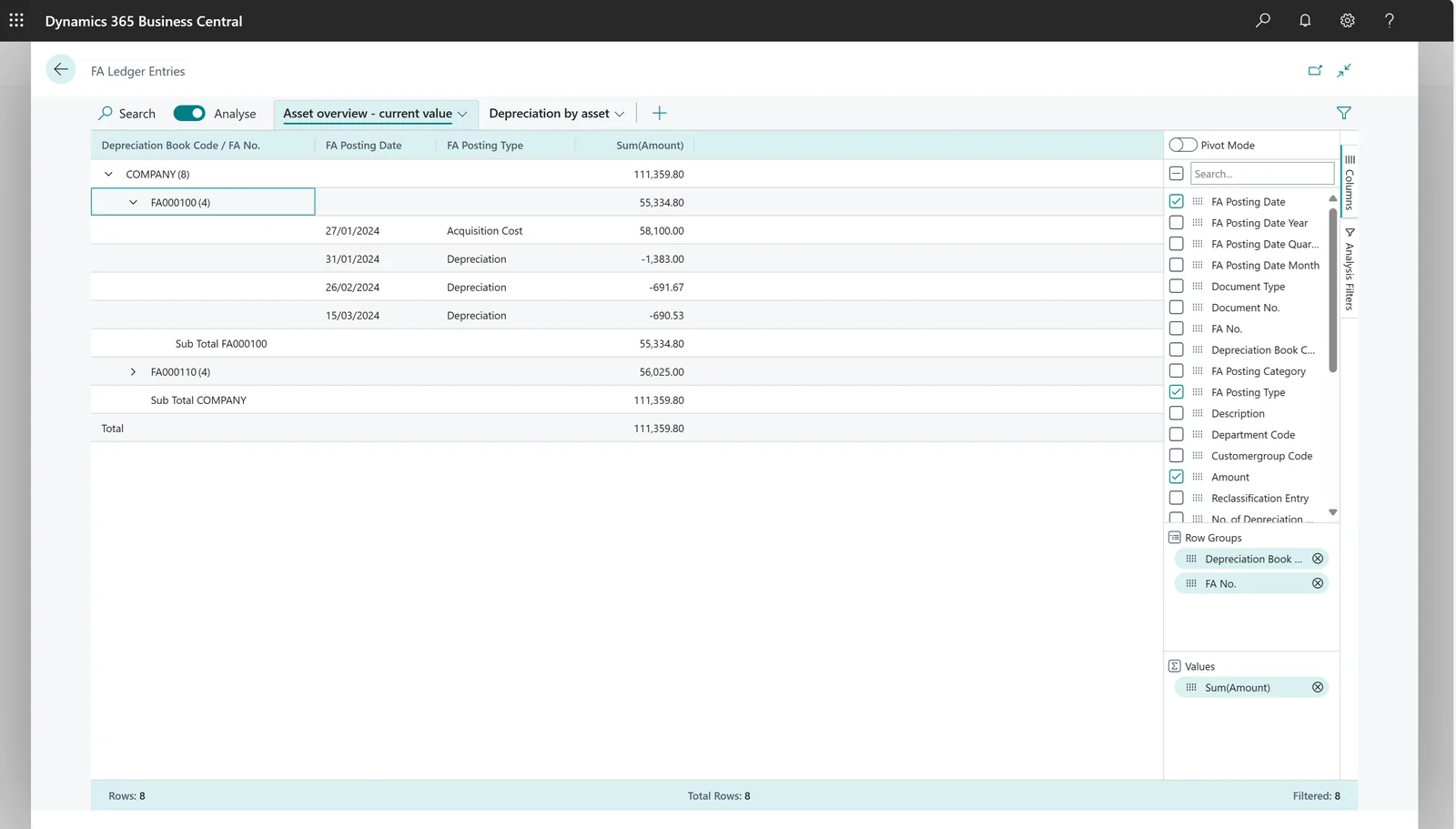
We build one view for asset owners and another for the property management team, both from the same contract and ledger data.
Property has some of the most specific VAT rules in the UAE. We set up the system to support them; always confirm treatment with your tax advisor.
Commercial leases are generally standard-rated at 5%, residential leases are generally exempt, and the first supply of a new residential building can be zero-rated within set conditions. We configure VAT groups per unit type so contracts pick up the agreed treatment.
Dubai tenancy contracts are registered through Ejari, and other emirates have their own registration systems. We store registration numbers and dates on each contract so renewals and disputes have a clear record.
Developers selling off-plan in Dubai must use project escrow accounts under the applicable regulations. Separate bank accounts and payment tracking per project support the reporting your auditors and the regulator expect.
Rental income held through a company is subject to corporate tax at 9% above AED 375,000, while individuals' direct holdings are treated differently. Clear entity and owner structures in the ERP help your advisor apply the right rules.
Invoices to business tenants fall into the B2B scope of UAE e-invoicing through an Accredited Service Provider from 2027. Check the latest Ministry of Finance and FTA guidance.
General information, not tax or legal advice. Rules change; confirm current FTA, MOHRE and Ministry of Finance guidance with your advisor.
Because the tenancy layer is partly built, real estate projects take a little longer than standard rollouts. A portfolio of a few buildings often goes live in 14 to 22 weeks.
Durations are typical ranges; your plan is agreed after discovery.
We review sample contracts, cheque practices, service charge arrangements and owner reporting needs.
We evaluate AppSource property apps against your needs and design any extension, with a clear scope for each gap.
Business Central finance, the tenancy layer and the Sales leasing pipeline are configured and connected.
Units, active contracts, future cheques, deposits and tenant balances are loaded and reconciled building by building.
We support the first rent cycle, PDC deposits and the first VAT return after go-live.
Compare platforms and explore property-specific ERP pages.
We configure the system for the rules UAE businesses report against, and test it before go-live.
General information, not tax or legal advice. Confirm current requirements with the FTA, MOHRE or your advisor. See all UAE compliance guides.
On-site workshops in Dubai, Abu Dhabi and Sharjah, and remote or on-site delivery across the Northern Emirates and free zones.
Official sources and references
Facts on this page were checked against these sources in October 2026. Rules change, so confirm current requirements before acting.
Still have a question? Our consultants are happy to help.
Ask an ExpertNo. Microsoft does not include a UAE property management module in Business Central or Finance. Tenancy contracts, rent schedules and PDC handling come from an AppSource app or an extension we build, on top of standard Dynamics 365 finance and Sales.
Yes, through the tenancy extension. Each cheque is recorded with its number, bank and due date, grouped into deposit batches and posted on clearance. Bounced cheques trigger a status change and a follow-up task.
Yes. Unit types carry their own VAT and revenue settings, so residential and commercial contracts are billed and reported correctly in the same system. We confirm the VAT treatment with your tax advisor during design.
It can be, especially for developers who also run construction or hold investment property. Booking, payment plans and escrow tracking are added as an extension, while construction cost is handled in the Projects module.
Often, yes. A landlord with a few buildings may get what they need faster and at lower cost from Odoo or Zoho. Dynamics 365 makes most sense for groups that need deeper finance, several entities or close Microsoft 365 integration.
Related Solutions
Related Industries
Related ERP Platforms
Send us a sample tenancy contract and owner report, and we will show how the leasing layer would work on Dynamics 365.
Dubai, United Arab Emirates