L
O
A
D
I
N
G


Zoho, Odoo, ERPNext, Dynamics 365 and custom ERP, delivered by one accountable team.

Run head office purchasing, branch replenishment, fresh departments and dozens of POS lanes on one system, with VAT handled the same way in every store.
An ERP for supermarkets in the UAE connects head-office buying, branch replenishment, fresh departments and POS lanes in one system, applying VAT the same way in every store. It must handle tens of thousands of SKUs, daily supplier deliveries per branch, weighed barcodes for fruit and meat, supplier rebates and offline tills that sync when the internet returns.
An ERP for supermarkets in the UAE has to cope with a scale few other retailers face: tens of thousands of active SKUs, several thousand receipts a day per branch, suppliers delivering daily to each store, and fresh departments where stock loses value by the hour. A standalone POS records the sale, but it rarely tells the buying team what to reorder, which promotions paid for themselves or why a branch shows negative stock on rice.
Most supermarket groups we speak with in Dubai, Sharjah and Abu Dhabi run POS software at the tills, spreadsheets for supplier rebates and a separate accounting package at head office. Once the group adds a fourth or fifth store, those gaps cost real money in expired stock, missed supplier claims and slow month-end.
A supermarket ERP connects the till to the warehouse, the buyer and the ledger. Sales post to inventory in near real time, replenishment suggestions are generated per branch, supplier deliveries are checked against purchase orders at the back door, and VAT is calculated identically everywhere. We implement this on Odoo, Zoho, ERPNext, Microsoft Dynamics 365 or a custom build, depending on the size of the chain and how much it relies on its existing POS. See our wider retail ERP overview for how this fits other store formats.
These issues come up in nearly every discovery workshop with UAE supermarket and hypermarket teams.
Price changes are keyed separately at each branch, so shelf labels and POS prices drift apart. Customers notice, and consumer protection complaints follow.
Receiving is done on paper and keyed later, so items sell before they exist in the system. Buyers then lose trust in the numbers and order by gut feel.
Bakery, butchery, fish and produce losses are thrown away without a recorded reason. Without wastage data by department, margins on fresh look better on paper than in the bank.
Rebates, gondola-end fees and promotional support are agreed by email and tracked in spreadsheets. At year end, the group cannot prove volumes, so claims are reduced or dropped.
Each cashier closes a drawer, but card terminal settlements, cash pickups and bank deposits are matched by hand. Differences surface days later when they are hard to trace.
A typical cycle for a multi-branch supermarket running on one ERP. Direct-to-store deliveries and distribution center transfers both feed the same stock ledger.
One shared database: every step updates stock, finance and reports in real time.
The exact app names differ by platform, but these are the functional blocks a supermarket chain usually needs from day one.
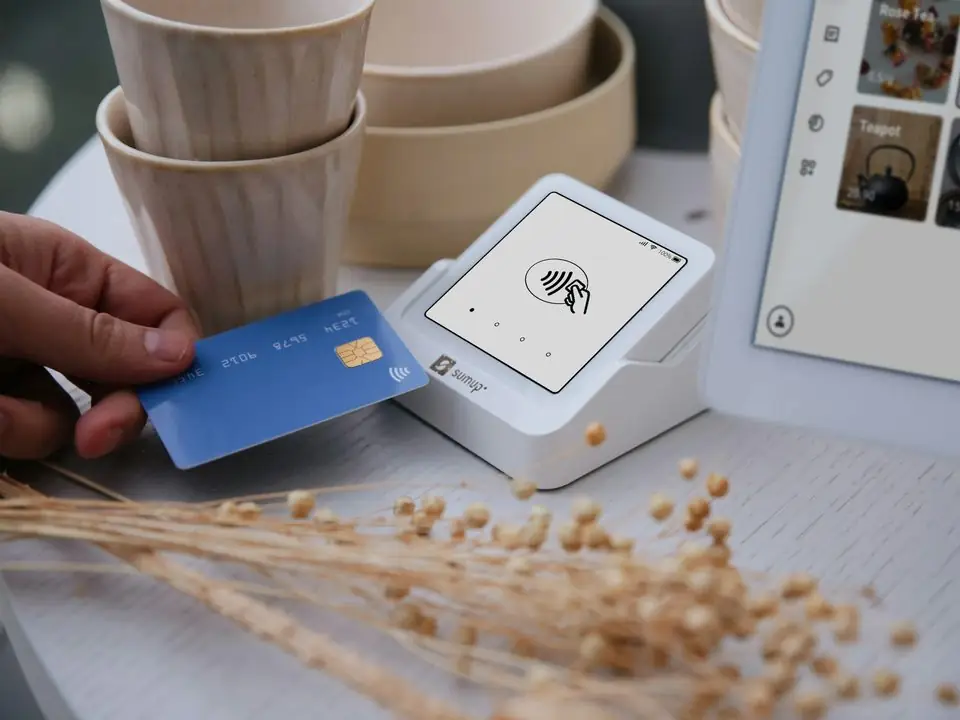
Fast barcode scanning, weighed-item barcodes from scales, multiple tender types and offline mode so lanes keep trading during a network drop.
Stock per branch, back store and distribution center, with transfers, cycle counts and reason codes for every adjustment.
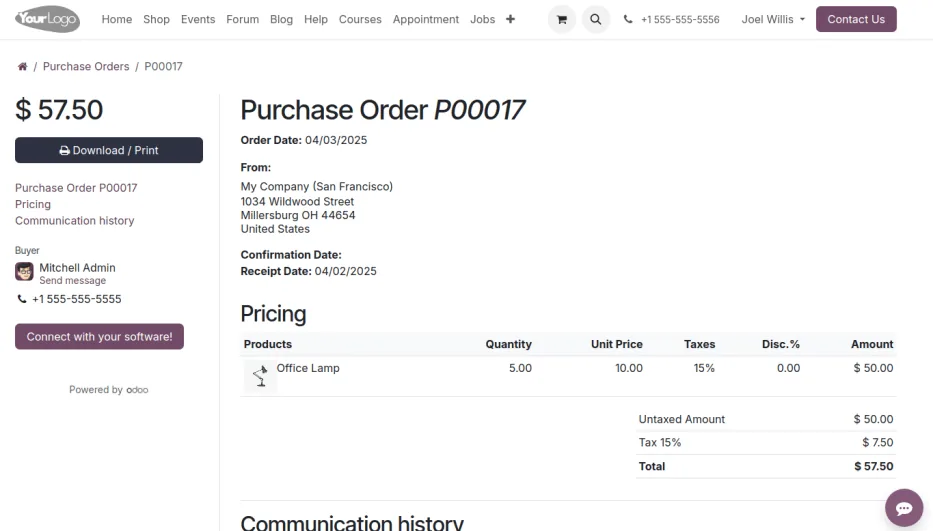
Min-max and sales-velocity reorder rules per branch, supplier lead times, and purchase orders grouped by delivery day.
Central price lists, mix-and-match offers, buy-one-get-one, loyalty discounts and time-bound promotions with start and end dates.
Simple bills of materials for bakery, hot food and cut meat, so ingredients are consumed when finished goods are produced and labeled.
Branch-wise profit and loss, daily sales posting, card settlement matching and VAT return figures built from the transactions.
Rebate tiers, listing fees and promotional funding linked to purchase volumes, so claims are calculated rather than estimated.
Cashier and shelf-filler shift rosters, attendance from biometric devices and WPS salary files for a large hourly workforce.
Category managers need to see what each branch will run out of before it happens, and which suppliers are late.
There is no single right answer. The choice depends on branch count, transaction volume and how much of your current POS you want to keep.
| Supermarket profile | Often a good fit | Why | Watch-outs |
|---|---|---|---|
| One to three neighborhood supermarkets | Odoo or ERPNext | Both include POS, inventory and accounting in one database, keeping license and integration effort modest. | Plan weighing scales and label printers early; hardware choices affect POS setup. |
| Regional chain, four to fifteen branches | Odoo | Native multi-branch POS, replenishment rules and promotions with one item master. | Heavy transaction volumes need proper server sizing and database maintenance. |
| Chain keeping its existing POS | Zoho or Dynamics 365 Business Central | Back-office ERP receives daily sales summaries from the POS through an integration. | Item and price sync must be designed carefully so both systems agree. |
| Hypermarket group with a distribution center | Dynamics 365 or Odoo with WMS | Distribution center picking, cross-docking and branch transfers at higher volumes. | Longer project; requires a firm data owner for the item master. |
We implement Zoho, Odoo, ERPNext, Microsoft Dynamics 365 and custom ERP. We do not implement SAP or NetSuite, though we can migrate data from them.
These are configuration points, not tax advice. Confirm treatment with your tax advisor.
Most groceries carry 5% VAT, but some items may be treated differently. The ERP should hold a tax code per item so every till applies the same rule, and VAT return boxes should be fed directly from posted sales.
Receipts at the till must show the details required for simplified tax invoices, and the system should issue a full tax invoice with the customer TRN on request for business buyers.
B2C receipts and B2B invoices are treated differently under the UAE e-invoicing framework using the PINT AE specification. Supermarkets with business customers should plan ASP connectivity; mandatory dates depend on revenue band, so check the latest Ministry of Finance and FTA guidance.
Shelf and till prices need to match. Central price control with label printing reduces the risk of complaints raised with the economic department in your emirate.
Large hourly workforces are paid through approved banks or agents using a Salary Information File under MOHRE's Wage Protection System, with gratuity calculated under UAE Labour Law.
General information, not tax or legal advice. Rules change; confirm current FTA, MOHRE and Ministry of Finance guidance with your advisor.
Results depend on data quality and how strictly stores follow the new process, but these are the improvements supermarket teams usually aim for.
Reorder proposals use actual branch sales instead of a buyer's memory, so staples such as rice, oil and water are ordered before shelves empty.
Every write-off carries a reason and department, giving fresh managers a weekly view of where margin is being lost.
Rebates and promotional funding are calculated from posted purchases and sales, giving finance a defensible figure for each supplier.
Basket size, category margin and shrinkage are reported per branch from the same data, without rebuilding spreadsheets each month.
Durations are indicative ranges for a multi-branch chain and vary with SKU count, POS hardware and data quality.
Durations are typical ranges; your plan is agreed after discovery.
We walk the receiving bay, tills, fresh counters and back office in at least one branch, and document current pricing and promotion rules.
Barcodes, units of measure, pack sizes, tax codes and supplier links are cleaned. This is usually the longest and most important step.
POS, scales, label printers, card terminals, replenishment rules and accounting are set up and tested together.
One branch goes live first, with our team on site for the opening days to fix issues before they spread.
Remaining stores move in waves, each with a stock count, cashier training and a supervised first weekend.
Further reading on retail systems, POS and the platforms we implement.
We configure the system for the rules UAE businesses report against, and test it before go-live.
General information, not tax or legal advice. Confirm current requirements with the FTA, MOHRE or your advisor. See all UAE compliance guides.
On-site workshops in Dubai, Abu Dhabi and Sharjah, and remote or on-site delivery across the Northern Emirates and free zones.
Official sources and references
Facts on this page were checked against these sources in October 2026. Rules change, so confirm current requirements before acting.
Still have a question? Our consultants are happy to help.
Ask an ExpertOften yes. If the POS has an API or can export sales files, we can post daily sales and stock movements into the ERP. If the POS is old or closed, replacing it with the ERP's own POS is usually cleaner. We assess this during discovery.
Weighing scales print a barcode that encodes the item code and either the weight or the price. The POS reads that barcode and records the correct quantity. We configure the barcode format to match your scale brand.
Most retail POS options we implement can run offline and sync when the connection returns. How long a lane can stay offline depends on the platform and setup, so we test this before go-live.
A focused rollout for a small chain often takes 3-5 months including a pilot branch. Larger groups with a distribution center take longer. Item master quality affects the timeline more than any other factor.
Yes, if the agreements are recorded in the system with clear tiers and periods. The ERP then calculates accrued rebates from purchases or sales, and finance raises the claim from that figure.
Related Solutions
Related Industries
Related ERP Platforms
Related Guides
Book a store walk-through with our team and get a clear view of the modules, data work and rollout order your chain needs.
Dubai, United Arab Emirates