L
O
A
D
I
N
G


Zoho, Odoo, ERPNext, Dynamics 365 and custom ERP, delivered by one accountable team.

For knitting, weaving, nonwoven, home textile and technical fabric producers who need to follow every lot from yarn to finished roll.
An ERP for textile manufacturing in the UAE traces yarn lots into greige fabric and finished rolls, recording dye lot, shade, length, weight and grade on every roll. It converts between kilograms, metres and pieces using width and GSM, and tracks greige sent to outside dye houses as job work. Odoo, ERPNext and Microsoft Dynamics 365 can all be configured for mills in Sharjah, Ajman and Jebel Ali.
An ERP for textile manufacturing in the UAE must follow material as it changes form several times: yarn becomes greige fabric, greige becomes dyed or printed fabric, and fabric becomes finished rolls, home textiles or technical products. Mills and converters in Sharjah, Ajman, Umm Al Quwain, Jebel Ali and other industrial areas often buy yarn by kilogram, produce rolls measured in metres and sell by metre, kilogram or piece.
Shade consistency is everything to buyers. A curtain, uniform or upholstery order must come from matching dye lots, and a mixed-lot delivery can be rejected outright. Many UAE textile businesses also use outside dye houses, printers or finishers, so material regularly leaves the plant and returns in a different state.
We implement Odoo, ERPNext, Microsoft Dynamics 365 and Zoho for manufacturers. This page covers fabric production and conversion. Businesses that cut and sew finished clothing should read our page on ERP for garment manufacturing, which deals with styles, sizes and cut-make-trim work.

Textile producers face a mix of unit, quality and subcontracting problems that generic systems handle poorly.
Yarn is bought in kilograms, greige is produced in metres or kilograms, and finished fabric may be sold by the metre. Without conversions based on GSM and width, stock values and yields cannot be trusted.
Rolls from different dye lots look similar on the rack. If the ERP does not record lot and shade per roll, pickers send mixed shades and customers reject the delivery.
Greige sent for dyeing returns lighter due to process loss, and sometimes fewer rolls come back than went out. Without job work records, these losses are never claimed or analysed.
Inspected rolls are graded as first quality, seconds or rags, each with a different value. If grades are not captured, sales may sell seconds at full price or undervalue good stock.
Machine hours, dyes, chemicals and energy are significant in textiles. Without allocation per lot, the business cannot see which fabrics or customers are profitable.
A typical knitting or weaving flow with outside dyeing, recorded lot by lot.
One shared database: every step updates stock, finance and reports in real time.
These modules give textile mills control over material, quality and subcontracted processes.
Yarn received by count, composition, supplier lot and weight, so faults can be traced to the source.
Each roll labelled with a barcode carrying length, weight, width, GSM, lot and shade.
Knitting or weaving machines as work centers, with output per shift and efficiency against plan.
Fabric sent to dye houses, printers or finishers tracked out and back with process loss recorded.
Approved shades, recipes and lab dip approvals stored against the customer order and dye lot.
Four-point or similar inspection results per roll, with grade assigned and defects recorded.
Packing lists by roll, commercial invoices and certificates of origin for export customers.
Yarn, dyes, chemicals, energy and job work charges allocated per lot to show true fabric cost.
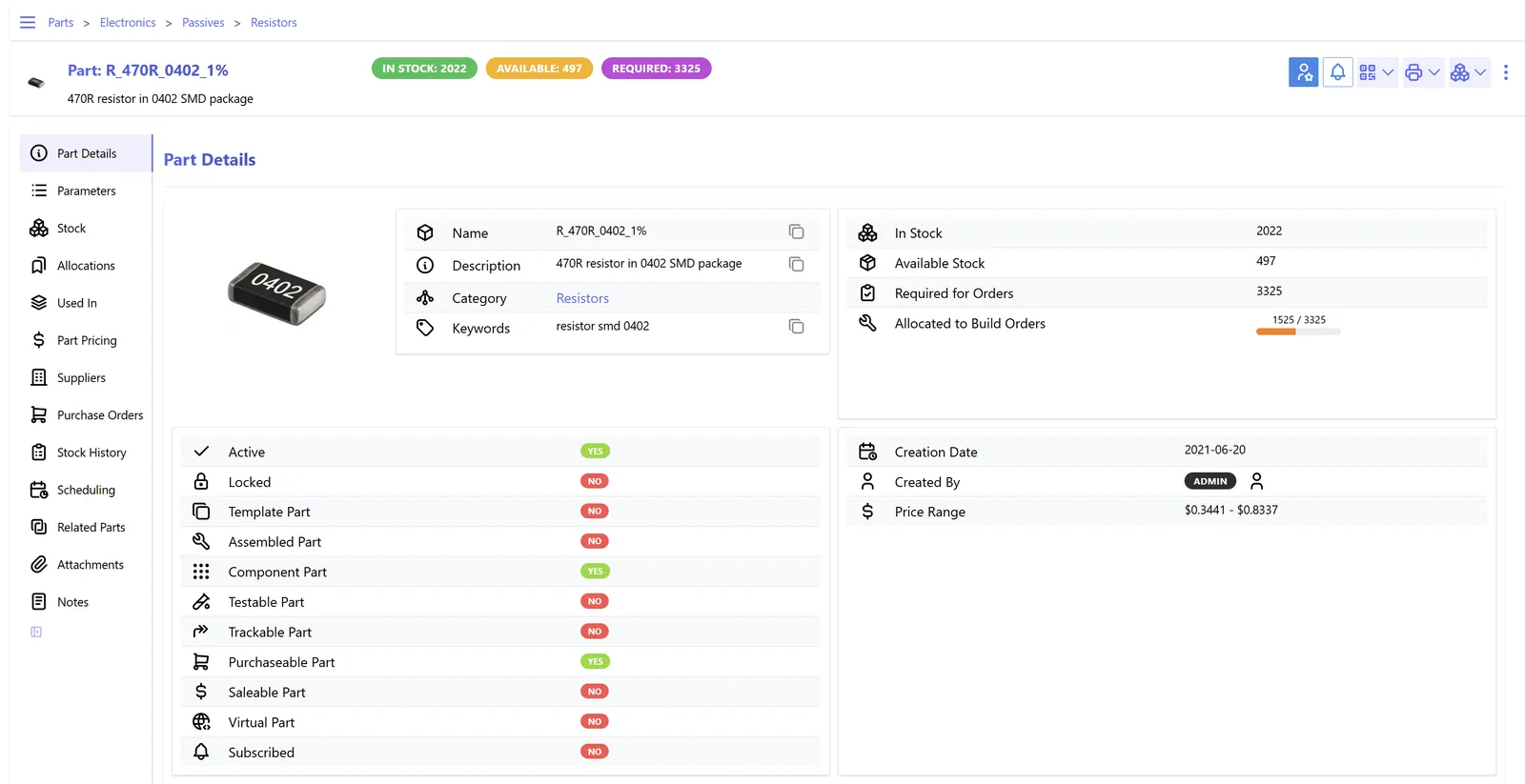
An inventory dashboard that shows fabric by stage, lot and grade helps planners and sales promise from real stock.
The right choice depends on volume, the number of processes and how much you subcontract.
| Company profile | Usual fit | Why | Watch-outs |
|---|---|---|---|
| Knitting or weaving unit using outside dye houses | ERPNext or Odoo | Strong lot tracking and subcontracting flows with roll barcodes | Roll attributes such as GSM and width need custom fields |
| Home textile or embroidery producer with retail sales | Odoo | Manufacturing, POS and ecommerce in one database | Detailed dyeing recipes may need an extension |
| Export-focused mill with several plants | Dynamics 365 Business Central or Supply Chain Management | Multi-company finance, planning and item tracking at scale | Larger budget and implementation effort |
| Trading house with light conversion work | Zoho Inventory with Zoho Books | Batch tracking, purchase and sales with simple job work records | Not suited to machine-level production planning |
We implement Zoho, Odoo, ERPNext, Dynamics 365 and custom ERP, and migrate data from Tally, Sage, QuickBooks or SAP Business One.
Textile businesses often import yarn and export fabric, so customs and tax records need care. Confirm specifics with your tax advisor.
Exports may be zero-rated for VAT where the FTA's evidence requirements are met. The ERP should link each export invoice to its customs declaration and shipping documents for the VAT return filed through EmaraTax.
Mills in free zones may have different VAT treatment for some movements if the zone is a designated zone, and may qualify for 0% corporate tax on qualifying income as a Qualifying Free Zone Person if conditions are met. Separate ledgers by entity and zone help your advisor confirm the position.
UAE e-invoicing uses a Peppol-based 5-corner model with Accredited Service Providers. Businesses with revenue of AED 50 million or more must comply from 1 January 2027 and others from 1 July 2027. Check the latest Ministry of Finance and FTA guidance.
Shift operators, dyers and inspectors are paid through WPS with a Salary Information File. ERP payroll can track overtime and accrue end-of-service gratuity under Federal Decree-Law No. 33 of 2021.
General information, not tax or legal advice. Rules change; confirm current FTA, MOHRE and Ministry of Finance guidance with your advisor.
These describe the direction of improvement; actual results depend on your processes and discipline.
Picking by dye lot and shade keeps deliveries consistent.
Weight and length in and out of every process show where fabric is lost.
Graded stock is valued and sold according to its real quality.
Conversion costs allocated per lot show which fabrics and customers earn money.
Hedged durations for a single mill; adding plants or in-house dyeing extends the plan.
Durations are typical ranges; your plan is agreed after discovery.
Process stages, units, roll labelling, subcontractors and grading rules.
Item and roll attributes, routings, job work flow, inspection and costing setup.
Roll labels, scanners and warehouse locations prepared and tested.
Physical roll count with labels, plus open orders and subcontractor balances.
Cut-over, on-site support for production and warehouse, then ongoing help.
Sister industries, platforms and modules relevant to textile producers.
We configure the system for the rules UAE businesses report against, and test it before go-live.
General information, not tax or legal advice. Confirm current requirements with the FTA, MOHRE or your advisor. See all UAE compliance guides.
On-site workshops in Dubai, Abu Dhabi and Sharjah, and remote or on-site delivery across the Northern Emirates and free zones.
Official sources and references
Facts on this page were checked against these sources in October 2026. Rules change, so confirm current requirements before acting.
Still have a question? Our consultants are happy to help.
Ask an ExpertYes. Each roll can be a lot or serial-tracked unit with its own barcode, length, weight and attributes such as shade and grade. Warehouse staff scan rolls on receipt, transfer and dispatch.
Items carry conversion factors based on width and GSM, or actual length and weight are recorded per roll. Purchases, production and sales can use different units while stock stays consistent.
Yes. Greige is issued on a job work or subcontract order, sits in a subcontractor location while away, and returns as dyed fabric with the process loss recorded. The dye house invoice is matched to that order.
Yes. Textile ERP focuses on yarn, rolls, dye lots and conversion. Garment ERP focuses on styles, size and colour matrices, cutting and sewing. Many groups need both, and the platforms we implement can cover both in one database.
ERPNext and Odoo are commonly a good fit for mid-sized knitting units because of their lot tracking, subcontracting and cost of ownership. We confirm the recommendation after reviewing your process stages and reporting needs.
Related Solutions
Related Industries
Related ERP Platforms
Call +971 55 145 3265 or email contact@uaeerpexperts.com to discuss an ERP for your textile operation.
Dubai, United Arab Emirates