
L
O
A
D
I
N
G


Zoho, Odoo, ERPNext, Dynamics 365 and custom ERP, delivered by one accountable team.

Stop chasing intercompany balances that never agree. We configure intercompany rules, matching and settlement across group entities in Zoho, Odoo, ERPNext and Dynamics 365.
An ERP handles intercompany accounting by recording each transaction between group companies once and creating the matching entry in the partner company automatically, so due-to and due-from balances agree. UAE groups with mainland, free zone and GCC entities set up internal partners, dedicated intercompany accounts, consistent exchange rates, recharge rules and netting, then eliminate balances on consolidation.
UAE business groups often combine a mainland trading LLC, a free zone company, a holding entity and sometimes companies in Saudi Arabia, Oman or India. They sell goods to each other, share staff and offices, lend money and recharge management fees. ERP for intercompany accounting in the UAE records each of those transactions once and creates the matching entry in the other company automatically, so balances agree before anyone starts consolidating.
In most groups we review, each entity books its side separately, often on different dates, in different currencies and sometimes with different amounts. The result is a month-end email chain to agree due to and due from balances, and unexplained differences that are written off at year end.
This page is about recording and reconciling transactions between group companies. Combining entities into group statements is covered in financial consolidation. If your locations are branches of one legal entity, branch accounting is simpler and avoids intercompany entries altogether.

These causes account for most intercompany differences in UAE groups.
The selling company invoices on the 28th, the buying company books the bill in the next month. At every month end the balances differ by timing alone.
One company records in AED, the other in SAR or USD, and each uses a different exchange rate. Small FX differences accumulate into balances nobody can explain.
Management fees, shared salaries and office costs are moved by journal in one company only. The other company never records them, or records them differently.
Intercompany items are posted to normal trade receivables or payables, so they mix with third-party balances and appear in customer statements and aging.
Prices and fees between related parties are set informally. When corporate tax requires an arm's-length basis, there is no clear link from the agreement to the entries.
This is the flow we configure so each intercompany transaction is recorded on both sides from one document.
One shared database: every step updates stock, finance and reports in real time.
Intercompany accounting needs multi-company capability plus clear rules.
Each legal entity as its own company with its own chart, currency, TRN and fiscal settings, in one database.
Each group company set up as a customer and supplier of the others, flagged as related party.
Rules that create the matching purchase order or bill when a sale is confirmed or invoiced.
Dedicated due to and due from accounts per partner, separate from third-party trade balances.
Exchange rates applied consistently on both sides, with revaluation and FX difference tracking.
Management fees, shared staff and shared office costs billed with supporting schedules.
Reports comparing both sides by partner, plus netting entries before cash settlement.
Tagged intercompany balances ready for elimination in the group reporting process.
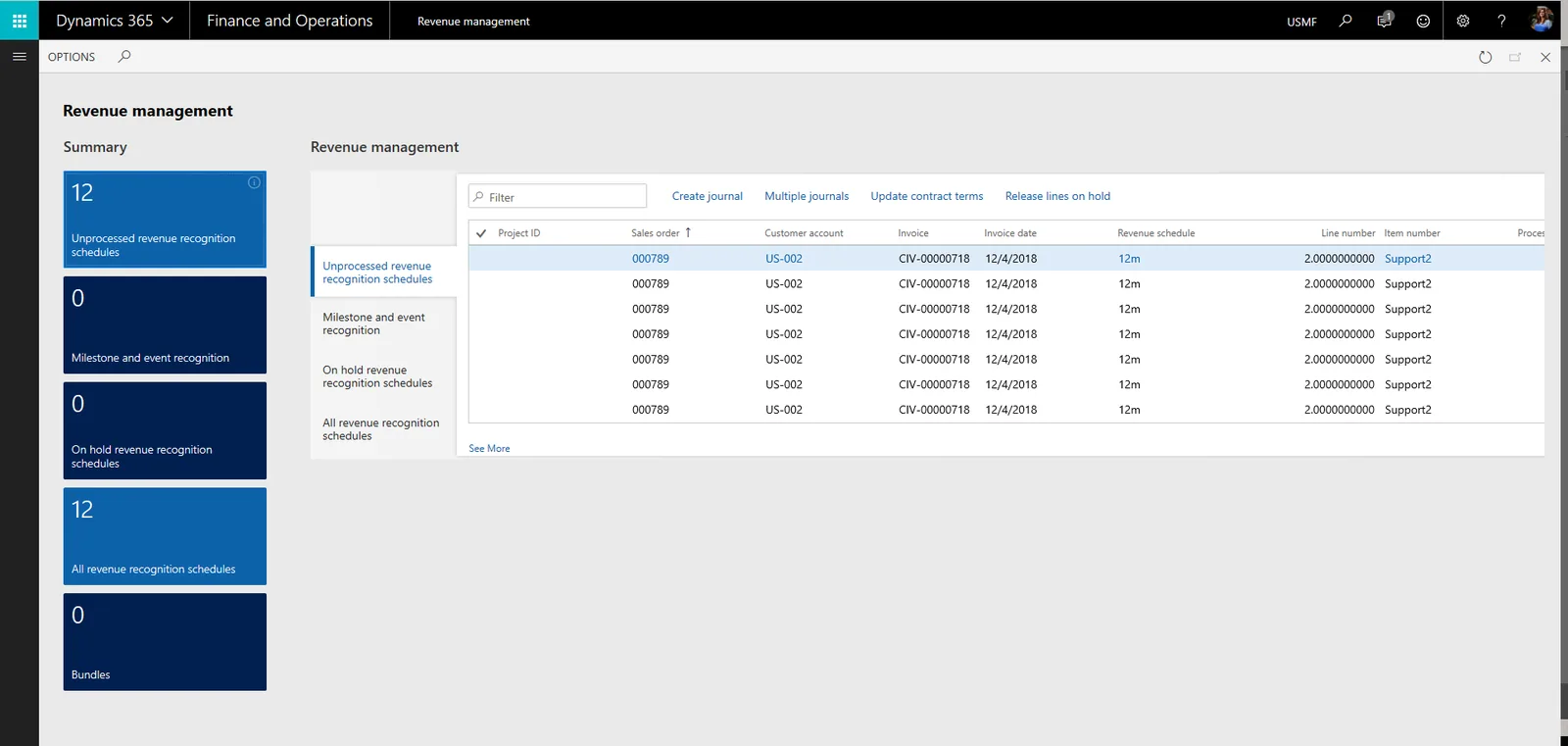
These reports let the group controller sign off intercompany positions before consolidation.
Native intercompany automation differs considerably. Confirm features for your edition and version.
| Zoho | Odoo | ERPNext | Dynamics 365 | |
|---|---|---|---|---|
| Entity structure | Separate Zoho Books organizations per company | Multiple companies in one database | Multiple companies in one site | Companies in Business Central; legal entities in Finance |
| Mirror documents | Usually via Zoho Flow, Deluge functions or custom integration | Inter-company rules can auto-create SO/PO or invoices/bills | Inter-company sales invoice can create the purchase invoice for internal suppliers | Intercompany postings in Business Central; intercompany trade in Finance |
| Shared master data | Masters maintained per organization | Shared or company-specific partners and products | Shared items and parties across companies | Data can be shared or synced across companies |
| Matching report | Custom reports or Zoho Analytics | Partner ledger and reports by company; custom views common | Reports by party and company | Intercompany reconciliation reports and analysis |
| Consolidation | Typically via Zoho Analytics or external tool | Consolidation features available in some versions; confirm | Consolidated financial statement report | Consolidation features in Business Central and Finance |
Groups with many entities should also read multi-company ERP in the UAE, and Odoo users can review Odoo Accounting for its inter-company settings.
Groups that run different systems per entity need integration so the mirror entry is still automatic.
Related-party transactions draw attention under corporate tax and VAT. Confirm treatments with your tax advisor.
Under the corporate tax law, transactions with related parties and connected persons should follow the arm's-length principle. The ERP should link each intercompany price or fee to the agreement it comes from. See ERP for corporate tax compliance.
A master file and local file are required where revenue reaches AED 200 million or group revenue reaches AED 3.15 billion. Smaller groups still need the data to complete related-party disclosures.
Supplies between UAE companies are normally subject to VAT unless they are members of the same VAT group. The ERP should apply tax codes per partner and support the VAT group status.
Transactions between a qualifying free zone person and mainland group companies can affect qualifying income. Tag them clearly so the analysis is possible.
Intercompany invoices between UAE entities are B2B invoices and are expected to fall under e-invoicing. Check the latest MoF/FTA guidance.
General information, not tax or legal advice. Rules change; confirm current FTA, MOHRE and Ministry of Finance guidance with your advisor.
The gains are mostly time saved at close and confidence in group numbers.
Both sides come from one document, so timing and amount differences largely disappear.
Eliminations use clean, tagged intercompany balances.
Related-party transactions are identifiable and linked to agreements.
Intercompany balances no longer pollute third-party aging and statements.
Indicative timings for a group of three to six entities; more entities or different systems extend the plan.
Durations are typical ranges; your plan is agreed after discovery.
Map entities, currencies, VAT status, intercompany flows and agreements.
Define partner setup, accounts, mirror rules, recharge method and matching tolerances.
Configure companies and rules, then test sales, recharges, loans and FX across entity pairs.
Agree opening intercompany balances, go live and run the first matched close.
We configure the system for the rules UAE businesses report against, and test it before go-live.
General information, not tax or legal advice. Confirm current requirements with the FTA, MOHRE or your advisor. See all UAE compliance guides.
On-site workshops in Dubai, Abu Dhabi and Sharjah, and remote or on-site delivery across the Northern Emirates and free zones.
Official sources and references
Facts on this page were checked against these sources in October 2026. Rules change, so confirm current requirements before acting.
Still have a question? Our consultants are happy to help.
Ask an ExpertYes. Odoo, ERPNext and Dynamics 365 support multiple companies in one system, each with its own books, TRN and reports. Zoho Books uses separate organizations, linked through automation.
Record in the transaction currency on both sides using the same rate source, and track revaluation differences separately so they do not appear as mismatches.
Netting offsets balances that group companies owe each other so only the net amount is paid. The ERP posts the netting entry in each company before the cash settlement.
Between UAE companies that are not in the same VAT group, normally yes, as for any taxable supply. Members of a VAT group generally disregard supplies between them. Confirm with your tax advisor.
Master and local files apply above the revenue thresholds. All groups should keep agreements and pricing support for related-party transactions.
It is the step before. Clean intercompany balances make elimination straightforward when you consolidate group financials.
Related Solutions
Related Industries
Related ERP Platforms
We map your entities and intercompany flows and show how mirrored entries and matching would work.
Dubai, United Arab Emirates










