
L
O
A
D
I
N
G


Zoho, Odoo, ERPNext, Dynamics 365 and custom ERP, delivered by one accountable team.

Payroll is often the largest cost in a UAE business, yet many companies post it as one manual journal. Payroll accounting integration posts it correctly, every month.
Payroll accounting integration maps each salary component, deduction and accrual to a general ledger account, so a locked payroll run posts automatically by department, cost center and project. Monthly accruals for end-of-service gratuity, leave salary and air tickets are booked, and the WPS payment clears salary payable. Finance then closes the month with payroll already reconciled.
Payroll accounting integration is how a locked payroll run becomes entries in the general ledger: salary expense by department and project, deductions and recoveries, the salary payable cleared by the WPS payment, and the monthly accruals for end-of-service gratuity, leave salary and air tickets. When the link is automatic and mapped correctly, finance closes the month with payroll already in the books and reconciled.
In many UAE companies the link is manual. The payroll team sends a summary spreadsheet, the accountant posts one journal to a single salaries account, the WPS payment is matched by hand, and gratuity is topped up once a year when the auditor asks. Management accounts then show labor cost by company, not by project, branch or cost center, and margins by job are guesswork.
This page focuses on the accounting side: the journal design, accruals and reconciliation. How payroll receives its inputs from HR, attendance and banks is covered under payroll integration, and the general approach to connecting finance with other systems under ERP accounting integration.

These issues appear in month-end close reviews and audits across trading, construction and services companies.
The entire payroll is posted to a single salaries account. Management cannot see labor cost by branch, project or function without rebuilding it from payroll reports.
The end-of-service provision is trued up at year end, producing a large one-off charge. Monthly accounts understate cost and the liability is never reviewed during the year.
WPS payments, rejected transfers, cash payments and final settlements are posted to different accounts. A balance builds up in salary payable that nobody can explain.
Advances are paid from accounts payable and recovered through payroll, but the employee receivable is not reduced in the ledger. HR and finance show different outstanding balances.
Construction and service companies bill by project but post payroll by company. Job costing shows materials and subcontracts but not own labor, which distorts margins.
The integration runs in this order once payroll is approved.
One shared database: every step updates stock, finance and reports in real time.
An illustrative mapping. Account names and the level of detail depend on your chart of accounts and reporting needs.
| Payroll item | Debit | Credit | Dimension |
|---|---|---|---|
| Basic salary and allowances | Salaries expense (by type) | Salary payable | Department, cost center, project |
| Overtime | Overtime expense or project labor cost | Salary payable | Project or site |
| Advance or loan recovery | Salary payable | Employee advances receivable | Employee |
| Other deductions (approved) | Salary payable | Relevant recovery or income account | Employee |
| Gratuity accrual | End-of-service expense | Provision for end-of-service benefits | Department, entity |
| Leave salary accrual | Leave salary expense | Leave salary provision | Department |
| Air ticket accrual | Ticket allowance expense | Ticket provision | Department |
| WPS payment | Salary payable | Bank | Entity |
Each removes a manual step between payroll and the books.
Each salary component, deduction and accrual carries its GL account, so the journal is generated rather than typed.
Department, branch and project tags on employees or timesheets split cost automatically.
Timesheet hours at a cost rate posted to projects, so job margins include own labor.
Monthly gratuity, leave salary and ticket provisions calculated per employee and posted in total, with the detail retained.
WPS payments and returns matched to the bank statement; see ERP for bank reconciliation.
Staff shared across group entities recharged by journal with matching entries in each company.
Gratuity paid released against the provision, with any difference posted to expense.
Salary payable, advances and provisions reconciled to payroll registers each month.
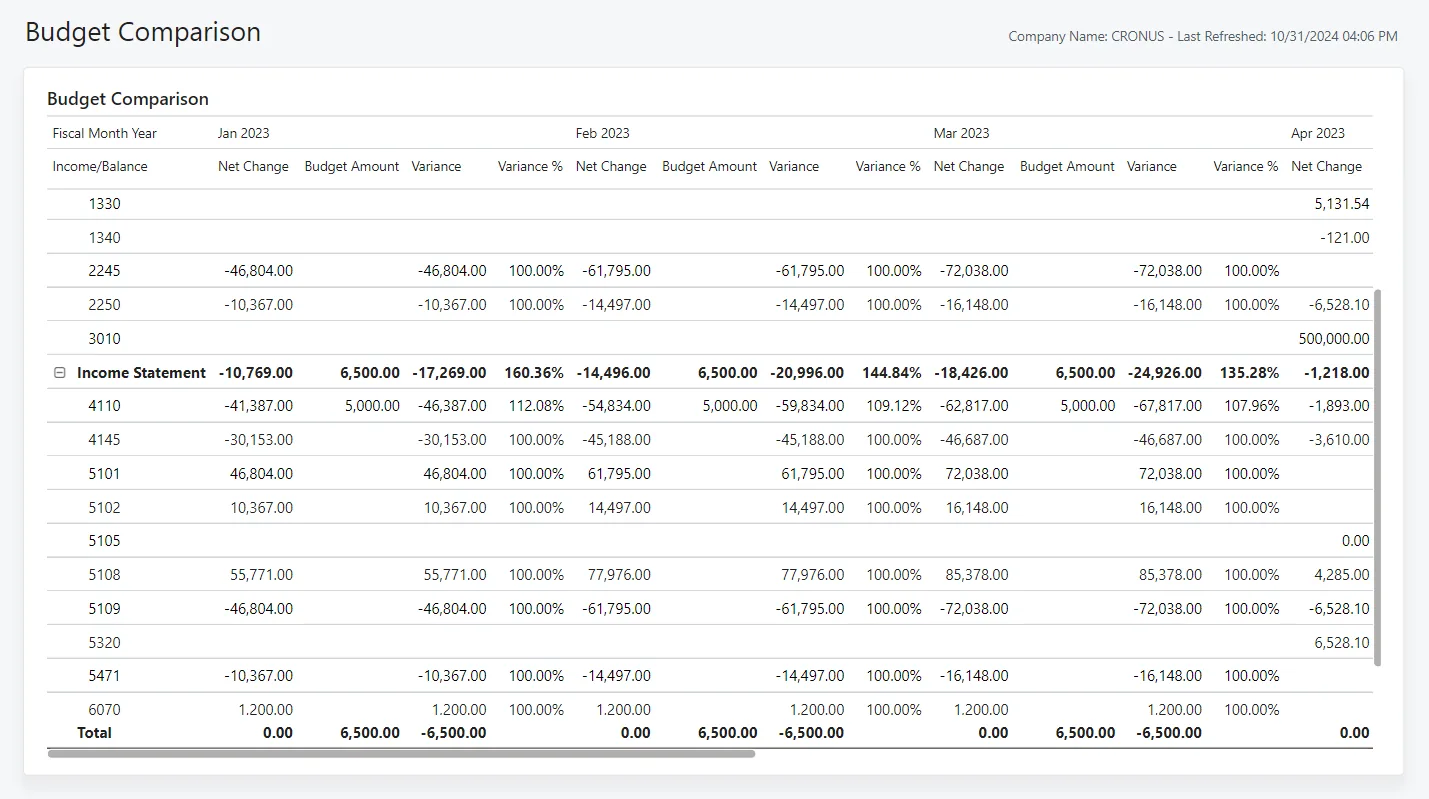
These are the reports finance uses to review payroll in the month-end close.
Where payroll and accounting share a database the link is native; otherwise it is an integration. Confirm details for your edition.
| Zoho | Odoo | ERPNext | Dynamics 365 | |
|---|---|---|---|---|
| Link type | Zoho Payroll integrates with Zoho Books | Payroll and Accounting in one database | Payroll and Accounts in one database | Partner payroll solutions post to Finance or Business Central |
| Account mapping | Pay components mapped to Books accounts | Salary rules carry debit and credit accounts | Salary components linked to accounts per company | Posting profiles in the payroll add-on |
| Cost center or analytic split | Depends on reporting tags in Books; check options | Analytic accounts and distribution on employees or contracts | Cost center on employee, payroll entry or component | Financial dimensions |
| Gratuity accrual | Supported for UAE in Zoho Payroll; confirm journal behavior | Configurable through salary rules or provision entries | Configurable; often a custom accrual script | Provided by the payroll add-on or periodic journal |
| Project labor cost | Through timesheets in Zoho Projects or Books | Timesheet cost on analytic accounts | Timesheet costing to projects | Project accounting in Dynamics 365 |
If you are on Zoho, the Zoho People and Payroll integration page covers the HR side of the same flow.
The accounting integration touches more than the payroll module.
Payroll accounting touches tax and reporting rules. Confirm treatment with your tax advisor and auditor.
Salaries paid to employees are generally outside the scope of UAE VAT, but payroll-related costs such as recruitment fees, staff accommodation or medical insurance may involve VAT and input recovery rules. Map them carefully; VAT accounting software covers the tax codes.
Salary and benefit costs feed taxable income under Federal Decree-Law No. 47 of 2022. How accrued provisions such as gratuity are treated should be confirmed with your tax advisor, and the ERP should keep accrual and payment detail separately. See corporate tax in ERP.
Gratuity follows the Labour Law formula; under IFRS it is usually accounted for as a defined benefit obligation. Many SMEs accrue on the statutory formula, while auditors may expect an actuarial valuation for larger groups.
Payroll registers, journals and bank evidence are part of the accounting records and are kept at least five years under UAE tax rules.
General information, not tax or legal advice. Rules change; confirm current FTA, MOHRE and Ministry of Finance guidance with your advisor.
Benefits we usually see once payroll posts to the ledger by rule.
Payroll is in the books on the day it is locked, with accruals included.
Job margins include own labor, which matters for contractors and service companies.
Salary payable and advances reconcile monthly, with no unexplained balances at audit.
The provision grows month by month and is visible in management accounts and the payroll dashboard.
Typical durations for one or a few entities; groups with many companies take longer.
Durations are typical ranges; your plan is agreed after discovery.
Agree payroll accounts, cost centers and project tags with finance.
Map every component, define accrual calculations and set up opening provision balances.
Post a past payroll month in a test environment and compare with the books.
Run the first closes with support and hand over the reconciliation checklist.
We configure the system for the rules UAE businesses report against, and test it before go-live.
General information, not tax or legal advice. Confirm current requirements with the FTA, MOHRE or your advisor. See all UAE compliance guides.
On-site workshops in Dubai, Abu Dhabi and Sharjah, and remote or on-site delivery across the Northern Emirates and free zones.
Official sources and references
Facts on this page were checked against these sources in October 2026. Rules change, so confirm current requirements before acting.
Still have a question? Our consultants are happy to help.
Ask an ExpertUsually in summary by account and dimension, with the employee detail kept in payroll. Posting per employee bloats the ledger; advances are the exception and are often tracked by employee.
We calculate the accrued gratuity for each employee at the cut-over date, agree the total with the last audited balance, and post the difference as a one-time adjustment approved by finance.
Yes, through an export file or API. For example a standalone payroll can post to Zoho Books, Odoo or ERPNext. The mapping work is the same; only the transport differs.
Returned amounts post back to salary payable or a suspense account and are cleared when paid again. The reconciliation report flags them so they do not age silently.
Yes. When site timesheets carry the project, labor cost posts to each job, which supports cost-to-complete and margin reporting.
It is one feed into the ledger alongside sales, purchasing and inventory. Our accounting ERP software page covers the broader finance design.
Related Solutions
Related Industries
Related ERP Platforms
Share your chart of accounts and a sample payroll register, and we will design the journal mapping and accruals.
Dubai, United Arab Emirates