L
O
A
D
I
N
G


Zoho, Odoo, ERPNext, Dynamics 365 and custom ERP, delivered by one accountable team.

Overstock ties up cash and stockouts lose orders. We set up inventory management in your ERP so quantities, values and reorder signals are right every day, not only after the annual count.
UAE trading companies should use inventory management software that shows available, reserved and incoming quantities per item and location, sets reorder rules from lead times, tracks batch, serial and expiry where needed and posts FIFO or average-cost valuation straight to the ledger. Zoho Inventory suits simple stock tracking, while an ERP module avoids syncing once purchasing and accounting share stock data.
Inventory management software UAE businesses rely on has one job above all others: making sure the number in the system matches the number on the shelf, and that both carry the right value. For a trading company in Deira or a distributor in Dubai Investment Park, stock is often the biggest asset on the balance sheet, and errors in it flow straight into gross margin.
The usual story is familiar. Sales staff promise goods that are not there because the spreadsheet was last updated on Thursday. Purchasing reorders an item that is already sitting in a second location. Expired food or pharmaceutical batches are found during a count rather than flagged weeks earlier. And at year end, the auditor questions how stock was valued.
This page focuses on stock control: quantities, locations, reorder planning, tracking and valuation. If your main concern is how goods physically move inside a large warehouse, read our page on warehouse management software instead.

The products we configure, integrate and support on projects like this one.

 Odoo Inventory
 ERPNext
Product names and logos are trademarks of their respective owners and are shown only to identify the software we implement.
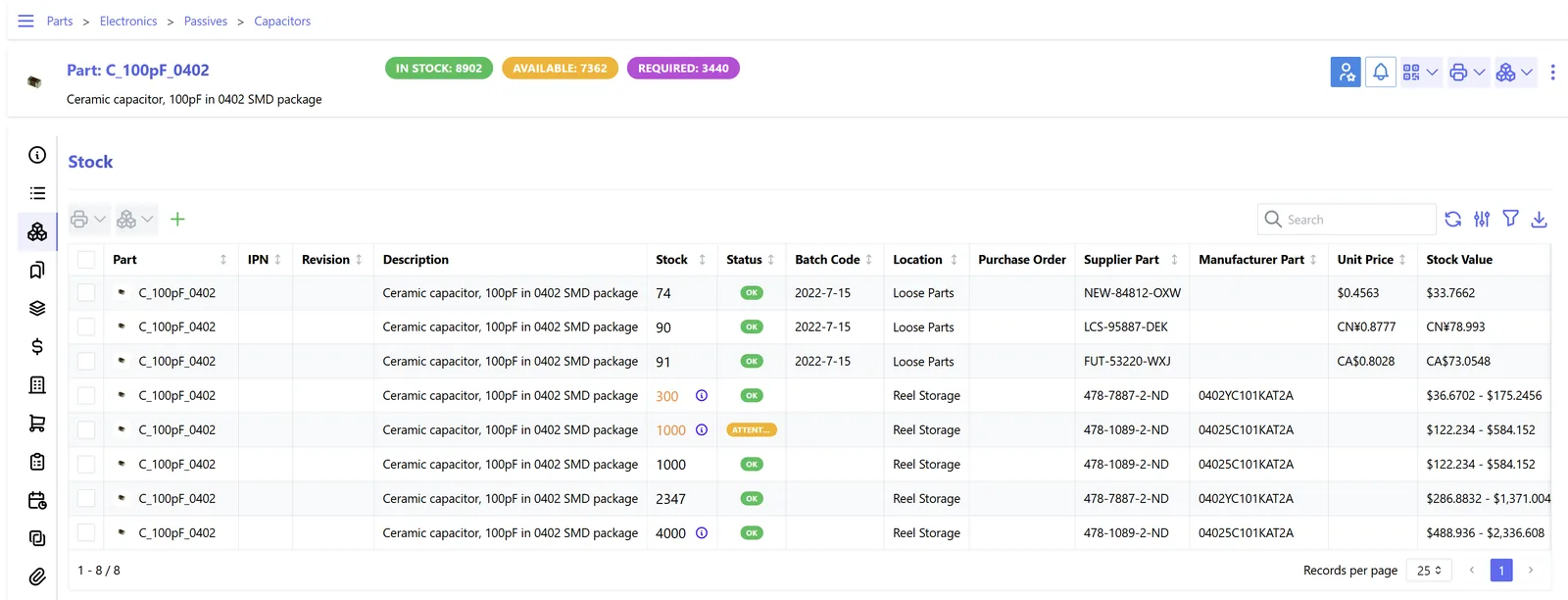
A useful inventory dashboard answers three questions quickly: what is running low, what is not moving, and what is about to expire.
Each step below updates quantities and, where relevant, accounting entries. Because sales and purchasing share the same item records, nobody has to re-key stock movements.
One shared database: every step updates stock, finance and reports in real time.
These six capabilities are where we see the biggest gains for UAE trading, distribution and retail companies.
Separate stock for each warehouse, showroom, van or consignment site, with transfers that keep quantities and values aligned.
Minimum and maximum levels or reorder rules that create draft purchase orders when stock falls below the threshold.
Lot numbers and expiry dates for food, cosmetics and pharma, serial numbers for electronics and equipment, with first-expiry-first-out picking.
FIFO or weighted average costing, with automatic stock journal entries so the balance sheet value matches the stock report.
Buy in cartons, sell in pieces; build kits or bundles that consume component stock when sold.
Count a few locations or categories each week instead of closing for a full annual stock take, with adjustments approved and logged.
All four handle core stock control well. The differences show up in costing options, warehouse depth and how inventory links to the rest of the business.
| Zoho Inventory | Odoo Inventory | ERPNext Stock | Dynamics 365 Business Central | |
|---|---|---|---|---|
| Best fit | Small to mid-sized traders and online sellers | Traders and manufacturers wanting stock tied to sales, purchase and MRP | Distributors wanting open-source flexibility | Mid-sized distributors with complex costing |
| Multi-location | Multiple warehouses | Multiple warehouses and sub-locations | Warehouse tree with groups | Locations with optional bins |
| Batch and serial | Batch and serial tracking | Lots and serial numbers with expiry | Batch and serial numbers with expiry | Item tracking for lots and serials |
| Costing | FIFO-based | Standard, average or FIFO per category | FIFO or moving average | FIFO, average, standard and specific |
| Reordering | Reorder levels and alerts | Reordering rules and replenishment report | Reorder levels creating material requests | Planning parameters and requisition worksheets |
| Watch-out | Manufacturing needs other tools | Advanced features depend on edition | Requires careful configuration | Higher licensing and setup effort |
Capabilities depend on edition and version; we confirm specifics during discovery.
Stock figures are only reliable when every channel that sells or receives goods talks to the same item records.
Stock records feed VAT, customs and corporate tax figures. Confirm specific treatments with your tax advisor.
Closing stock directly affects accounting profit. Consistent valuation and documented write-downs help support the taxable income figure under the 9% corporate tax regime.
Goods moving between certain free zones designated for VAT purposes and the mainland can have different VAT outcomes. The ERP should record the location and movement type so advisors can assess treatment.
Stock given away as samples or used internally may count as a deemed supply for VAT in some cases. A separate adjustment reason in the ERP makes these easy to review.
Stock movements, counts and adjustments form part of the business records the FTA can ask to see, so keep them in the system with an audit trail rather than in loose files.
General information, not tax or legal advice. Rules change; confirm current FTA, MOHRE and Ministry of Finance guidance with your advisor.
Compare platforms or look at stock control for your industry.
We configure the system for the rules UAE businesses report against, and test it before go-live.
General information, not tax or legal advice. Confirm current requirements with the FTA, MOHRE or your advisor. See all UAE compliance guides.
On-site workshops in Dubai, Abu Dhabi and Sharjah, and remote or on-site delivery across the Northern Emirates and free zones.
Official sources and references
Facts on this page were checked against these sources in October 2026. Rules change, so confirm current requirements before acting.
Still have a question? Our consultants are happy to help.
Ask an ExpertIf you only need stock tracking and simple orders, a focused app like Zoho Inventory can be enough. Once purchasing, accounting and perhaps production need to share stock data, an ERP where inventory is one module avoids constant syncing and mismatched figures.
Most traders use FIFO or weighted average, and IFRS allows both for interchangeable goods. The right choice depends on your products and reporting, so agree it with your auditor before go-live, because changing method later is disruptive.
Yes. All four platforms can record lot numbers with expiry dates and suggest picking the earliest-expiring stock first. We also set alerts so near-expiry batches can be discounted or returned before they become a loss.
We usually recommend a full count shortly before go-live, imported with costs agreed with finance. After that, cycle counts keep accuracy up without shutting the warehouse for days.
Yes. Shopify, WooCommerce and several marketplaces can sync stock levels and orders with the ERP, so a sale online reserves stock immediately and the website does not sell what you do not have.
A single-warehouse rollout often takes four to eight weeks including item cleanup, opening stock and training. Several locations, batch tracking or ecommerce integration add time, and we plan those in phases.
Related Solutions
Related Industries
Related ERP Platforms
Tell us how many items and locations you manage and we will propose a practical inventory setup.
Dubai, United Arab Emirates