L
O
A
D
I
N
G


Zoho, Odoo, ERPNext, Dynamics 365 and custom ERP, delivered by one accountable team.

An export sale is not finished when the invoice is printed. It is finished when the goods have left the country, the evidence is filed and the customer has paid. Export management software tracks all three.
Export management software handles export and re-export orders from quotation to payment: Incoterm quotes with freight and insurance lines, orders in foreign currency with LC or CAD terms, packing lists from the warehouse pick, commercial invoices and origin data from one order, and exit evidence filed against each zero-rated invoice. UAE traders also keep free zone re-export stock separate from local stock.
Export management software in the UAE supports companies that sell goods to customers outside the country, including the large re-export trade that runs through Jebel Ali, Sharjah and the free zones to Africa, the GCC, Iran-facing markets, Central Asia and South Asia. The sale carries extra terms the local business does not: Incoterms, payment by LC or cash against documents, export packing, shipping documents in the buyer's required format, and proof that the goods actually left the UAE.
In many trading houses the export desk runs on Word templates and Excel. The sales coordinator retypes the proforma into a commercial invoice, the packing list is built by hand from the warehouse pick, and the certificate of origin application is prepared separately. When the bank rejects LC documents for a mismatch in description or weight, payment is delayed by weeks. When the auditor asks for export evidence behind zero-rated sales, finance searches emails for bills of lading.
This page covers the outbound side of trade. Inbound shipments are covered in import management software, and the general order cycle for local customers is covered in sales order management. If your business both imports and re-exports, see ERP for import and export companies for the full picture.
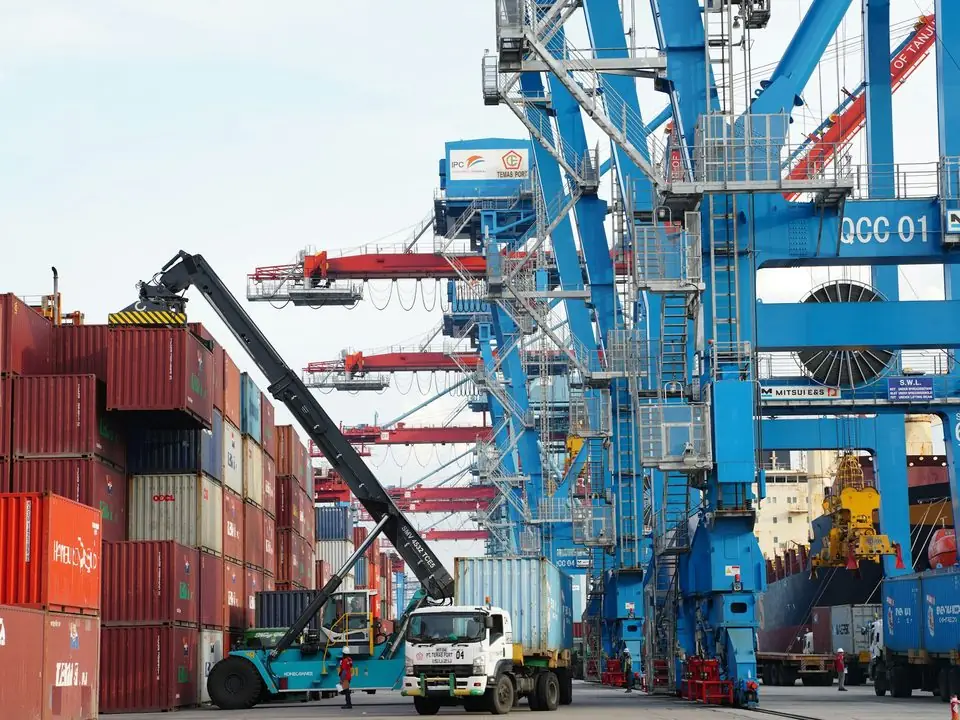
These issues cost exporters money through delayed payments, VAT exposure and lost repeat orders.
Descriptions, quantities, weights and HS codes differ between the proforma, invoice, packing list and BL because each was typed separately. Under an LC, a single mismatch can mean a discrepancy fee and delayed payment.
Exports of goods are generally zero-rated only when official and commercial evidence of export is kept. Exit certificates and BLs are scattered, so zero-rating is hard to support in an FTA audit.
A CIF quote includes freight and insurance the company pays, but the quote was priced like an ex-works sale. The margin disappears when the forwarder's invoice arrives.
Orders are priced in USD or EUR, paid weeks later, and booked at whatever rate finance uses that day. Exchange differences and unpaid balances are discovered at month-end.
Goods held in a free zone or under customs suspension are stored and recorded with local stock. The wrong goods go to the wrong customer and duty or VAT treatment is unclear.
One export order drives the documents, the shipment and the receivable, so nothing is retyped.
One shared database: every step updates stock, finance and reports in real time.
These modules share the export order so sales, logistics, documentation and finance see the same data.
Quotes with Incoterm, port of loading and discharge, validity and freight and insurance cost lines.
Orders in customer currency with payment instrument, LC number and latest shipment date.
Pallets, cartons, net and gross weight and volume captured at packing to produce the packing list.
Commercial invoice, packing list and origin data printed in the formats buyers and banks require.
Invoices in USD or EUR, payments at the actual rate and exchange gains or losses posted automatically.
Separate warehouses for re-export stock so it is not sold or counted as local stock.
Freight, insurance, documentation and inspection costs charged to the order to show true margin.
Exit certificates, BLs and airway bills attached to each invoice that was zero-rated.
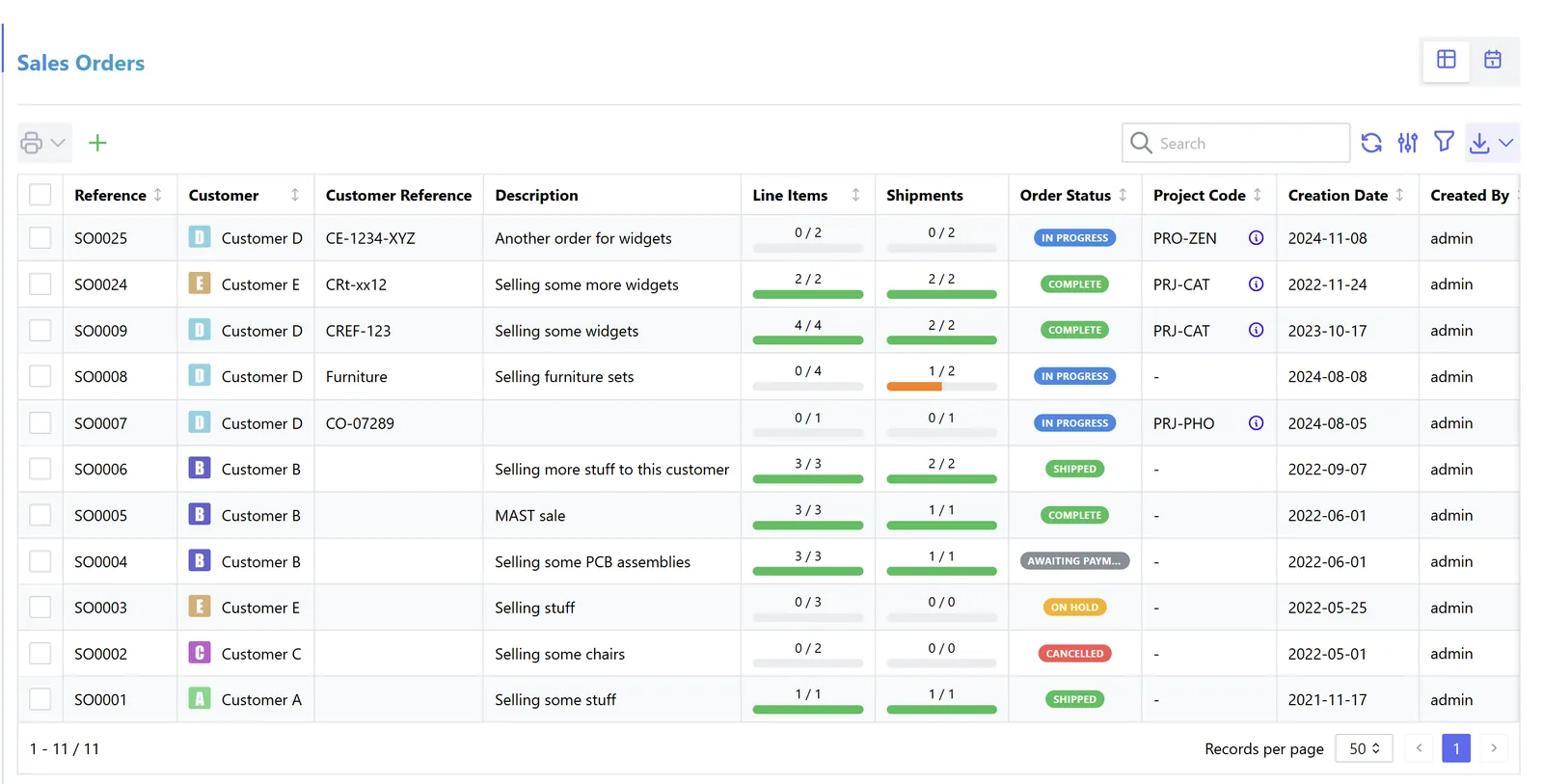
Export managers and finance use these views to keep orders, documents and receivables moving.
None of the four is an export documentation system out of the box. Each handles the order and accounting well, and the documents are configured. Check details for your edition.
| Zoho | Odoo | ERPNext | Dynamics 365 | |
|---|---|---|---|---|
| Incoterms on orders | Custom fields on sales orders and invoices | Incoterm field on sales orders and invoices | Incoterm field in recent versions | Shipment method and delivery terms on sales orders |
| Packing list | Packages and shipments in Zoho Inventory | Packages in Inventory with weight; report customization usually needed | Packing Slip and Shipment doctypes | Packing slips and shipment documents; layouts customized |
| Export document formats | Custom templates | QWeb report customization | Print formats with Jinja | Report layouts in Word or RDLC |
| Foreign currency receivables | Multi-currency with exchange gain or loss | Multi-currency with automatic exchange difference entries | Multi-currency with exchange rate revaluation | Multi-currency with adjust exchange rates |
| Zero-rated VAT | Zero-rate tax on export invoices | UAE localization with zero-rated export taxes | Zero-rated tax template | VAT posting setup for exports |
| Evidence attachments | Attachments on invoices | Attachments and Documents app | Attachments on Sales Invoice | Attachments and SharePoint links |
Bank-specific LC document checking is usually done by people, with the ERP providing consistent data.
These are connected through APIs, file exchange or middleware depending on the provider.
These rules shape how export sales are configured. Confirm treatment for your transactions with your tax advisor.
Exports of goods outside the GCC implementing states can be zero-rated when the goods leave within the required period, generally 90 days, and official and commercial evidence is kept. The ERP should hold that evidence against each invoice. See UAE VAT in ERP for return mapping.
Goods moving between designated zones, mainland and abroad can have different VAT and customs treatment. Separate warehouses and tax rules help keep these flows clear. Our free zone ERP page covers this in more depth.
Exchange gains and losses on foreign currency receivables affect accounting profit and therefore taxable income. Post them consistently and confirm treatment with your advisor.
Keep export invoices, BLs, exit certificates and payment records for at least five years. Storing them with the invoice in the ERP makes audits much faster.
General information, not tax or legal advice. Rules change; confirm current FTA, MOHRE and Ministry of Finance guidance with your advisor.
These benefits come from entering data once and linking evidence to transactions.
Invoice, packing list and origin data come from the same order, so descriptions, weights and quantities agree.
Every zero-rated invoice has its exit evidence attached, ready for an FTA audit.
Freight, insurance and document costs are charged to the order, so margins reflect the Incoterm sold.
Clean bank documents and visible foreign receivables reduce payment delays.
An export module on an existing ERP often takes 6-10 weeks; a full trading ERP with exports takes longer.
Durations are typical ranges; your plan is agreed after discovery.
Review export markets, Incoterms used, payment instruments, document formats and free zone flows.
Agree order fields, document templates, warehouses, VAT treatment and evidence rules.
Configure orders, packing, print formats, currency handling and the export dashboard.
Run real past shipments through the system and train sales, logistics and finance.
Process live exports with support and adjust document layouts as buyers and banks respond.
We configure the system for the rules UAE businesses report against, and test it before go-live.
General information, not tax or legal advice. Confirm current requirements with the FTA, MOHRE or your advisor. See all UAE compliance guides.
On-site workshops in Dubai, Abu Dhabi and Sharjah, and remote or on-site delivery across the Northern Emirates and free zones.
Official sources and references
Facts on this page were checked against these sources in October 2026. Rules change, so confirm current requirements before acting.
Still have a question? Our consultants are happy to help.
Ask an ExpertThe ERP can produce invoices and packing lists with the exact descriptions, quantities and terms entered from the LC, which removes most retyping errors. Checking the full document set against the LC conditions is still a human task, usually supported by a checklist on the order.
Attach the exit certificate or customs exit declaration and the BL or airway bill to the export invoice, together with commercial evidence such as the contract and payment. The ERP can flag zero-rated invoices without evidence before the VAT period closes.
Usually only in warehouse and tax setup. Re-export goods often come from a free zone or bonded warehouse and may involve different customs procedures, so they are kept in separate locations with their own rules.
Add estimated freight and insurance as cost lines on the quote, drawn from the forwarder's rate sheet, and compare them later with actual charges booked against the order. Customer-specific pricing can come from customer price lists.
The UAE e-invoicing model on PINT AE through Accredited Service Providers is being phased in from 2027. How export transactions are covered should be checked against the latest Ministry of Finance and FTA guidance, and your ERP should be ready to send structured invoices either way.
It depends on volume, entities and document complexity. Odoo and ERPNext suit many SMEs, Zoho suits lighter operations and Dynamics 365 suits larger multi-entity exporters. We implement all four and recommend by fit.
Related Solutions
Related Industries
Related ERP Platforms
Share a recent export file with us and we will show how the order, documents and evidence would flow in an ERP.
Dubai, United Arab Emirates