
L
O
A
D
I
N
G


Zoho, Odoo, ERPNext, Dynamics 365 and custom ERP, delivered by one accountable team.

The supplier price is only part of what you pay. Freight, insurance, customs duty, clearing, port and transport charges can change the cost of an item enough to turn a profitable line into a loss.
UAE importers calculate landed cost by adding freight, insurance, customs duty, clearing fees, port charges and inland transport to the supplier price, then allocating each charge across received items by value, quantity, weight or volume. The ERP posts the result to stock value, so cost of goods sold, margins and price lists reflect real cost. Recoverable import VAT is not added to inventory.
Landed cost software in the UAE adds every cost of bringing goods to your warehouse to the value of those goods: supplier price, international freight, insurance, customs duty, clearing agent fees, delivery order and port handling charges, inspection, and inland transport from Jebel Ali, Khalifa Port or Sharjah to your store. The result is a unit cost that reflects what the item actually cost you, which then drives stock valuation, cost of goods sold, margin reports and selling prices.
In practice, many UAE traders value stock at the supplier invoice price and book freight, duty and clearing as expenses. Gross margin looks healthy item by item, while the profit and loss account tells a different story. Others add a flat percentage, say an uplift on every item, which overcosts light high-value goods and undercosts heavy low-value goods. Building materials, foodstuff and furniture importers feel this most, because freight and handling are a large share of their cost.
This page is about the costing method and the accounting. The shipment process itself is covered in import management software. If you are budgeting for a new system rather than for imports, see ERP cost in the UAE instead; that page is about the cost of the software, not the cost of your goods.

These are the patterns behind margin surprises at year-end.
The clearing agent's invoice and the shipping line's DO charges often arrive weeks after receipt. By then part of the stock is sold at a cost that ignored them, and the adjustment lands in a later month.
A single percentage added to all items hides the real differences. A container of tiles and a carton of electronics do not carry the same freight per dirham of value.
Recoverable import VAT is sometimes added to item cost, inflating stock value, while duty is sometimes expensed, deflating it. Both distort margins and the VAT return.
A forwarder bills several containers on one invoice, or one container carries goods from three POs. Without an allocation tool, finance splits the charges in Excel or not at all.
Sales managers set selling prices from the supplier price list plus a margin, unaware that duty and freight on some lines are much higher than average.
Costs are estimated when goods arrive and trued up when the last invoice is posted, so stock value is never far from reality.
One shared database: every step updates stock, finance and reports in real time.
Landed cost touches purchasing, inventory valuation and accounts payable, so all three must be set up together.
Stock valued in real time using average cost or FIFO, so landed costs change item value immediately.
A document that links charge invoices to one or more receipts and allocates them to items.
Freight, insurance, duty, clearing, port and transport defined as separate cost types with default allocation rules.
Weight, volume and HS code on each item so allocation by weight or volume and duty estimates work.
Forwarder, shipping line and clearing agent invoices booked against the shipment, not to expense.
Landed costs tagged by shipment, branch or business line for reporting.
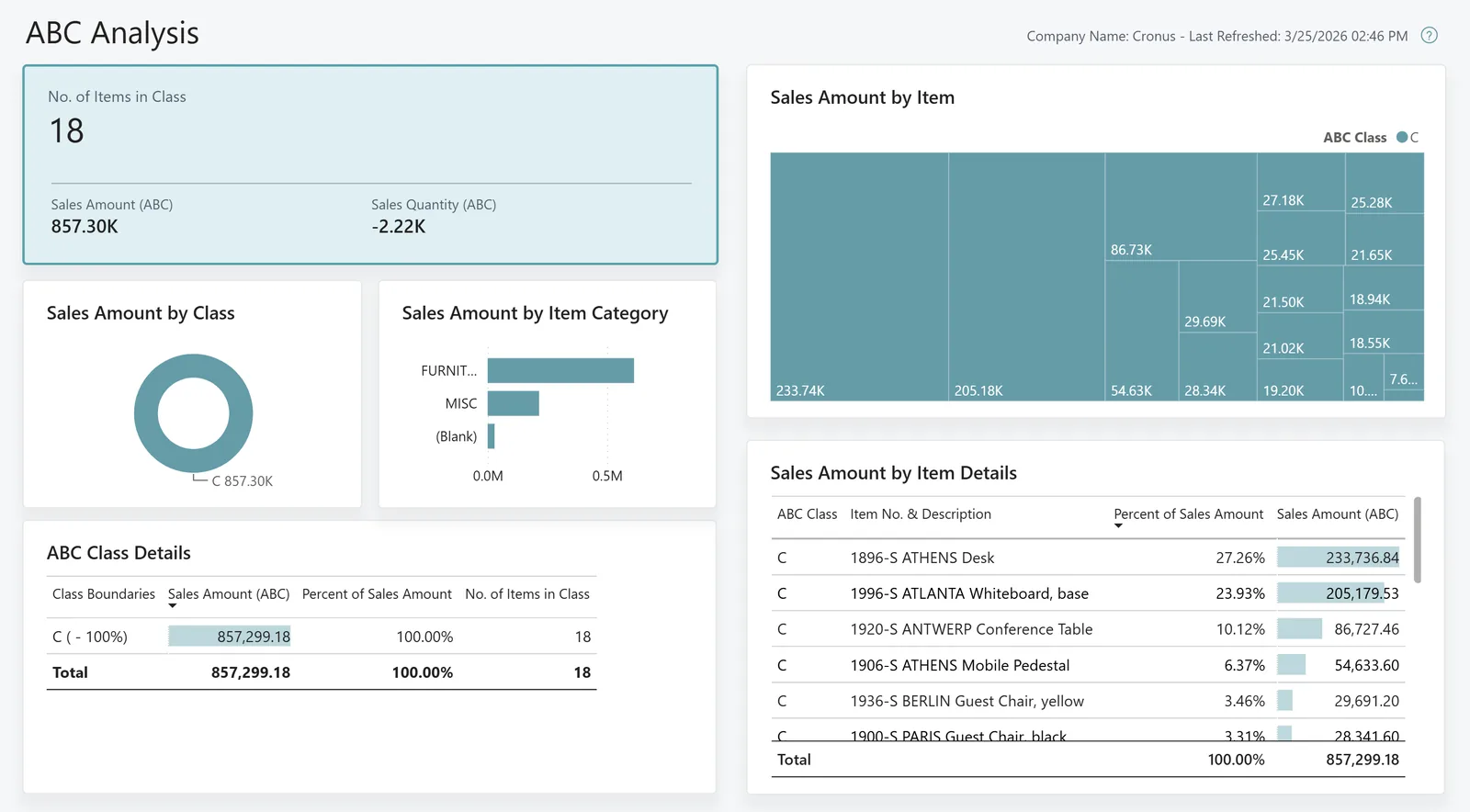
Finance and category managers use these reports to see where import costs are eating margin.
All four platforms support landed costs. The mechanics differ, so test with a real shipment before you choose. Confirm details for your edition.
| Zoho | Odoo | ERPNext | Dynamics 365 | |
|---|---|---|---|---|
| How charges are added | Landed cost added on purchase bills for inventory items in Zoho Inventory and Books | Landed Costs in Inventory, linked to receipts and vendor bills | Landed Cost Voucher against Purchase Receipts or Purchase Invoices | Item charges in Business Central; Landed Cost module in Supply Chain Management |
| Allocation methods | By quantity or value | Equal, by quantity, cost, weight or volume | By quantity or amount; custom methods possible | By quantity, amount, weight or volume (Business Central) |
| Valuation prerequisite | Inventory tracking enabled | Automated inventory valuation with FIFO or AVCO | Perpetual inventory enabled | Inventory posting setup; costing method per item |
| Multi-receipt charges | Allocation per bill | One landed cost record across several receipts | One voucher across several receipts | Item charge assigned across several receipt lines |
| Estimated vs actual | Usually actual charges only | Estimates possible by posting landed cost before the final bill | Estimates via provisional accounting setup | Estimated costs supported in the SCM Landed Cost module |
Allocation by weight or volume only works when item weights and volumes are maintained.
Charge data comes from many parties. These connections reduce manual entry.
Landed costs touch VAT, corporate tax and valuation. Confirm treatment with your tax advisor and auditor.
For VAT-registered importers, import VAT accounted under reverse charge is normally recoverable and should not be added to inventory. Duty, by contrast, is generally part of the cost of the goods.
Clearing agents, transporters and port service providers charge 5% VAT on many services. The VAT goes to input tax; only the net charge is allocated to stock.
Corporate tax starts from accounting profit, so consistent landed cost methods matter for both financial statements and the tax return under Federal Decree-Law 47 of 2022.
Tag charges by shipment, branch or division so landed cost appears in management accounts. See cost center accounting in ERP.
General information, not tax or legal advice. Rules change; confirm current FTA, MOHRE and Ministry of Finance guidance with your advisor.
The benefit is decisions made on the right numbers.
Item and customer margins reflect the full cost of bringing goods in, not just the supplier price.
Price lists can be reviewed against landed cost, especially for heavy or high-duty lines.
Balance sheet inventory includes freight and duty, and month-end does not need manual journals.
Comparing landed cost by supplier, port and Incoterm shows which sourcing option is actually cheaper.
On an existing ERP, landed costing is often live in 3-6 weeks; it is longer when inventory valuation must be fixed first.
Durations are typical ranges; your plan is agreed after discovery.
Check valuation method, item weights and volumes, and how charges are booked today.
Agree charge types, default allocation basis per charge and the treatment of late invoices.
Set up landed cost documents, accounts, cost types and reports.
Cost two or three past shipments in parallel and compare with your spreadsheet.
Apply landed cost to every shipment and review margin reports monthly.
We configure the system for the rules UAE businesses report against, and test it before go-live.
General information, not tax or legal advice. Confirm current requirements with the FTA, MOHRE or your advisor. See all UAE compliance guides.
On-site workshops in Dubai, Abu Dhabi and Sharjah, and remote or on-site delivery across the Northern Emirates and free zones.
Official sources and references
Facts on this page were checked against these sources in October 2026. Rules change, so confirm current requirements before acting.
Still have a question? Our consultants are happy to help.
Ask an ExpertUse the basis that drives the cost. Freight and transport usually follow weight or volume, insurance and duty follow value, and per-container fees can follow quantity or value. Most ERPs let you choose a basis per charge.
Post the landed cost when the invoice arrives. With average cost, the remaining stock absorbs the change and the sold portion usually goes to cost of goods sold, depending on the platform. Posting estimated charges at receipt reduces the gap.
Generally yes, as duty is part of the cost of acquiring the goods. Recoverable import VAT is not. Confirm your specific treatment with your auditor or tax advisor.
Yes. Odoo Inventory has landed costs that link to receipts and vendor bills, with allocation by quantity, cost, weight or volume, as long as automated valuation is enabled. See Odoo Inventory for the wider setup.
Usually not. Most UAE importers use the landed cost feature of their ERP rather than a standalone tool, because it must post into stock valuation and the ledger. Dedicated tools are mainly used by very large importers.
It rarely changes licence cost, but it adds setup and data work, especially item weights and charge rules. We include it in the total cost of ownership view during scoping.
Related Solutions
Related Industries
Related ERP Platforms
Related Guides
Send us one recent shipment and its charges, and we will show you its landed cost per item in a configured ERP.
Dubai, United Arab Emirates