
L
O
A
D
I
N
G


Zoho, Odoo, ERPNext, Dynamics 365 and custom ERP, delivered by one accountable team.

Retention is often a contractor's largest forgotten asset. Track every dirham held back, the conditions for its release and the date you can claim it.
Contractors track retention in an ERP by storing each contract's retention percentage, cap, release stages and defects liability period, deducting retention on every certificate, and holding retention receivable and payable in separate ledger accounts. The system records completion and defects period end dates, sends reminders before each release is due, tracks retention bonds, and links subcontractor retention back-to-back with the client's.
Construction retention management UAE contractors struggle with is a two-sided problem. On one side, the client deducts a percentage from every interim certificate, commonly up to a cap, and releases it in stages: often part at taking-over or substantial completion and the rest after the defects liability period, which is frequently twelve months. On the other side, the main contractor withholds retention from its own subcontractors, usually on back-to-back terms. Both sides need tracking for years after the work is finished.
In practice retention slips through the cracks. The project team demobilises, the QS moves to a new site, and the balance sits in a general receivables account with no release date attached. Completion certificates are filed in email, the defects period ends without anyone noticing, and the release application is sent months late, or never. At the same time, subcontractors chase their own retention and the contractor cannot easily show what is still held, or why.
A proper retention register inside the ERP links each amount to its contract, certificate and release condition. It connects to construction billing on the client side and to subcontractor management on the supply side, and it feeds the profitability view because uncollected retention is still margin at risk.

These issues are typical when retention is managed through general ledgers and spreadsheets.
Retention held by clients sits in the same customer balance as overdue invoices. Ageing reports then show very old debts that are not actually due, and credit control loses focus.
The defects liability period ends on a date written in a handover letter, but no system reminds anyone. Release applications go out late and cash arrives months after it could have.
Contracts differ: some cap retention at a share of contract value, some release half at completion, some allow a bond instead of cash. Applying one rule to all contracts leads to over-deduction or under-claiming.
The contractor releases a subcontractor's retention before its own client has released the matching amount, or holds it longer than the subcontract allows. Both damage cash or relationships.
Clients can withhold release when defects remain open. If snag lists are not tied to the contract, the commercial team cannot see what is blocking release.
The register follows retention from first deduction to final release on both sides of the contract chain.
One shared database: every step updates stock, finance and reports in real time.
Retention is handled by a few connected records rather than one standalone app.
Retention percentage, cap, release stages, bond option and defects liability period stored per client contract and subcontract.
Separate receivable and payable accounts by contract, so balances can be aged by release date instead of invoice date.
Retention calculated on each IPC and on each subcontractor payment, with cumulative totals checked against the cap.
Taking-over, completion and end-of-DLP dates recorded with reminders to the commercial team.
Open defects linked to the contract so release blockers are visible, typically through a project or helpdesk module.
Retention bonds and performance guarantees logged with amounts, issuing bank and expiry.
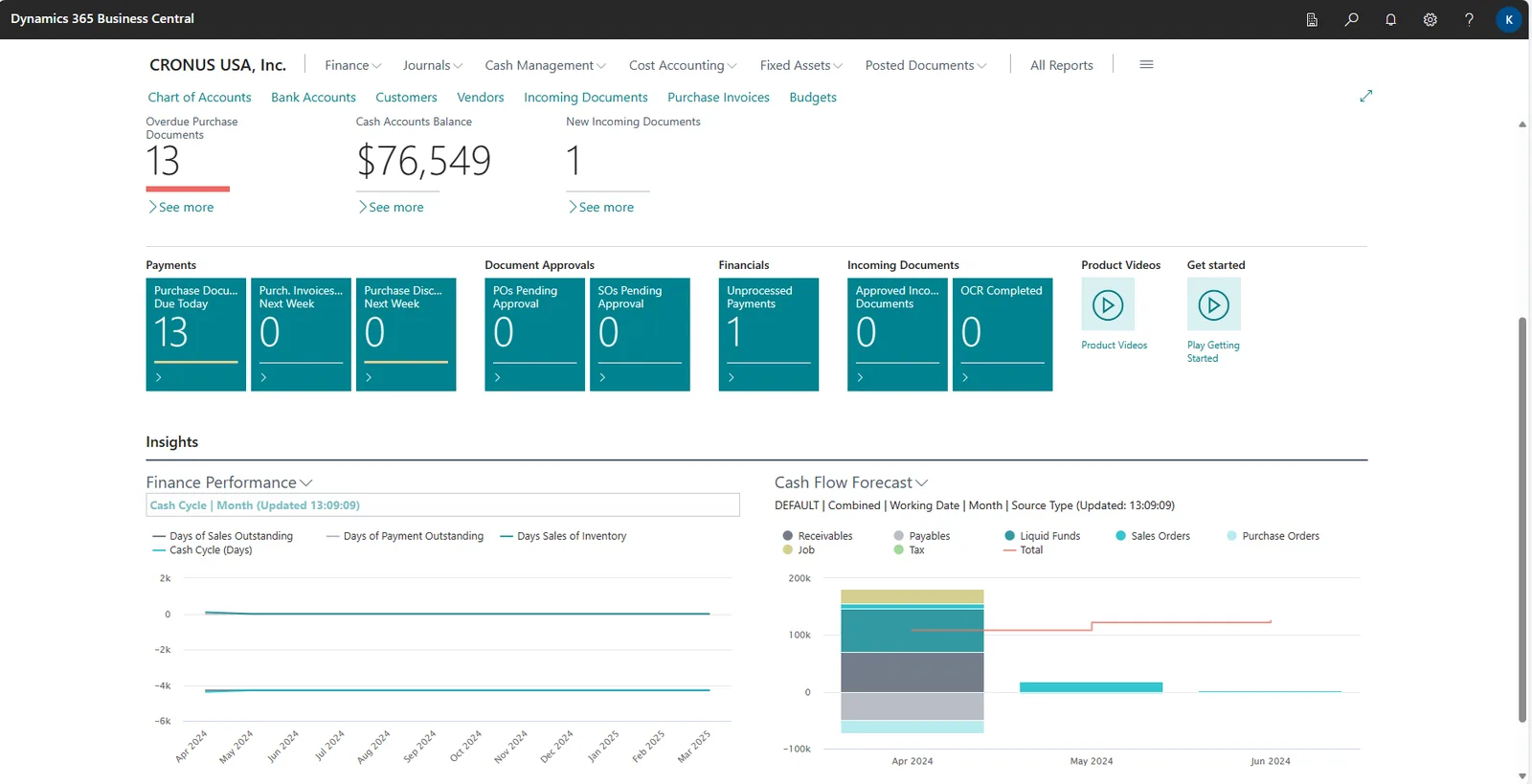
A retention view answers one question: how much cash is held, and when can we claim it?
Retention is rarely fully standard in SME editions. Here is how each platform typically handles it; confirm details for your edition and version.
| Zoho | Odoo | ERPNext | Dynamics 365 | |
|---|---|---|---|---|
| Retention on customer invoices | Usually custom fields and a deduction line posting to a retention account | Not standard in core apps; third-party app or customisation | Commonly added through customisation on Sales Invoice | Retention terms on project contracts in Project management and accounting (Finance); Business Central often via AppSource apps |
| Retention on supplier bills | Custom fields or Zoho Creator logic on bills | Customisation on vendor bills | Customisation on Purchase Invoice | Vendor retention in Finance; Business Central via partner apps |
| Separate retention accounts | Yes, through chart of accounts design | Yes, through chart of accounts and journal design | Yes, through chart of accounts design | Yes, with posting setup |
| Release reminders | Workflow rules and scheduled emails | Scheduled activities | Notifications and reminders | Workflow and alerts |
| Register reporting | Zoho Analytics or custom reports | Custom report or spreadsheet view | Script or query reports | Power BI or standard reports |
Retention depends on dates and documents produced outside the finance team.
How retention affects tax and records in the UAE. This is not tax advice; confirm treatment with your tax advisor.
Contracts and practice differ on whether VAT is charged on the gross certified amount or when retention is released, and the date of supply rules for periodic supplies apply. Agree the approach with your advisor, then configure the ERP to apply it consistently. See VAT accounting software.
Retention can stay open well beyond a project's end, so the related invoices, certificates and release letters must be kept at least five years from the relevant tax period, or seven for real estate, under Cabinet Decision 74 of 2023.
Where a release is invoiced, it will be a tax invoice that needs PINT AE data and exchange through an ASP once your mandatory phase starts (1 January 2027 for AED 50 million revenue and above, 1 July 2027 for others). Check the latest Ministry of Finance and FTA guidance.
Doubtful retention balances may need provisions in the financial statements. Keep the ageing evidence in the ERP so auditors and advisors can review the basis.
General information, not tax or legal advice. Rules change; confirm current FTA, MOHRE and Ministry of Finance guidance with your advisor.
Benefits are practical and mostly about cash timing.
Reminders tied to completion and DLP dates mean release applications go out when they fall due, not when someone remembers.
Retention is reported separately, so credit control works on genuinely overdue invoices.
Back-to-back links show when the client has released, which supports consistent decisions on subcontractor retention.
Old retention balances are followed up while there is still a relationship and documentation to support the claim.
Retention is often added as part of a wider construction ERP rollout; these are typical durations for that piece.
Durations are typical ranges; your plan is agreed after discovery.
List every live and completed contract with retention still open, and capture its terms.
Configure retention accounts, deduction logic, date fields and reminders.
Load retention held and withheld per contract, reconciled to the ledger.
Use the register for the next releases due and refine reports with the commercial team.
We configure the system for the rules UAE businesses report against, and test it before go-live.
General information, not tax or legal advice. Confirm current requirements with the FTA, MOHRE or your advisor. See all UAE compliance guides.
On-site workshops in Dubai, Abu Dhabi and Sharjah, and remote or on-site delivery across the Northern Emirates and free zones.
Official sources and references
Facts on this page were checked against these sources in October 2026. Rules change, so confirm current requirements before acting.
Still have a question? Our consultants are happy to help.
Ask an ExpertThere is no single rule. Many contracts deduct a percentage of each certificate up to a cap, with release split between completion and the end of the defects period. Your contract terms decide, so the ERP stores them per contract rather than using a global setting.
Yes. Keeping retention receivable and payable separate from trade balances makes ageing meaningful and simplifies the audit.
Yes. The bond is logged against the contract with its amount and expiry, and the deduction on certificates is switched off or reduced as the contract allows.
Subcontract terms are stored on the subcontract record, and each payment certificate deducts retention automatically. Linking the subcontract to the main contract shows when back-to-back conditions are met. See construction subcontractor management.
Load them as opening balances with their release conditions. Old balances are often where the most cash is waiting.
It depends on the wider setup. Dynamics 365 Finance has retention terms in project accounting, while Zoho, Odoo and ERPNext usually need configuration. Our pages on Odoo for construction companies and ERPNext for construction explain those options.
Related Solutions
Related Industries
Related ERP Platforms
We will review your open contracts and set up a retention register that shows every balance, release date and blocker.
Dubai, United Arab Emirates