L
O
A
D
I
N
G


Zoho, Odoo, ERPNext, Dynamics 365 and custom ERP, delivered by one accountable team.

For civil, MEP and fit-out contractors, we turn Dynamics 365 projects into a cost control system that follows your BOQ, your payment applications and your subcontract packages.
Dynamics 365 suits UAE civil, MEP and fit-out contractors when Business Central's Projects module is structured to mirror the BOQ, with purchase orders and subcontracts charged to project tasks and work-in-progress calculated per job. Standard Dynamics 365 does not produce UAE-style interim payment applications with retention and advance recovery, so a tested extension or AppSource construction app fills that gap.
Dynamics 365 for construction in the UAE starts with one question from the commercial manager: is this project making money right now, or will we find out at final account? Contractors in Dubai, Abu Dhabi and the northern emirates work on thin margins, long payment cycles and retention that can sit unpaid for a year after handover. The ERP must show committed cost, actual cost and certified revenue per project at any time, not just at year-end.
Business Central's Projects module (previously called Jobs) gives a sound base: project tasks that can follow your BOQ structure, budget and billable planning lines, resources with cost and price, purchase orders charged to project tasks, and work-in-progress calculations using several recognized methods. For larger groups running many concurrent projects, Dynamics 365 Project Operations with Finance adds contract-based billing and resource scheduling.
We are open about the gaps. Standard Dynamics 365 does not produce UAE-style interim payment applications with retention and advance recovery out of the box. We close that with a tested extension or a construction app from Microsoft AppSource, chosen after we see your contracts. For a platform-neutral view, see the best ERP for construction companies.
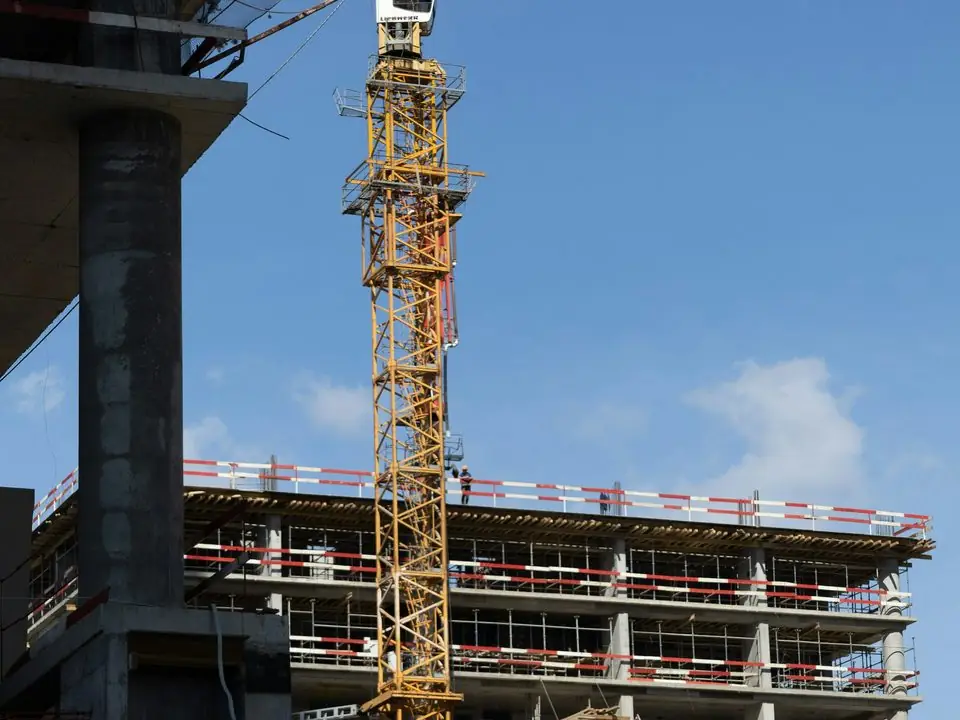
These issues appear across main contractors, MEP subcontractors and fit-out companies alike.
Site teams raise material requests and LPOs without checking the remaining budget. By the time the quantity surveyor reconciles costs, the overrun has already happened.
Retention of 5 to 10% on each certificate builds into a large receivable. Without a retention ledger by project and due date, releases after handover and defects liability are missed.
Subcontract packages, variations, back-charges and retention held from subcontractors are tracked in spreadsheets. Disputes are hard to settle without a record of what was certified and paid.
Approved and pending variations change both revenue and budget. If they are not recorded against project tasks, margin forecasts are wrong.
Equipment and labor move between projects weekly. Without timesheets and plant allocation, overheads are shared out by guesswork.
This is the project lifecycle we configure for contractors. Procurement and payroll feed costs into the same project throughout.
One shared database: every step updates stock, finance and reports in real time.
Most of these are standard Business Central features. The last two are where an extension or Project Operations comes in.
A project per contract with tasks that follow BOQ sections or cost codes. Budget lines hold quantity, unit cost and unit price for each item.
Purchase requisitions and orders carry project and task numbers, so commitments appear against budget before invoices arrive.
Labor, staff and equipment set up as resources with cost rates. Timesheets post hours to the right project task.
Dimensions for project, site, division and cost center make reporting flexible without extra chart of accounts lines.
Built-in WIP methods such as cost value, sales value and percentage of completion post WIP and recognized revenue to the general ledger.
Plant, vehicles and site equipment registered as fixed assets with depreciation, insurance and maintenance history.
Interim payment applications, retention held and released, and advance payment recovery. Delivered through an extension or AppSource construction app.
Subcontract packages with certified values, variations and retention held from subcontractors. Built as an extension on purchase documents.
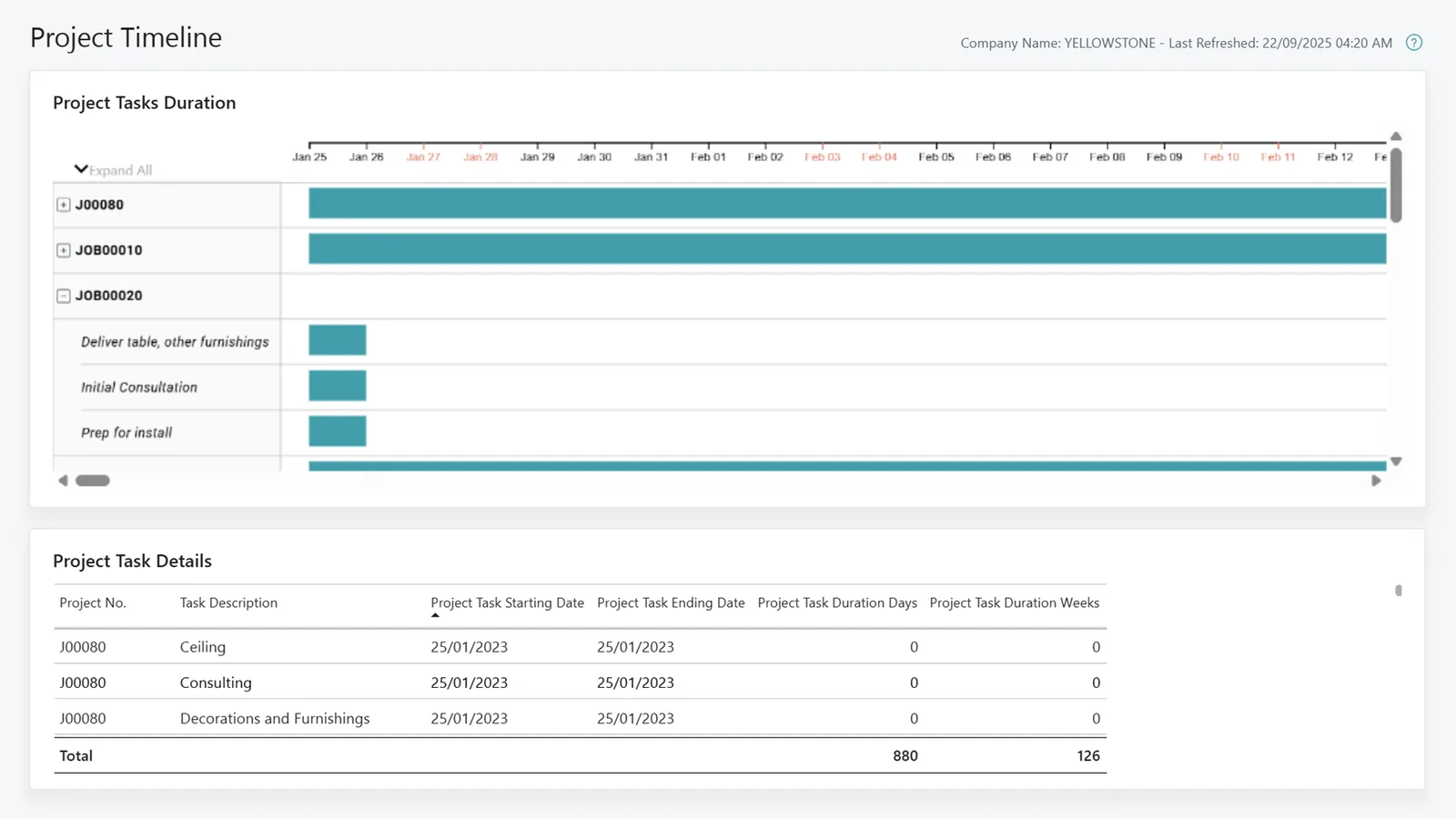
We set up a project cost view that the commercial manager, the project manager and the finance team can all read the same way.
Contractors face specific VAT timing and labor rules. We configure the system to support them; confirm treatment with your tax advisor.
In staged contracts, the VAT tax point is generally linked to payment certificates, invoices or payment, whichever comes first, and retention has its own timing. We configure invoicing so the agreed treatment is applied consistently.
Construction labor is paid through the Wage Protection System using SIF files through approved banks or exchange houses. We connect a WPS-capable payroll solution and post labor cost to projects.
End-of-service gratuity under Federal Decree-Law No. 33 of 2021 and leave salary are accrued monthly, so project labor costs are complete.
Corporate tax at 9% above AED 375,000 relies on accounting profit, so revenue recognition on long contracts matters. Clean WIP postings make the year-end computation easier to explain.
Invoices raised to developers and main contractors will move to PINT AE through an Accredited Service Provider from January or July 2027, depending on revenue. Check the latest Ministry of Finance and FTA guidance.
General information, not tax or legal advice. Rules change; confirm current FTA, MOHRE and Ministry of Finance guidance with your advisor.
For a contractor with several live projects, a phased rollout often runs 14 to 22 weeks. Live projects move over at a month-end cut-off.
Durations are typical ranges; your plan is agreed after discovery.
We study typical contracts, BOQs, payment application formats and your cost code structure.
We confirm how billing, retention and subcontracts will work, and whether an extension or AppSource app is needed.
Project templates, dimensions, purchasing rules, the billing extension and dashboards are set up and tested.
Budgets, commitments, certified amounts and retention balances for each running project are loaded and reconciled.
QS, procurement, site admin and finance teams train on their own steps before the first payment application in the new system.
Explore construction-specific ERP pages and other Dynamics 365 services.
We configure the system for the rules UAE businesses report against, and test it before go-live.
General information, not tax or legal advice. Confirm current requirements with the FTA, MOHRE or your advisor. See all UAE compliance guides.
On-site workshops in Dubai, Abu Dhabi and Sharjah, and remote or on-site delivery across the Northern Emirates and free zones.
Official sources and references
Facts on this page were checked against these sources in October 2026. Rules change, so confirm current requirements before acting.
Still have a question? Our consultants are happy to help.
Ask an ExpertIt includes project costing, budgets, purchasing against projects, resources, timesheets and WIP. It does not include UAE-style interim payment applications, retention or subcontract certification as standard. We add those with an extension or an AppSource construction app.
Yes. BOQ items are usually imported from Excel as project tasks and planning lines, with quantities, rates and cost codes. We agree a template with your QS team so future tenders import the same way.
With the billing extension, each payment application calculates retention held, posts it to a separate retention receivable account and keeps a balance per project. Release invoices are raised at handover and at the end of the defects liability period.
Yes. Requests can be submitted through a mobile app or the web client, routed for approval and turned into purchase orders charged to the right project task, with budget checks along the way.
Business Central suits most small and mid-sized contractors. Groups with several companies, many concurrent projects and shared resource pools may be better served by Finance with Project Operations. We help you decide based on volume and structure.
Related Solutions
Related Industries
Related ERP Platforms
Share one live project's BOQ and payment application, and we will show how it would be tracked in Dynamics 365.
Dubai, United Arab Emirates