L
O
A
D
I
N
G


Zoho, Odoo, ERPNext, Dynamics 365 and custom ERP, delivered by one accountable team.

Running several schools, nurseries or learning brands means several legal entities, regulators and fee models. We set up ERP that consolidates them without flattening what makes each one different.
A UAE education group running schools, nurseries, tutoring or edtech brands needs a multi-company ERP that consolidates separate legal entities, automates intercompany management fees and eliminations, and defers term fees and annual subscriptions as revenue. Dynamics 365 Business Central and Odoo support multi-currency consolidation, and each entity keeps its own trade licence, VAT position, bank accounts and WPS payroll as an employer.
ERP for education companies in the UAE starts where single-school software stops. An education operator might own two schools in Dubai, a nursery chain across Abu Dhabi and Al Ain, a tutoring brand, and an edtech subscription product sold to other schools. Each unit may be its own legal entity with its own trade license, regulator, VAT position and bank accounts, while the head office provides shared services and charges management fees.
The problems at this level are group problems: consolidating results each month, eliminating intercompany charges, recognizing fees and subscriptions over the right periods, controlling capital spending on new campuses, buying centrally to get better terms, and giving investors or lenders numbers they can trust. Campus teams still need their own fee billing and payroll, but the group CFO needs one ledger structure and one reporting calendar.
We implement group ERP for education businesses on Dynamics 365 Business Central, Odoo, ERPNext and Zoho, choosing based on entity count, reporting demands and in-house IT. For the day-to-day bursar view inside a single school, see ERP for schools; for group structures in general, see multi-company ERP.

These issues appear once an education business grows beyond a single campus or product.
Each campus closes in its own way and sends a trial balance to head office. Mapping, eliminating and adjusting them by hand delays reporting and hides errors.
Management fees, shared staff costs and loans between entities are booked differently on each side. Unmatched balances surface at audit and take weeks to resolve.
Term fees, registration deposits, nursery monthly fees and edtech annual licences all have different recognition patterns. Mixing them up distorts margins and investor reporting.
Fit-out, furniture, technology and pre-opening staff costs are spread across entities and cost centers, so total spend against the approved budget is hard to see.
Schools and nurseries in different emirates answer to different regulators, while training or edtech arms may be licensed elsewhere, often in a free zone. Reporting must respect each entity's rules.
These steps run every month and every year across the group, and the ERP should make each one routine.
One shared database: every step updates stock, finance and reports in real time.
We focus on group finance and shared services, while each campus keeps the tools it needs locally.
Separate legal entities in one system with a shared chart of accounts and group-level reporting.
Management fees and recharges posted to both entities at once, with matching and elimination at consolidation.
Rules for term fees, monthly nursery fees and annual subscriptions so revenue follows service delivery.
Campus-level budgets rolled up to group, with enrollment-driven revenue scenarios.
New campus or expansion projects with commitments, actuals and approvals against the board budget.
Group contracts for furniture, devices, catering and cleaning, with campus-level purchase requests.
Group HR policies with entity-specific payroll and WPS files per employer.
Enrollment, revenue per student, staff cost ratio and cash by entity in one reporting layer.
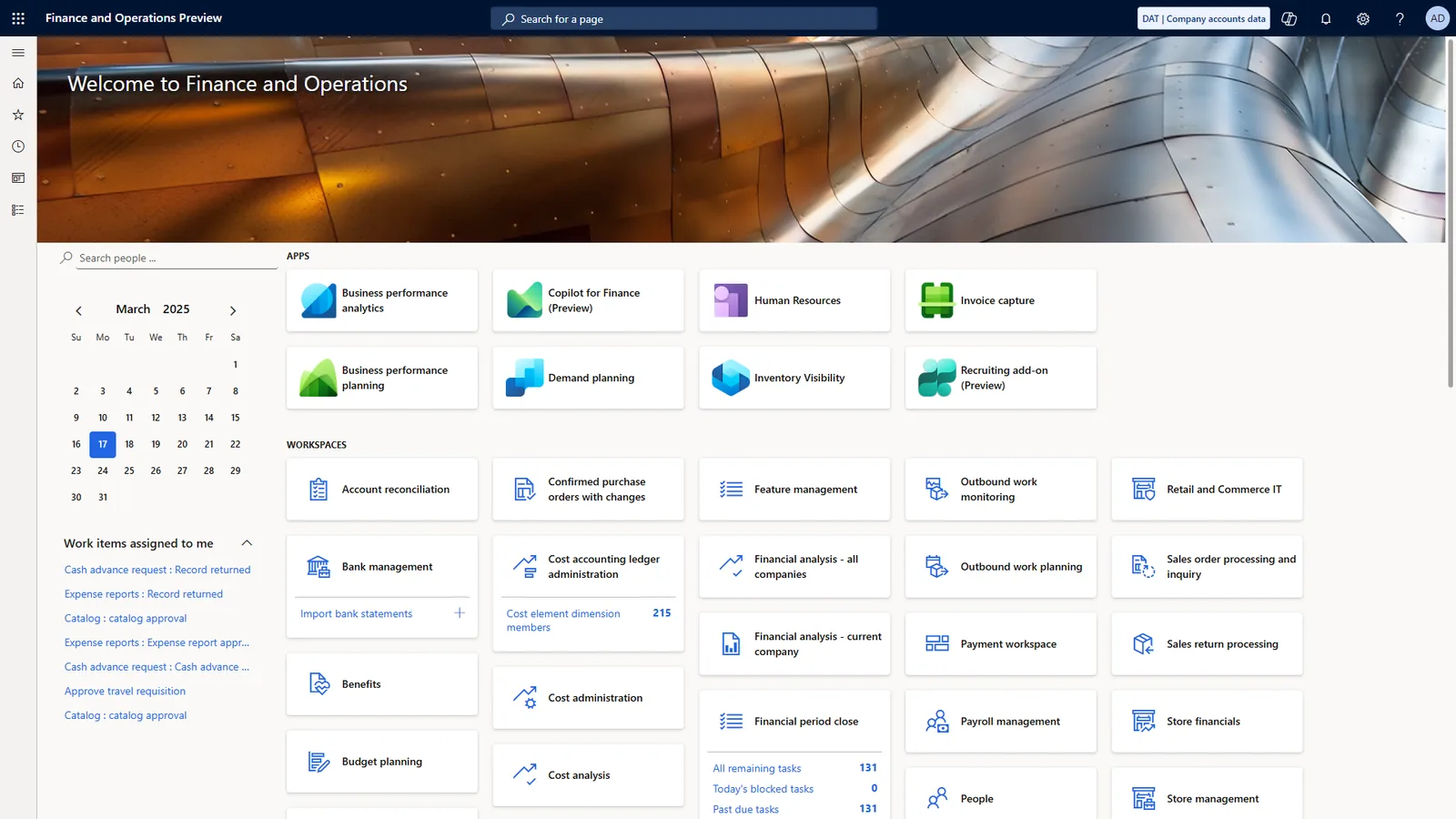
A consolidated view that can be drilled down to a single campus or product line.
Entity count, reporting depth and investor requirements usually decide the platform.
| Company profile | Platform that usually fits | Why it fits | Watch-out |
|---|---|---|---|
| School group with several entities and external investors | Dynamics 365 Business Central | Multi-company, consolidation, dimensions and Power BI suit board and lender reporting | Campus fee billing usually comes from an SIS or add-on |
| Nursery chain growing branch by branch | Odoo | Multi-company with shared products and HR, simple branch rollouts | Define the nursery billing model before configuration |
| Operator wanting to own and extend its platform | ERPNext | Multi-company and education features, open source, extendable | Plan hosting, backups and version upgrades |
| Edtech or tutoring company with subscriptions | Zoho Books with Zoho Billing and CRM | Subscriptions, recurring invoices, CRM and accounting closely linked | Group consolidation across many entities needs extra reporting setup |
| Mixed group with unusual structures | Custom reporting layer over a core ERP | Keeps transactional ERP standard while modeling group-specific KPIs | Needs disciplined data ownership |
We implement Zoho, Odoo, ERPNext, Dynamics 365 and custom ERP. Platform choice is made after we review your entity structure.
We configure entity setups and records to support these rules. Confirm your specific position with your tax advisor.
Recognized school and nursery tuition is generally zero-rated, while training, tutoring and edtech subscriptions are generally standard-rated at 5%. Entities may also form a VAT group where conditions are met, which changes how intercompany charges are treated.
Under Federal Decree-Law No. 47 of 2022, management fees and recharges between group entities are related-party transactions and need to follow arm's length principles. A tax group may also be an option for qualifying entities.
Edtech or training arms set up in a free zone may consider Qualifying Free Zone Person status, which depends on qualifying income, substance and other conditions. Keeping their ledgers separate makes that analysis possible.
Intercompany invoices and edtech sales to other schools are B2B and fall within the planned PINT AE e-invoicing scope through an Accredited Service Provider. Check the latest Ministry of Finance and FTA guidance on dates.
Each employing entity runs WPS for its own staff, so payroll must be separated by legal employer even when HR is shared.
General information, not tax or legal advice. Rules change; confirm current FTA, MOHRE and Ministry of Finance guidance with your advisor.
Outcomes we aim for; actual impact depends on how standardized your entities become.
Consolidation runs inside the ERP rather than in spreadsheets compiled from many trial balances.
Both sides of every recharge are posted together, so balances agree before audit.
Revenue recognition and campus margins are consistent across entities and periods.
New campus spend is tracked against approved budgets from the first commitment.
Groups usually start with head office and one or two entities, then roll out in waves. Ranges are indicative.
Durations are typical ranges; your plan is agreed after discovery.
Agree entity structure, chart of accounts, dimensions, intercompany rules and reporting calendar.
Configure head office and a first campus, including payroll, procurement and revenue recognition.
Set up eliminations, group reports and the board pack.
Bring remaining campuses and brands onto the template, ideally at period starts.
Add forecasting, analytics and automation once the core close is stable.
Group finance, education and platform pages that go deeper.
We configure the system for the rules UAE businesses report against, and test it before go-live.
General information, not tax or legal advice. Confirm current requirements with the FTA, MOHRE or your advisor. See all UAE compliance guides.
On-site workshops in Dubai, Abu Dhabi and Sharjah, and remote or on-site delivery across the Northern Emirates and free zones.
Official sources and references
Facts on this page were checked against these sources in October 2026. Rules change, so confirm current requirements before acting.
Still have a question? Our consultants are happy to help.
Ask an ExpertIf a campus holds its own trade license, bank accounts and VAT registration, it is usually a separate company. Campuses under one license are normally branches or dimensions within one company. We confirm this against your legal structure.
Platforms like Dynamics 365 Business Central and Odoo support multi-currency consolidation. Different financial year ends are possible but complicate group reporting, so we usually recommend aligning them where you can.
We set up recurring intercompany invoices that post to both the charging and receiving entity, with matching accounts that are eliminated on consolidation. The fee basis is documented to support related-party requirements.
Not necessarily. Many groups keep their SIS and integrate it for enrollment and fee data. Standardizing on one SIS over time does make group reporting easier.
Yes, as a separate company with its own subscription billing and VAT treatment. It shares the group chart of accounts so results roll up cleanly.
Related Solutions
Related Industries
Related ERP Platforms
Related Guides
Call +971 55 145 3265 or email contact@uaeerpexperts.com to map your entities, campuses and reporting needs.
Dubai, United Arab Emirates