L
O
A
D
I
N
G


Zoho, Odoo, ERPNext, Dynamics 365 and custom ERP, delivered by one accountable team.

In a GMP plant, a batch is not finished until quality says so. We configure ERP so material status, batch records and release decisions are enforced by the system, not by memory.
An ERP for pharmaceutical manufacturing in the UAE should enforce material status (quarantine, approved, rejected, on hold), trace batch genealogy from API and excipient lots to finished packs, block shipment until QC release, and keep audit trails on master data. Odoo, ERPNext and Dynamics 365 Business Central can do this, though a validated LIMS or MES may still be needed.
ERP for pharmaceutical manufacturing in the UAE is about control as much as efficiency. Generic medicine producers, nutraceutical and supplement makers, and contract manufacturers in Dubai, Abu Dhabi's industrial zones, Sharjah and Ras Al Khaimah all work under Good Manufacturing Practice expectations. Every gram of active ingredient has to be traceable, every batch has to be released by quality before it ships, and every change to master data has to leave a trail.
This page is about making medicines and health products, not distributing them. Producers carry a different load: dispensing against approved formulas, yield reconciliation, in-process controls, cleaning and equipment status, stability samples, and status rules that stop quarantined or rejected stock from being used. UAE national priorities around local medicine production have also encouraged new plants, many of which start with spreadsheets and quickly hit their limits during inspections.
We implement Odoo, ERPNext, Dynamics 365 Business Central and custom extensions for regulated producers, and we are clear about the boundary: ERP manages materials, batches, costs and records, while a validated LIMS or MES may still be needed for laboratory data and electronic batch execution. For distributors, see ERP for pharmaceutical distribution; for the wider healthcare sector, see ERP for healthcare companies.

These are the gaps that tend to surface during inspections, recalls or customer audits.
When quarantine and release status exists only as a sticker on a drum, stock can be issued before testing is complete. The system should refuse the issue, not rely on a store-keeper noticing the label.
Dispensed quantities, theoretical yield and actual output rarely reconcile on paper. Unexplained losses of active ingredients are a quality and cost problem at the same time.
Answering which customers received product made with a specific API lot can take days when records are split across logbooks and spreadsheets.
Formula, specification and supplier approvals are edited without review. Inspectors expect to see who changed what, when and why.
Batches can be scheduled on equipment that is due for calibration or not yet cleaned after a previous product, creating cross-contamination risk.
Each status change is recorded with a user and time, giving quality a complete picture of every batch.
One shared database: every step updates stock, finance and reports in real time.
Configured with strict permissions and approval steps, these modules form the operational backbone of a regulated plant.
Only qualified suppliers can be used for specified materials, with audit dates and certificates stored on the supplier record.
Every receipt creates a lot in quarantine; only QC can change it to released, rejected or on hold, and the system blocks issue of unreleased stock.
Approved formulas with versioning, effective dates and potency adjustments where the active content of a lot varies.
Batch orders reserve specific lots, record dispensed weights and reconcile theoretical and actual yield.
Test plans, specifications, results entry or LIMS integration, deviations and CAPA records linked to batches and materials.
Preventive maintenance and calibration schedules for equipment and instruments, with status visible to planners.
First-expiry-first-out picking, temperature-controlled locations and retest date tracking for materials.
SOPs, specifications and certificates of analysis stored and versioned against products and batches.
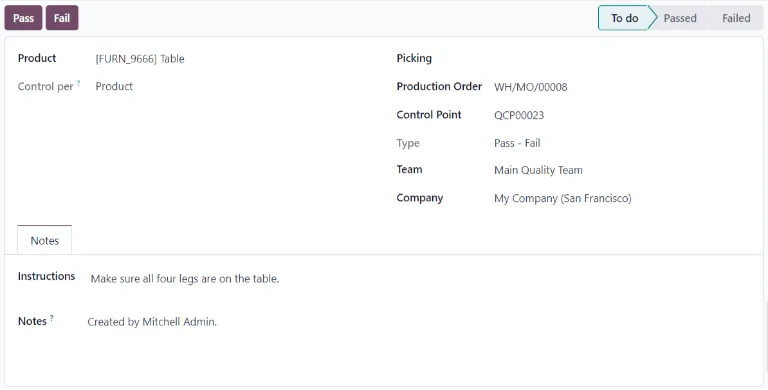
Quality heads and plant managers need to see what is blocked and why, every morning.
Regulated manufacturing raises the bar for any platform. This is how the options compare for typical UAE producers.
| Company profile | Often a good fit | Why | Watch out for |
|---|---|---|---|
| Supplement or nutraceutical start-up with one line | Odoo (Manufacturing, Quality, Inventory) | Lots, expiry, quality checks and maintenance available in one integrated system | Validation documentation is your responsibility; plan time for it |
| Generic medicine plant with strict status control | ERPNext with extensions, or Odoo | Batch, quality inspection and open framework for custom status rules | Audit trail and e-signature requirements need careful design and testing |
| Multi-site or group-owned producer | Dynamics 365 Business Central, or Dynamics 365 Finance and Supply Chain for larger groups | Strong finance, item tracking and the wider Microsoft ecosystem | Process manufacturing depth varies by product; confirm fit in a scripted demo |
| Plant already running a validated MES or LIMS | Any of the above as the business system | ERP handles materials, cost and finance while specialist systems handle execution and lab data | Integration scope must be clearly defined and tested |
Zoho is generally not suited to regulated batch manufacturing. We implement Zoho, Odoo, ERPNext, Dynamics 365 and custom ERP and will say so when a platform is the wrong fit.
ERP can support your quality system, but it does not make a plant compliant on its own. Confirm requirements with the relevant regulator and your tax advisor.
Medical product manufacturing in the UAE is regulated at federal level, with the Emirates Drug Establishment and the Ministry of Health and Prevention involved in licensing and oversight. Check current responsibilities. The ERP should provide batch records, status history and audit trails that inspectors can review.
The UAE operates a national pharmaceutical track-and-trace platform, Tatmeen, based on GS1 standards. The ERP should hold GTINs, batch numbers and expiry dates accurately so serialization and reporting systems receive correct data.
Certain medicines and medical equipment may qualify for zero-rating under UAE VAT rules, while other products are standard-rated at 5%. The ERP applies tax codes by item, but the classification of each product should be confirmed with your tax advisor.
Corporate tax is 9% on taxable income above AED 375,000. E-invoicing through Accredited Service Providers becomes mandatory in phases from 2027 depending on revenue. Check the latest Ministry of Finance and FTA guidance.
General information, not tax or legal advice. Rules change; confirm current FTA, MOHRE and Ministry of Finance guidance with your advisor.
Results depend on process discipline and validation, not configuration alone.
Quarantined or rejected material cannot be issued, because the system blocks it.
Forward and backward batch tracing becomes a report rather than a project.
Batch histories, approvals and change logs are retrievable on request.
Dispensed versus produced quantities are compared batch by batch, highlighting losses early.
Regulated projects take longer than typical rollouts because of validation work. These ranges are indicative only.
Durations are typical ranges; your plan is agreed after discovery.
We document user requirements with quality, production, stores and finance, including GMP-relevant controls.
Status rules, formulas, quality plans, permissions and audit settings are configured.
We support your validation team with configuration specifications and test scripts; qualification remains your responsibility.
Approved materials, open lots with status, formulas and balances are migrated and verified.
Controlled go-live, often starting with one product family, followed by ongoing support.
Platforms, modules and related healthcare pages.
We configure the system for the rules UAE businesses report against, and test it before go-live.
General information, not tax or legal advice. Confirm current requirements with the FTA, MOHRE or your advisor. See all UAE compliance guides.
On-site workshops in Dubai, Abu Dhabi and Sharjah, and remote or on-site delivery across the Northern Emirates and free zones.
Official sources and references
Facts on this page were checked against these sources in October 2026. Rules change, so confirm current requirements before acting.
Still have a question? Our consultants are happy to help.
Ask an ExpertNo ERP makes a plant GMP compliant by itself. Compliance depends on how the system is configured, validated and used within your quality system. We provide configuration documents and test support, while your quality team owns qualification.
Yes. With lot status control, materials received into quarantine cannot be reserved or issued until QC releases them. We test this rule thoroughly before go-live.
It depends on your volume and regulatory expectations. Many smaller plants record QC results in the ERP's quality module. Larger plants often keep a dedicated LIMS or electronic batch record system and integrate it with ERP for status and quantities.
The ERP holds GTINs, batch numbers and expiry dates and passes them to the serialization or packaging line system. Reporting to the national platform is usually handled by a specialised serialization solution integrated with ERP.
Where an API lot has a measured potency, the dispensed quantity can be adjusted to deliver the correct active content. Some platforms support this natively; others need configuration, which we confirm during design.
Usually longer than a standard manufacturing rollout because of documentation and validation. A focused single-site project is often several months; we give a realistic plan after the requirements phase.
Related Solutions
Related Industries
Related ERP Platforms
Share your batch process and quality controls and we will outline how an ERP should support them.
Dubai, United Arab Emirates