L
O
A
D
I
N
G


Zoho, Odoo, ERPNext, Dynamics 365 and custom ERP, delivered by one accountable team.

For offset, digital and large-format printers who need fast, accurate quotes and know what each job really cost once it leaves the press.
An ERP for printing companies in the UAE builds estimates from paper, imposition, machine rates and finishing, then tracks each job through digital job tickets from prepress to dispatch. Paper and substrates are stocked by size, grammage and sheet or roll, and actual cost, including wastage and reprints, is compared with the estimate for offset, digital and large-format work.
An ERP for printing companies in the UAE has to price a job before it exists and then prove what it cost once it is delivered. A commercial printer in Al Quoz quoting brochures, a large-format shop in Sharjah producing building wraps and a digital print house in Dubai Industrial City running short-run labels each live on the accuracy of their estimates. Paper, plates, ink, machine time, finishing and delivery all go into the price, and small errors repeat across hundreds of jobs.
Printers in the UAE also deal with tight turnarounds. Agencies send artwork late, clients approve proofs at midnight and events need signage on site by morning. Jobs jump the queue, paper is borrowed from one order to cover another and outsourced finishing such as foiling or die-cutting is arranged by phone. The result is a busy shop floor and a job cost that nobody can reconstruct.
UAE ERP Experts is a Dubai-based implementation partner that sets up print workflows on Odoo, ERPNext, Zoho and Dynamics 365. Print shops share some needs with packaging companies, but commercial and large-format printing turns on estimating speed and job tickets more than on long production runs. Our manufacturing ERP page covers the broader production side.

These are the issues printers raise most often when they start looking at ERP.
Estimating often lives in the head or spreadsheet of one senior estimator. When that person is on leave, quotes slow down or go out with inconsistent margins.
Board, coated and uncoated paper, vinyl and fabric come in many sizes and weights. Off-cuts, make-ready waste and borrowing between jobs make the store count unreliable.
Extra proofs, changed quantities and rush surcharges are agreed by phone with the client. If they are not added to the job, the invoice goes out at the original quote.
Presses, digital machines and finishing equipment are scheduled on a whiteboard. Sales promise dates without knowing what is already booked on the machines.
Color issues or finishing errors lead to reprints that are rarely tracked as a separate cost, so the shop never learns where quality problems come from.
This is the flow we configure for most commercial and large-format printers.
One shared database: every step updates stock, finance and reports in real time.
Printers rarely need every manufacturing feature. These are the modules that matter most.
Calculators for sheets, impositions, plates, clicks, ink and finishing that turn specifications into a costed quote.
A digital job card carrying specs, artwork files, proof status, machine route and delivery details.
Client proof history with approvals recorded by date and user, linked to the job.
Paper and media tracked by size, grammage, roll or sheet, with reservations for jobs and off-cut records.
Work centers for each press, digital printer, laminator and cutter, with planned and actual times.
Outsourced finishing such as foiling, embossing or binding raised as purchase orders against the job.
Agency and corporate client accounts, repeat job templates and follow-up on open quotes.
Estimated versus actual cost, wastage and reprint costs, and VAT-ready invoicing.
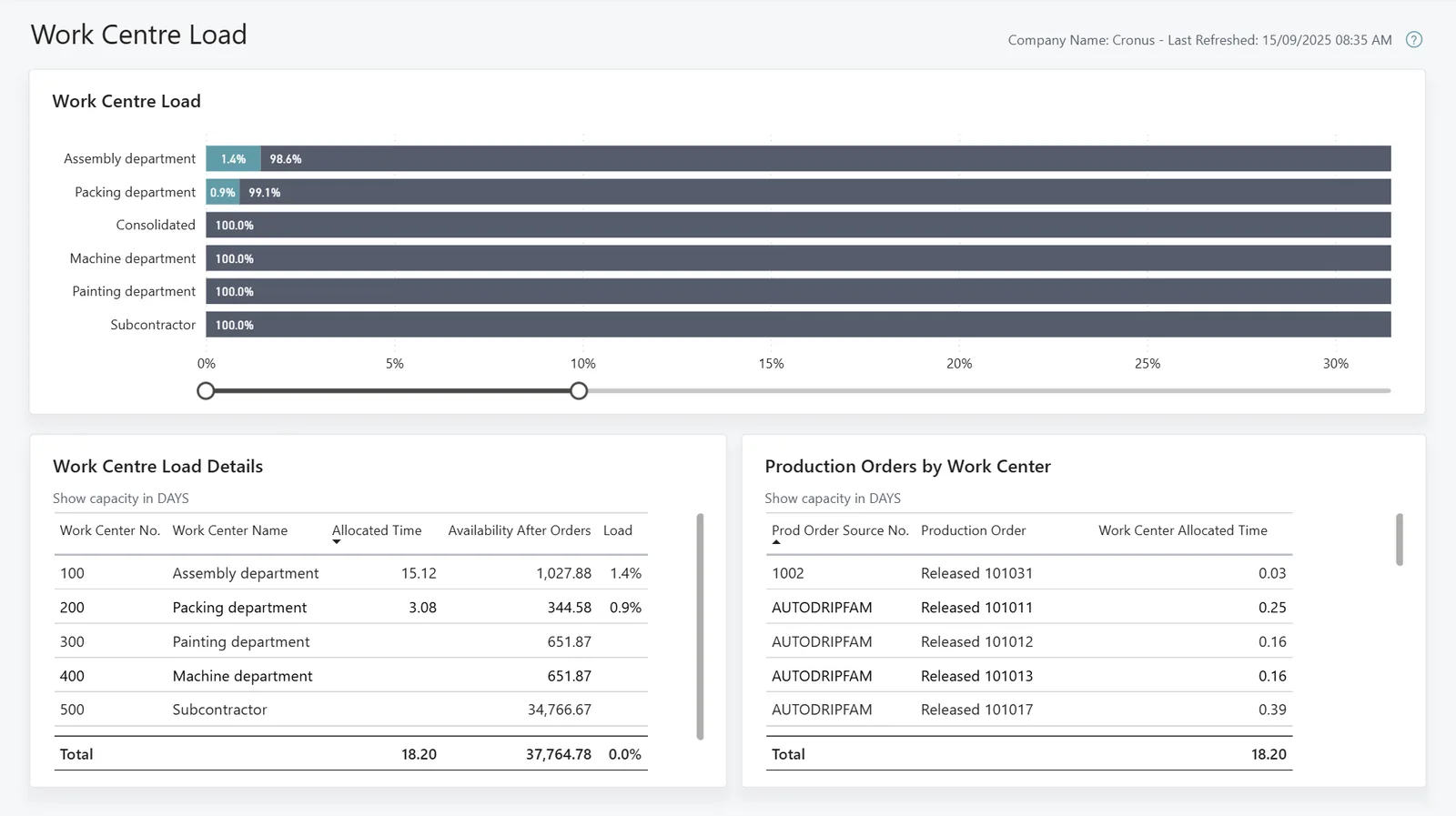
A shop-floor and management view combining production status with job profitability.
Platform choice depends on job volume, how complex your estimating is and whether you also produce packaging.
| Printer profile | Platform that usually fits | Why it fits | Watch-out |
|---|---|---|---|
| Small digital or quick-print shop | Zoho Books with Zoho Inventory and Zoho Creator | Simple job and stock control with a custom estimating form | Machine scheduling stays basic at this level |
| Commercial offset and digital printer | Odoo | Manufacturing work centers, inventory, purchase, CRM and accounting together, with estimating added as a configured app | Print estimating logic needs specific design; it is not standard out of the box |
| Large-format and signage producer with installation teams | Odoo or ERPNext | Combines job costing with field installation tasks and project billing | Installation scheduling should be agreed early with operations |
| Print group with packaging and several plants | Dynamics 365 Business Central or a specialist print MIS connected to ERP | Multi-company finance and production at scale | A specialist print MIS may still be the best estimator; we integrate rather than replace it |
We implement Zoho, Odoo, ERPNext, Dynamics 365 and custom ERP. Where a dedicated print MIS fits better, we say so and connect it to your finance system.
The ERP should support these points. Confirm the specific tax treatments with your tax advisor.
Printing jobs are generally standard-rated at 5% within the UAE. Exports outside the GCC may qualify for zero-rating if export evidence is kept, so the system stores shipping documents against the job.
Some printed materials, such as publications or advertising, can require approval from the relevant media authority. The job ticket can record approval references so they are on file before printing.
Most print work is B2B, so the phased e-invoicing rollout matters. Large printers should check whether they fall into the earlier phase and confirm dates with the latest Ministry of Finance and FTA guidance.
Operators, finishers and installers are paid through WPS, with overtime for night shifts calculated from attendance records.
General information, not tax or legal advice. Rules change; confirm current FTA, MOHRE and Ministry of Finance guidance with your advisor.
Directional benefits. Results depend on recording paper issues and machine times consistently.
Standard estimating rules let more of the team produce quotes with the same margin logic.
Actual paper, machine time and finishing are compared with the estimate for every job.
Sales can check machine load before committing to a date.
Make-ready waste, off-cuts and reprints are recorded, which points to where process fixes pay off.
Indicative ranges. Estimating complexity and the number of machines drive the effort most.
Durations are typical ranges; your plan is agreed after discovery.
Document product types, estimating methods, machine rates, paper ranges and the job ticket process.
Build and test the estimating calculators against recent jobs to confirm they match real prices.
Set up work centers, substrate stock, subcontracting, job tickets and accounting.
Run new quotes in both the old method and the ERP, then compare and adjust rates.
Move all new jobs into the ERP and review estimated versus actual costs monthly.
Further reading on production, stock and platform options.
We configure the system for the rules UAE businesses report against, and test it before go-live.
General information, not tax or legal advice. Confirm current requirements with the FTA, MOHRE or your advisor. See all UAE compliance guides.
On-site workshops in Dubai, Abu Dhabi and Sharjah, and remote or on-site delivery across the Northern Emirates and free zones.
Official sources and references
Facts on this page were checked against these sources in October 2026. Rules change, so confirm current requirements before acting.
Yes, once estimating rules are set up. The estimator enters size, quantity, paper, colors and finishing, and the system calculates sheets, machine time and cost, then applies your margin rules.
For many small and mid-sized printers, a configured ERP with custom estimating works well. Very complex operations may be better served by a specialist print MIS for estimating, connected to an ERP for finance and stock. We will tell you which fits.
Each paper or media type is tracked by size, grammage and unit, such as sheets, reams or rolls. Paper is reserved for jobs when they are confirmed and issued when printing starts, with waste recorded.
Yes. Foiling, embossing, binding or die-cutting done by another shop is raised as a subcontract purchase order on the job, so the cost lands in the job automatically.
Yes. Installation can be scheduled as tasks on the job, with crew time and materials costed, which suits large-format and signage producers.
Small shops can often go live in six to ten weeks. Larger printers with complex estimating usually need longer, mainly to test estimates against real past jobs.
Related Solutions
Related Industries
Related ERP Platforms
Send us a few recent job specs and your current quote sheet, and we will show how estimating and job costing would work in an ERP.
Dubai, United Arab Emirates