L
O
A
D
I
N
G


Zoho, Odoo, ERPNext, Dynamics 365 and custom ERP, delivered by one accountable team.

We help inbound tour operators, destination management companies and excursion providers plan departures, use guides and vehicles well, and see margin per tour.
A UAE tour operator or destination management company needs an ERP that costs packages and excursions from contracted hotel and attraction rates, schedules guides, drivers and vehicles per departure, checks supplier invoices against service vouchers and reports margin by tour, market and source agent. Unlike travel agency software, it must cover delivery of desert safaris, city tours and group ground handling.
Tourism companies in the UAE do the physical work of travel: desert safaris leaving Dubai in the afternoon, city tours of Abu Dhabi, dhow cruises, mountain trips to Hatta or Jebel Jais, and full ground handling for incoming groups. Unlike a travel agency that resells tickets, a tour operator or destination management company owns the delivery. It contracts hotels and attractions, schedules guides and drivers, runs vehicles and absorbs the cost when a coach breaks down. ERP for tourism companies UAE has to support that operational load, not only the invoicing.
The commercial side is complex too. A DMC quotes a package to an overseas tour operator months before arrival, often in euros or dollars, using contracted hotel rates and attraction prices that may change. When the group arrives, the room list, meal plan and excursion count rarely match the original quote. Margin is made or lost in that gap, and most companies only find out weeks later when supplier invoices are reconciled.
An ERP built around tours, departures and supplier contracts closes that gap. Every booking is linked to a departure, every departure has a cost sheet, and every supplier invoice is checked against what was planned. Companies that also sell outbound travel can read our travel agency ERP page for the ticketing side.

These are the operational and financial problems we hear about most from tourism companies.
Sales teams price packages from spreadsheets of hotel and attraction rates that may already have changed. Groups are confirmed at margins that disappear on arrival.
Between October and April, guides, drivers and 4x4s are fully booked. Double-booking a vehicle or sending an unlicensed guide damages reviews and supplier relationships.
Hotels, restaurants and attractions bill for what they believe was delivered. Without vouchers linked to bookings, overcharges and duplicate invoices get paid.
Inbound business is often contracted in EUR, GBP or USD while costs are in AED. Exchange movements between quote and payment can erase thin margins.
Bookings arrive from overseas partners, OTAs, hotel concierge desks and walk-ins, each with different commission and payment terms. Channel profitability is rarely visible.
Revenue is concentrated in the cooler months while fixed costs such as vehicles and staff continue in summer. Planning needs reliable forecasts from confirmed bookings.
Each stage updates the cost sheet so actual margin is known as soon as the tour ends.
One shared database: every step updates stock, finance and reports in real time.
We combine standard ERP apps with tour-specific setup for departures and resources.
Hotel, attraction and transport rates stored with validity dates, seasons and currencies, used directly in quotes.
Quotes built from rate sheets with markups by market and partner, recalculated when room lists change.
Each tour date as a departure with its passengers, services and cost sheet, similar to a short project.
Guides, drivers and vehicles assigned on a calendar, with license and permit expiry checks.
Vehicle records, fuel, servicing and registration renewals for owned coaches and 4x4s.
Service vouchers issued per booking and supplier invoices matched against them before payment.
Overseas agents, OTAs and concierge desks set up with commissions, credit terms and statements.
Quotes, invoices and payments in foreign currency, with realised and unrealised exchange gains and losses.
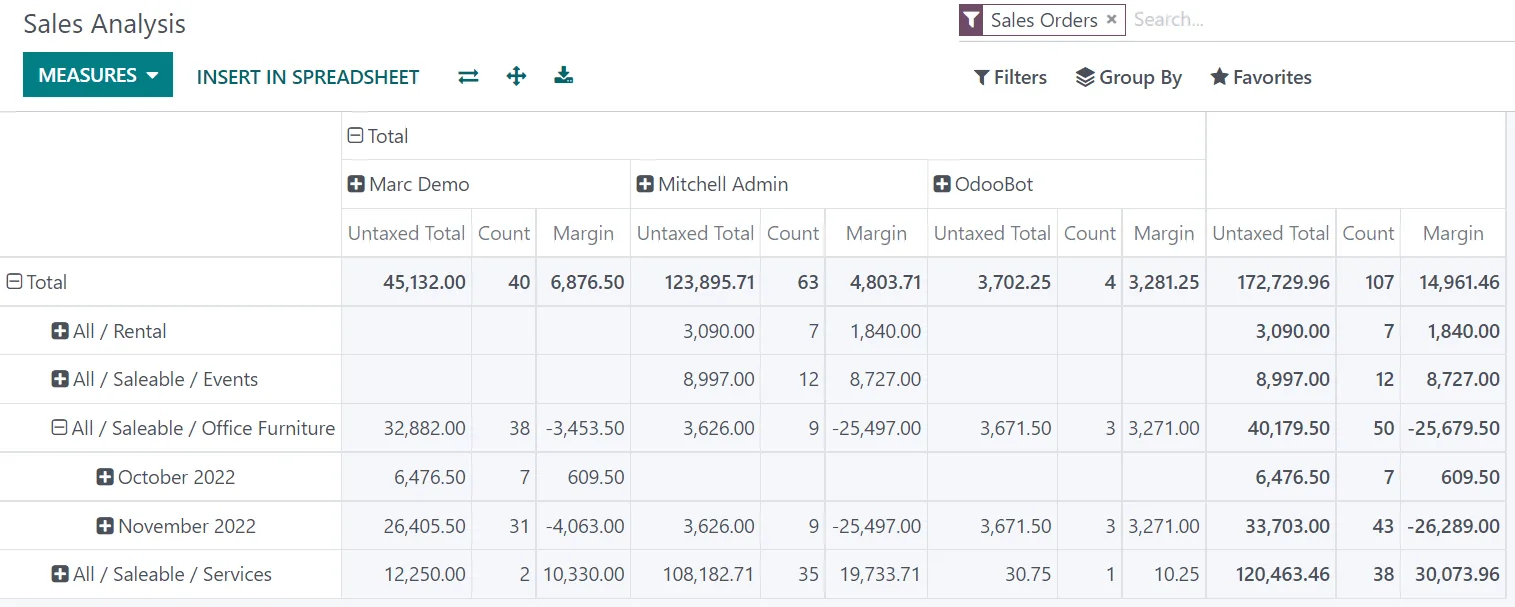
A shared dashboard for operations managers and the commercial team during peak season.
We implement Zoho, Odoo, ERPNext, Microsoft Dynamics 365 and custom ERP. Most tourism companies need some configuration for departures and rate sheets.
| Company profile | Often a good fit | Why |
|---|---|---|
| Single-activity excursion provider | Zoho One or Odoo | Bookings, CRM, invoicing and simple resource calendars without heavy customization. |
| Desert safari or activity company with own fleet | Odoo | Sales, field scheduling, fleet and maintenance apps work together with accounting. |
| DMC handling groups and MICE | ERPNext or Odoo with custom tour costing | Departures as projects with cost sheets, supplier vouchers and multi-currency invoicing. |
| Tourism group across several emirates or the GCC | Microsoft Dynamics 365 Business Central | Multi-company consolidation, strong currency handling and approvals. |
| Operator with its own online booking platform | Custom ERP | Back office designed around your booking data and channel logic. |
Specialist tour operator software is also available; we help you compare it with an ERP approach.
We configure the ERP to support these requirements. Confirm VAT positions and licensing with your advisors and the relevant tourism authority.
Tours delivered in the UAE are generally standard-rated at 5%, including those sold to overseas partners, but treatment depends on the service and contract. Your tax advisor should confirm codes per product.
Emirate tourism authorities license tour operators and guides. The ERP can store licence numbers and expiry dates for the company, guides and vehicles and alert you before renewals.
Corporate tax applies at 9% on taxable income above AED 375,000. Departure-level margin and clear foreign exchange accounting support accurate annual returns.
Guides and drivers on UAE employment contracts are paid through WPS using a Salary Information File, with gratuity accrued under current labour law.
General information, not tax or legal advice. Rules change; confirm current FTA, MOHRE and Ministry of Finance guidance with your advisor.
The benefits below depend on teams using the system daily during peak season.
Packages priced from current contracted rates protect margin from the first quote.
Calendar checks stop double-booked vehicles and guides before the day of the tour.
Invoices matched to vouchers catch errors before payment, not after.
Margin by source market and partner shows where to invest sales effort next season.
We usually plan go-live for the quieter summer months. Durations are typical ranges.
Durations are typical ranges; your plan is agreed after discovery.
Products, contracts, partners, resource rules and currency practices documented.
Rate sheets, package costing, departures, scheduling and finance set up.
Website booking engine, OTA channels and payment gateways connected where options exist.
Sales, operations and accounts trained on real upcoming departures.
Close support as volumes rise, with adjustments to scheduling and costing rules.
Hospitality, fleet and finance pages relevant to tour operators.
We configure the system for the rules UAE businesses report against, and test it before go-live.
General information, not tax or legal advice. Confirm current requirements with the FTA, MOHRE or your advisor. See all UAE compliance guides.
On-site workshops in Dubai, Abu Dhabi and Sharjah, and remote or on-site delivery across the Northern Emirates and free zones.
Official sources and references
Facts on this page were checked against these sources in October 2026. Rules change, so confirm current requirements before acting.
Still have a question? Our consultants are happy to help.
Ask an ExpertA travel agency mainly resells tickets and hotels. A tour operator delivers the service, so it needs departures, resource scheduling, supplier vouchers and cost sheets in addition to accounting.
Yes. Quotes and partner invoices can be in foreign currency, supplier costs in AED, and the ERP posts exchange differences automatically.
Yes. Resources are assigned to departures on a calendar, with checks for availability and licence or registration expiry.
Usually, through an API or the booking engine's exports. We confirm the integration route during discovery.
We recommend the summer months, so the team is trained and stable before the October peak.
Yes. We are based in Dubai and support clients across all seven emirates, on-site and remotely.
Related Solutions
Related Industries
Related ERP Platforms
Related Guides
Book a call to map your tours, partners and resources to a practical ERP setup.
Dubai, United Arab Emirates