
L
O
A
D
I
N
G


Zoho, Odoo, ERPNext, Dynamics 365 and custom ERP, delivered by one accountable team.

Most project overruns are found at month end, after the money is spent. Project costing software posts every hour, purchase and expense to the right project and cost code as it happens.
Project costing software records the full cost of each project: timesheet hours at loaded cost rates, purchase orders, subcontractors, materials, expenses and an allocated share of overheads, all coded to phases, tasks or cost codes. UAE consultancies, IT integrators, fit-out firms and MEP contractors see committed cost and cost-to-complete in Zoho Projects, Odoo, ERPNext or Dynamics 365 before overruns grow.
Project costing software records the full cost of delivering a project: the hours your people spend, the materials and services you buy, the subcontractors you engage and a fair share of overheads. In UAE engineering consultancies, IT integrators, fit-out firms, event companies and MEP contractors, these costs usually live in four places at once: timesheets in Excel, purchase orders in the accounting system, petty cash in an envelope at site and subcontractor invoices in someone's inbox. The project manager sees part of the picture, finance sees another part, and nobody sees the cost to complete.
A proper setup gives every cost a home. Each project is broken into phases, tasks or cost codes (a work breakdown structure), each employee has a loaded cost rate, and each purchase order line carries a project and cost code before it is approved. The result is a live cost ledger per project that shows actual cost, committed cost and the forecast at completion. This page covers the cost side only. Revenue and margin analysis is covered on our project profitability software page, and approving and controlling budgets is covered under project budget management.
The labour rate is where most UAE companies get costing wrong. Basic salary is only part of what an employee costs. Housing and transport allowances, visa and Emirates ID renewals, medical insurance, air tickets, annual leave and the end-of-service gratuity accrual (21 days of basic wage per year for the first five years under the UAE Labour Law) all belong in the hourly cost rate. Leave them out and every project looks more profitable than it is. If you run construction jobs with BOQs and IPCs, see our dedicated construction project costing software page.

These are the patterns we see when project costs are tracked in spreadsheets or in an accounting system with no project dimension.
Timesheets are multiplied by basic pay, or not costed at all. Allowances, visa costs and gratuity sit in general overheads, so labour-heavy projects look far cheaper than they are.
A subcontractor order raised in March is invoiced in June. Until then the project report shows nothing, and the project manager believes there is headroom that has already been committed.
Everything is posted to the project as a single line. You can see the total is high but not whether design, procurement, installation or commissioning caused it.
Fuel, small tools, permits and taxi fares are collected in envelopes and entered weeks later, often to a general expense account instead of the project.
Office rent, software licences and management time are either left out of project cost or spread with a rough percentage nobody can explain at the year-end review.
Finance knows what was spent; only the project manager knows what is still to come. Without a structured forecast, overruns appear as a surprise at handover.
This is the sequence we configure. The first two steps are set up once; the rest repeat every week or month for each live project.
One shared database: every step updates stock, finance and reports in real time.
Costing pulls data from almost every part of the ERP. These are the modules that must carry the project and cost code.
The project, its phases and tasks form the structure every cost is posted against, with a project manager and status on each.
Approved hours are valued at each employee's cost rate and posted as labour cost to the task, not only counted as hours.
Purchase requisitions and POs carry the project and cost code, so commitments show on the project the moment the PO is approved.
Materials issued from the warehouse to a project are charged at their stock valuation, including landed cost on imported items.
Employee claims and site cash are tagged to the project with receipts, so small costs stop leaking into general overheads.
Salary, allowances and gratuity accruals feed the cost rate calculation, so labour cost stays in line with what payroll actually pays.
Project, department and cost center dimensions on every journal line let finance report cost by project from the general ledger.
Cost variance, committed cost and cost-to-complete reports, shared with project managers on a schedule or in a dashboard.
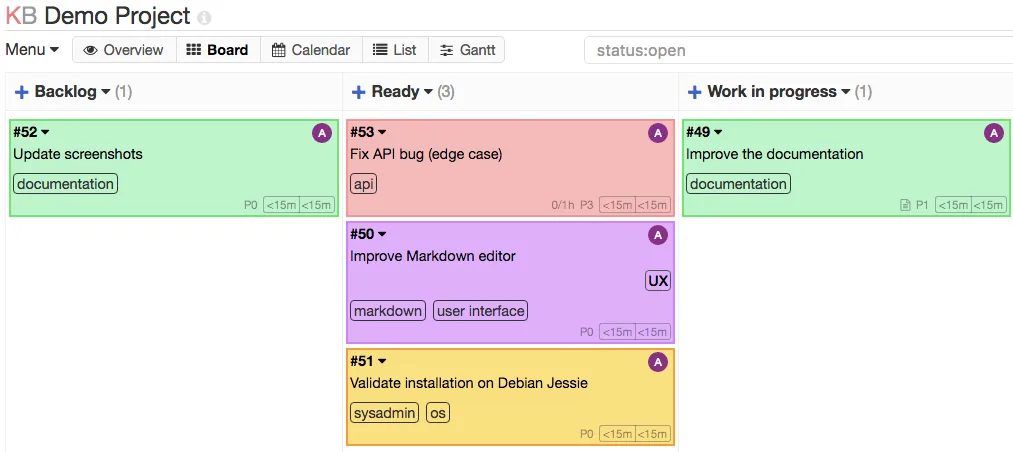
These reports answer the question project managers and finance actually ask: where is the money going on this job, and how much more will it need?
All four platforms we implement can cost projects well when configured properly. Depth and setup effort differ. Features vary by edition and version, so confirm for yours.
| Zoho | Odoo | ERPNext | Dynamics 365 | |
|---|---|---|---|---|
| Project structure | Projects, task lists and tasks in Zoho Projects; projects in Zoho Books for accounting | Project app with tasks and sub-tasks, linked to an analytic account | Project and Task doctypes, with Project as a standard accounting dimension | Business Central projects with project tasks; Project Operations for larger services firms |
| Labour cost rate | Cost per hour per user can be set for budgeting in recent editions; loaded rates usually maintained by finance | Employee hourly cost posts timesheet cost to the analytic account | Activity Cost per employee and activity type values timesheets at cost | Resource unit cost on project journals; role-based cost prices in Project Operations |
| Committed cost | Purchase orders linked to projects in Zoho Books; commitment reporting often via Zoho Analytics | PO lines carry analytic distribution; commitment reports available, depth depends on version | Purchase orders by project; budget checks can include ordered amounts | Purchase lines linked to project tasks and planning lines |
| Material issues | Bills and inventory adjustments tagged to projects; limited issue-to-job flow | Stock moves can carry analytic distribution to charge materials to a project | Stock Entry (material issue) with project field | Item lines on project journals consume inventory at cost |
| Overhead allocation | Usually manual journals tagged to projects | Analytic distribution models and manual allocations | Journal entries with project dimension; distribution via accounting dimensions | Allocation journals and indirect cost percentages on items or resources |
| Cost to complete | Budget vs actual in Zoho Projects; forecasting typically in Analytics | Project profitability panel plus custom reports | Project costing fields plus custom reports | Work-in-progress and estimate-to-complete in Project Operations and project WIP methods in Business Central |
Our consultants confirm the exact behavior for your edition during discovery.
Costs that arrive from outside the ERP should land on the right project without re-keying.
Project cost data supports tax filings and audits as well as management decisions. Confirm specific treatments with your tax advisor.
Input VAT on supplier and subcontractor invoices must be recorded separately from the net cost charged to the project. The ERP should post the net amount to project cost and the 5% VAT to the recoverable input tax account.
Project costs flow into taxable income under Federal Decree-Law 47 of 2022. Clean project records make it easier to support deductions and to reconcile accounting profit to taxable income.
End-of-service gratuity under Federal Decree-Law 33 of 2021 is a real employment cost. Accruing it monthly and including it in cost rates keeps project cost honest.
Tax records must generally be kept for at least five years (seven for real estate) under Cabinet Decision 74 of 2023. Timesheets, POs and cost journals linked to projects form part of that trail.
General information, not tax or legal advice. Rules change; confirm current FTA, MOHRE and Ministry of Finance guidance with your advisor.
We do not quote percentages. These are the outcomes UAE project firms typically report once costing runs inside the ERP.
Committed costs and cost-to-complete forecasts show a problem while there is still time to change scope or renegotiate.
Loaded rates show the true cost of each hour, which often changes which projects and clients look worth pursuing.
Actual cost by cost code from finished projects becomes the basis for the next quotation, instead of a rule of thumb.
Costs are coded at entry, so finance stops reclassifying general expenses to projects at the end of each month.
Ranges are typical for a small to mid-size services or contracting firm and depend on data quality and the number of live projects.
Durations are typical ranges; your plan is agreed after discovery.
Review current cost sources, agree the cost code structure and how overheads will be allocated.
Build loaded cost rates from payroll data, set up projects, tasks and cost codes, and configure dimensions.
Make project and cost code mandatory on POs, timesheets, expenses and material issues; load open commitments.
Run two or three live projects through the new process and compare with the old spreadsheet.
Extend to all projects and hold a monthly cost review with each project manager.
We configure the system for the rules UAE businesses report against, and test it before go-live.
General information, not tax or legal advice. Confirm current requirements with the FTA, MOHRE or your advisor. See all UAE compliance guides.
On-site workshops in Dubai, Abu Dhabi and Sharjah, and remote or on-site delivery across the Northern Emirates and free zones.
Official sources and references
Facts on this page were checked against these sources in October 2026. Rules change, so confirm current requirements before acting.
Still have a question? Our consultants are happy to help.
Ask an ExpertThey are largely the same idea. Job costing is the term used more in contracting and manufacturing for one-off orders, while project costing is common in services and consulting. Both assign every cost to a specific job or project and compare it with the estimate.
Add up the annual cost of an employee or role, including salary, allowances, visa and insurance costs, air tickets, leave and gratuity accruals, then divide by realistic productive hours rather than total paid hours. Many firms use role-based rates updated once or twice a year.
For management reporting, yes, through a consistent allocation such as a rate per labour hour. Keep the allocation as a separate line so project managers can see direct cost and overhead separately.
Yes. When purchase orders and subcontracts carry the project and cost code, the ERP reports them as committed cost on approval. This is often the single biggest improvement over invoice-based tracking. Our project procurement software page explains the purchasing side.
It depends on size and complexity. Smaller service firms often fit Zoho Projects with Zoho Books, growing firms often pick Odoo Project or ERPNext Projects, and larger multi-entity groups look at Dynamics 365. We implement all four and recommend by fit.
Most modern ERPs handle project costing natively once projects are set up as a dimension and every transaction carries it. A separate tool usually adds re-keying. See our overview of project management ERP for the wider picture.
Related Solutions
Related Industries
Related ERP Platforms
Related Guides
We review how your costs are captured today and design a costing structure your project managers will actually use.
Dubai, United Arab Emirates










