L
O
A
D
I
N
G


Zoho, Odoo, ERPNext, Dynamics 365 and custom ERP, delivered by one accountable team.

Traders live on margin and stock accuracy. Here is how Odoo and Zoho handle the daily buy-store-sell cycle of a UAE trading business.
For UAE trading companies, Odoo usually suits larger traders needing detailed landed cost splits, complex warehouse routing, high volumes or several companies in one database, while Zoho Books with Zoho Inventory suits many small and mid-sized traders wanting a faster go-live. Deira general traders, Al Quoz building materials distributors and Jebel Ali re-exporters should test both using one of their real shipments.
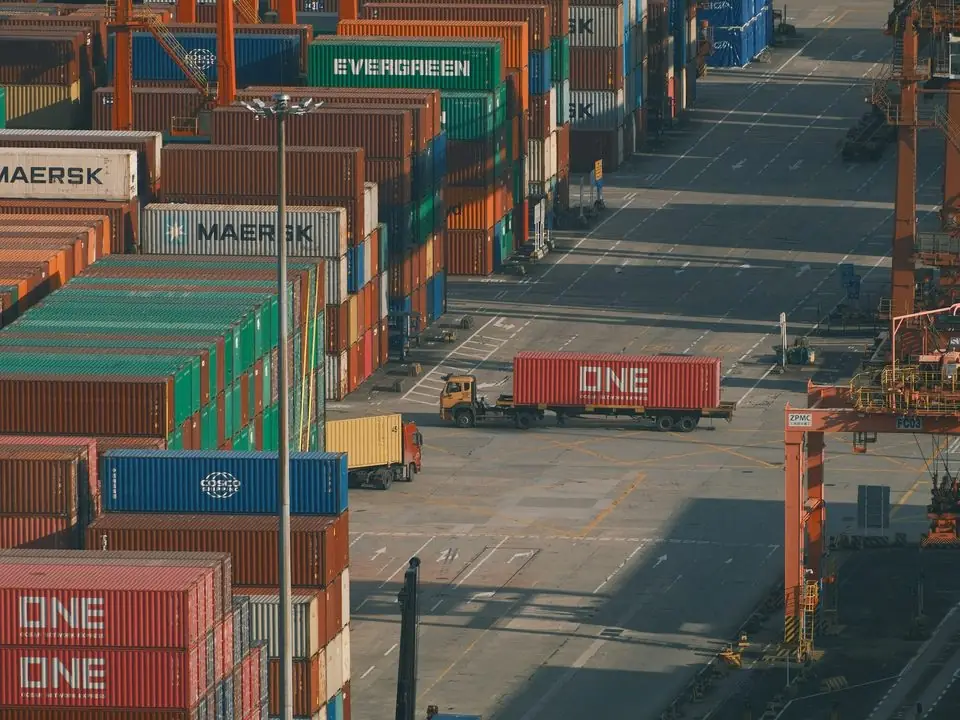
Most comparisons look at the whole suite. Odoo vs Zoho for trading companies UAE is a narrower question: which one handles container arrivals, landed costs, multiple warehouses, credit limits and fast quotations better for a company that buys and resells goods. That is the daily reality for general traders in Deira, building materials distributors in Al Quoz and re-exporters in Jebel Ali.
Zoho approaches trading with a set of connected apps. Zoho CRM manages leads and quotes, Zoho Inventory handles items, warehouses and orders, and Zoho Books runs accounting and VAT. Odoo puts Sales, Purchase, Inventory and Accounting into one database with one item master. Both approaches work. They feel different once you have thousands of SKUs and several people touching the same order.
We are a Zoho Premium Partner and an Odoo Official Partner, and we implement both for traders. For a broader suite-level view, see our Zoho vs Odoo UAE page. Here we stay focused on the trading cycle.
The products we configure, integrate and support on projects like this one.

 Odoo Invoicing / Accounting
 Odoo Sales
 Odoo CRM
 Odoo Inventory
Product names and logos are trademarks of their respective owners and are shown only to identify the software we implement.
Zoho here means Zoho Books plus Zoho Inventory, with Zoho CRM where noted. Odoo means Sales, Purchase, Inventory and Accounting.
| Odoo | Zoho (Books + Inventory) | |
|---|---|---|
| Item master | Single product master with variants, units of measure and packaging | Items with variants (item groups), units and composite items |
| Warehouses | Multiple warehouses, locations and routes, including bin locations | Multiple warehouses; bin locations available in higher plans |
| Landed costs | Landed cost entries spread freight, duty and clearing across receipts | Landed cost allocation on purchase bills in inventory-enabled setups |
| Batch and serial | Lots and serials with expiry and full traceability | Batch and serial tracking with expiry dates |
| Pricing | Price lists by customer, quantity, date and currency | Price lists by customer and item, with markup or markdown rules |
| Credit control | Credit limits and blocking at order confirmation | Customer credit limits with warnings and approval workflows |
| Purchase planning | Reordering rules and replenishment reports | Reorder points and purchase order suggestions |
| Drop-ship and back-to-back | Drop-ship and make-to-order routes | Drop-ship and back-order handling |
| Sales channels | Odoo Website, eCommerce and POS in the same database | Integrations with Shopify, Amazon and Zoho Commerce |
| Field sales | Mobile app and Sales app for reps | Zoho CRM mobile with quotes synced to Books and Inventory |
| Scale | Handles high SKU counts and complex routes well when hosted properly | Comfortable for small to mid traders; check API and plan limits for high volumes |
Plan and edition differences apply on both sides; we confirm limits for your volume during discovery.
These are the points where traders feel the difference after go-live.
If freight, customs duty and clearing charges must land on each item before you price it, test landed cost handling with a real container. Odoo's landed cost entries are very flexible; Zoho covers common cases with less setup.
A single Al Quoz warehouse is easy for either. Several warehouses with transit stock, bin locations and pick-pack-ship routes push you toward Odoo Inventory.
Traders with tens of thousands of SKUs and heavy daily order lines should load-test their volume. Odoo scales well on good hosting; Zoho is quick to run but has plan-based limits worth checking.
If the salesperson, credit controller, storekeeper and accountant all handle one order, a single database makes hand-offs easier. Zoho achieves the same through tight sync between CRM, Inventory and Books.
Re-exporters to Africa, the GCC and South Asia buy in USD or EUR and sell in several currencies. Both handle multi-currency; check exchange gain and loss posting and how export documents print.
A small trader can be live on Zoho in weeks with standard settings. Odoo projects for traders take a little longer because routes and costing need more design, but they leave more room to grow.
Match your profile to the row that fits best.
| Choose Odoo if... | Choose Zoho if... | |
|---|---|---|
| Size | Has many SKUs, several warehouses or a group of trading entities | Is a small or mid trader with one or two warehouses |
| Costing | Needs detailed landed cost spread by weight, volume or value | Needs straightforward landed cost on most shipments |
| Channels | Sells through counters, B2B portal and ecommerce from one stock pool | Sells mainly B2B with some online sales through Shopify or Amazon |
| Sales team | Runs inside sales from the ERP itself | Already uses or wants Zoho CRM for a field sales team |
| Budget style | Accepts a larger project for long-term fit | Wants a fast, low-setup start and to grow app by app |
| Free zone stock | Holds goods in a designated zone with separate locations and transfers | Keeps free zone stock as a separate warehouse with simple transfers |
Traders face VAT questions on almost every shipment. Use these checks in demos and confirm treatment with your tax advisor.
Goods imported through customs usually carry import VAT that registered businesses account for on their return. Both Odoo and Zoho can post this through tax codes, but the mapping must match how your customs declarations are recorded.
Goods moved within or between VAT designated zones can follow special rules. Set up separate locations or warehouses so the system shows where stock sits when a sale happens, and let your advisor confirm the VAT treatment.
Every sale must produce a tax invoice with TRN and prescribed fields, and returns need proper credit notes. Check that both tools print bilingual layouts if your customers need them.
Traders exchange many B2B invoices, so e-invoicing will hit them early. Businesses with revenue of AED 50 million or more must appoint an ASP by 30 October 2026 for a 1 January 2027 start. Check the latest Ministry of Finance and FTA guidance as dates have changed before.
General information, not tax or legal advice. Rules change; confirm current FTA, MOHRE and Ministry of Finance guidance with your advisor.
More detail on each platform for traders, plus buying guides.
We configure the system for the rules UAE businesses report against, and test it before go-live.
General information, not tax or legal advice. Confirm current requirements with the FTA, MOHRE or your advisor. See all UAE compliance guides.
On-site workshops in Dubai, Abu Dhabi and Sharjah, and remote or on-site delivery across the Northern Emirates and free zones.
Official sources and references
Facts on this page were checked against these sources in October 2026. Rules change, so confirm current requirements before acting.
Still have a question? Our consultants are happy to help.
Ask an ExpertFor many small and mid traders, yes. It covers items, warehouses, batches, serials, orders and shipments, and syncs with Zoho Books for VAT. Larger traders with complex routing or very high volumes often find Odoo a better long-term fit.
Odoo gives more control over how freight, duty and clearing are split across items. Zoho covers the typical case of allocating charges on a purchase bill. Test both with one of your real shipments.
Odoo supports multiple companies in one database with intercompany rules. Zoho handles this through separate organizations in Books and Inventory, which works but keeps reporting separate unless you add analytics. See our multi-company ERP page for detail.
Yes. Odoo has a Barcode app for receipts, transfers and picking. Zoho Inventory supports barcode scanning through its apps and compatible scanners. Hardware choice matters, so test with your scanners.
A focused Zoho rollout for a trader often takes 4-8 weeks. Odoo projects often run 8-14 weeks, depending on warehouses, costing and data migration. These are typical ranges, not promises.
Yes. We move item masters, customers, vendors, opening stock and balances from Tally, QuickBooks, Sage or Excel. Opening stock valuation is the step that needs the most care.
Related Solutions
Related Industries
Related ERP Platforms
Share one recent shipment and order flow, and we will show you how Odoo and Zoho would record it end to end.
Dubai, United Arab Emirates