L
O
A
D
I
N
G


Zoho, Odoo, ERPNext, Dynamics 365 and custom ERP, delivered by one accountable team.

ERP records every order, receipt and payment. Supply chain management software plans and coordinates the flow of goods across suppliers, ports, warehouses and customers. Most UAE companies need ERP first and selective SCM tools later.
ERP is the system of record for what happened and what is committed: orders, receipts, stock, sales and payables. SCM (supply chain management) software plans what should happen next across suppliers, ports, warehouses and customers, through tools like demand planning, advanced scheduling, transport management and control towers. Most UAE companies need ERP first and add selective SCM tools later.
ERP vs SCM is a confusing comparison because the two overlap heavily. Supply chain management (SCM) is a discipline: planning demand, sourcing from suppliers, producing, storing, moving and delivering goods, and handling returns. SCM software is the set of tools that supports it, such as demand planning, advanced planning and scheduling, transport management, supplier portals and supply chain control towers. ERP is the system of record that holds the purchase orders, stock, shipments and invoices those tools act on.
Put simply, ERP answers what happened and what is committed: what we ordered, received, hold, sold and owe. SCM tools answer what should happen next across the network: how much to buy from which supplier, which warehouse should ship, which route and container is cheapest, and what to do when a vessel is delayed. Some products sit on both sides; Microsoft even names its larger ERP Dynamics 365 Supply Chain Management.
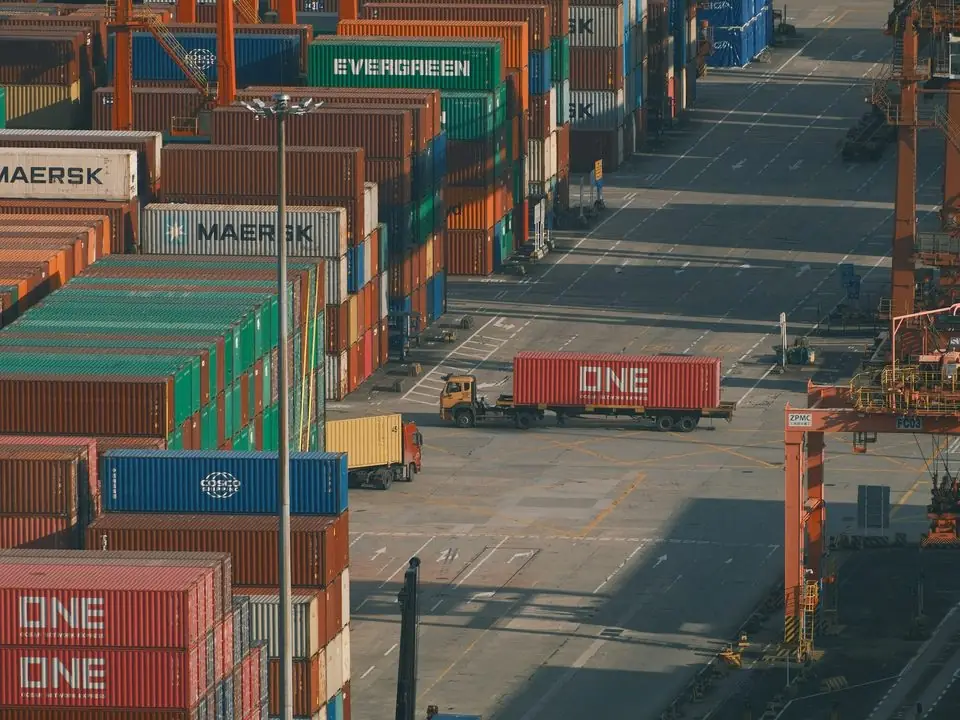
For UAE businesses the supply chain is often long and international. A Dubai importer may buy from suppliers in China, India and Europe, clear goods at Jebel Ali, hold them in a free zone and re-export across the GCC and Africa. Shipping disruptions in recent years have shown how quickly lead times can change. That makes good supply chain data valuable, but the foundation is still accurate ERP transactions: no planning tool fixes wrong stock or missing purchase orders.
A practical way to see the boundary is to look at one import. The buyer raises a purchase order in ERP. The supplier ships, and the freight forwarder's portal shows the container milestones. On arrival, the clearing agent handles customs, and the duty, freight and handling charges are booked in ERP as landed cost against the receipt. Stock is received into the warehouse and becomes available to sell. The ERP holds every financial and stock record in that chain; SCM tools add the forecasting before the order and the visibility while goods are moving.
SCM is usually described as plan, source, make, deliver and return, plus visibility across all of them. Here is how each maps to ERP.
Demand forecasting and supply planning. ERP provides history and reorder rules; dedicated tools add statistical forecasts and scenario planning. See demand planning in ERP.
Supplier selection, RFQs, contracts and performance. ERP handles POs, approvals and price lists; supplier portals and sourcing suites add collaboration. Our supplier management page goes deeper.
Production planning and execution. ERP manufacturing and MRP cover most SMEs; advanced schedulers help complex plants. Compare in ERP vs MRP.
Inventory and warehouse operations. ERP covers stock records; a WMS adds floor-level control for high-volume sites.
Transport planning, carrier selection, routing and proof of delivery. ERP issues delivery notes; transport management systems optimise loads and routes.
Tracking shipments across suppliers, ports and carriers. ERP shows open POs and expected dates; control towers and forwarder portals add live milestones.
How an ERP compares with dedicated supply chain software for a UAE importer and distributor.
| ERP | Dedicated SCM tools | |
|---|---|---|
| Core role | Record and control transactions | Plan, optimise and coordinate flows |
| Time horizon | Today and committed orders | Weeks to months ahead, plus what-if scenarios |
| Purchasing | PR, RFQ, PO, GRN, three-way match | Supplier collaboration, forecast sharing, sourcing events |
| Inventory | Quantities and value per warehouse | Optimal stock levels and placement across the network |
| Imports | Shipment records, landed cost and customs duty on stock value | Container booking, milestone tracking, port and carrier data |
| Transport | Delivery notes and basic delivery scheduling | Load building, route optimisation, carrier rate comparison |
| Finance link | Native: costs, payables, VAT, ledger | Through integration back to ERP |
| Users | Buyers, storekeepers, accounts, sales | Planners, logistics managers, supply chain heads |
| Typical UAE fit | Nearly every trading, distribution and manufacturing company | Larger multi-country distributors and manufacturers |
A hedged overview; capabilities change by edition and release, so confirm for your version.
| Zoho | Odoo | ERPNext | Dynamics 365 | |
|---|---|---|---|---|
| Purchasing and approvals | Purchase orders and approvals in Zoho Inventory and Books | Purchase with RFQs, agreements and approvals | Material request, RFQ, supplier quotation, PO | Purchasing in Business Central; procurement and sourcing in Supply Chain Management |
| Planning | Reorder points; forecasting often via Zoho Analytics | Replenishment rules with lead times | Reorder levels and production planning | Planning worksheet; master planning and demand forecasting in Supply Chain Management |
| Landed cost | Landed cost in Zoho Inventory on supported plans | Landed costs in Inventory | Landed cost voucher | Item charges in Business Central; landed cost features in Supply Chain Management |
| Transport | Shipment tracking via carrier integrations | Delivery methods and carrier connectors | Delivery trips | Transportation management in Supply Chain Management |
We implement Zoho, Odoo, ERPNext and Dynamics 365. Compare platforms in Zoho vs Dynamics 365 and Odoo vs ERPNext.
Use these to decide where to invest next.
We configure the system for the rules UAE businesses report against, and test it before go-live.
General information, not tax or legal advice. Confirm current requirements with the FTA, MOHRE or your advisor. See all UAE compliance guides.
On-site workshops in Dubai, Abu Dhabi and Sharjah, and remote or on-site delivery across the Northern Emirates and free zones.
Official sources and references
Facts on this page were checked against these sources in October 2026. Rules change, so confirm current requirements before acting.
Still have a question? Our consultants are happy to help.
Ask an ExpertPartly. Purchasing, inventory, manufacturing and delivery are standard ERP modules and form the transactional core of SCM. Advanced planning, transport optimisation and supplier collaboration are often separate products or premium modules. Microsoft's Dynamics 365 Supply Chain Management is one example where planning and execution sit in the same product family.
Most need a well-configured ERP with purchasing, inventory and landed cost before anything else. Dedicated SCM tools pay off for larger distributors with many suppliers, sites and countries.
A WMS controls work inside one warehouse. SCM covers the whole flow from supplier to customer. Our ERP vs WMS page explains the warehouse piece.
Customs documentation is usually handled with your broker and the relevant customs platform. VAT on imports, including reverse charge where applicable, should be recorded in ERP so it reaches the VAT return. Confirm treatment with your tax advisor.
It is an ERP application with strong supply chain functions, typically used with Dynamics 365 Finance. Smaller companies often start with Business Central, which also includes purchasing, inventory and planning.
Through APIs, connectors or middleware that sync items, suppliers, POs, shipments and receipts. Keep ERP as the master for costs and payables so the ledger stays accurate.
Related Solutions
Related Industries
Related ERP Platforms
Tell us how goods move from your suppliers to your customers and we will show which parts ERP should handle and where specialist tools help.
Dubai, United Arab Emirates