L
O
A
D
I
N
G


Zoho, Odoo, ERPNext, Dynamics 365 and custom ERP, delivered by one accountable team.

A CRM consultant's job is to answer the questions that come before configuration: what your sales process really is, which platform fits it, and why the current system is not being used.
CRM consulting in the UAE is advisory work done before or instead of implementation: mapping the real sales process, writing requirements, running scripted demos to choose between platforms, or diagnosing why an existing CRM has poor adoption. The output is a set of decisions, a weighted platform scoring and a roadmap. UAE ERP Experts implements Zoho, Odoo, ERPNext and Dynamics 365 and discloses this.
CRM consulting in the UAE is advisory work that happens before, or instead of, a full implementation. Typical requests are: help us choose between two or three CRMs, write requirements we can send to vendors, tell us why our existing CRM has poor adoption, or design a sales process for a new business line. The output is a set of decisions and documents, not a configured system.
UAE companies often reach this point after a false start. A CRM was bought because a competitor uses it, the free trial looked good, and six months later the sales director still prints a pipeline from Excel. Consulting steps back and looks at how leads arrive, who qualifies them, how quotations are approved, how long deals take in your sector, and what managers need to see. Only then does the platform question make sense. Our wider ERP consulting practice uses the same approach when CRM is one part of a larger system decision.
Because we implement Zoho, Odoo, ERPNext and Dynamics 365, we say openly that we have a stake in those platforms. We recommend by fit, and sometimes the honest advice is to keep and fix the CRM you already have. When the work moves into delivery, it continues as a CRM implementation project with the same team.

Most requests fall into one of these situations.
Vendor demos show the best path through the product, not your awkward cases such as tender bids, distributor pricing or multi-currency quotes. Decisions based on demos alone often miss the deal-breakers.
The process lives in the heads of two senior salespeople. Without stage definitions and qualification criteria, any CRM will simply reproduce the inconsistency in software.
Licences are paid for, but only a third of the team logs in weekly. Management assumes the software is wrong when the real causes are too many mandatory fields and no manager follow-up.
Sales reports one revenue number, finance another. Usually customer records, price lists and won-deal definitions were never aligned between the CRM and the ERP.
Nobody is responsible for the CRM after go-live. Fields multiply, reports break and every department requests changes directly from the vendor.
A consulting assignment follows a short, fixed sequence so you get decisions quickly.
One shared database: every step updates stock, finance and reports in real time.
These are the workstreams we cover. A small engagement may focus on two or three of them.
Lead sources, routing rules, response times and how unqualified leads are recycled.
Stage definitions, exit criteria, probabilities and the cadence of pipeline reviews.
Price lists, discount authority, approval routes and the link from quote to sales order.
Accounts, contacts, groups and branches, including TRN and billing entity rules.
What must connect to email, telephony, WhatsApp, website and the ERP, and in which direction.
The handful of reports management truly uses, defined before anything is built.
Who owns the CRM, who approves changes, and how requests are prioritized.
Usage measurement, role guides and the manager routines that keep data current.
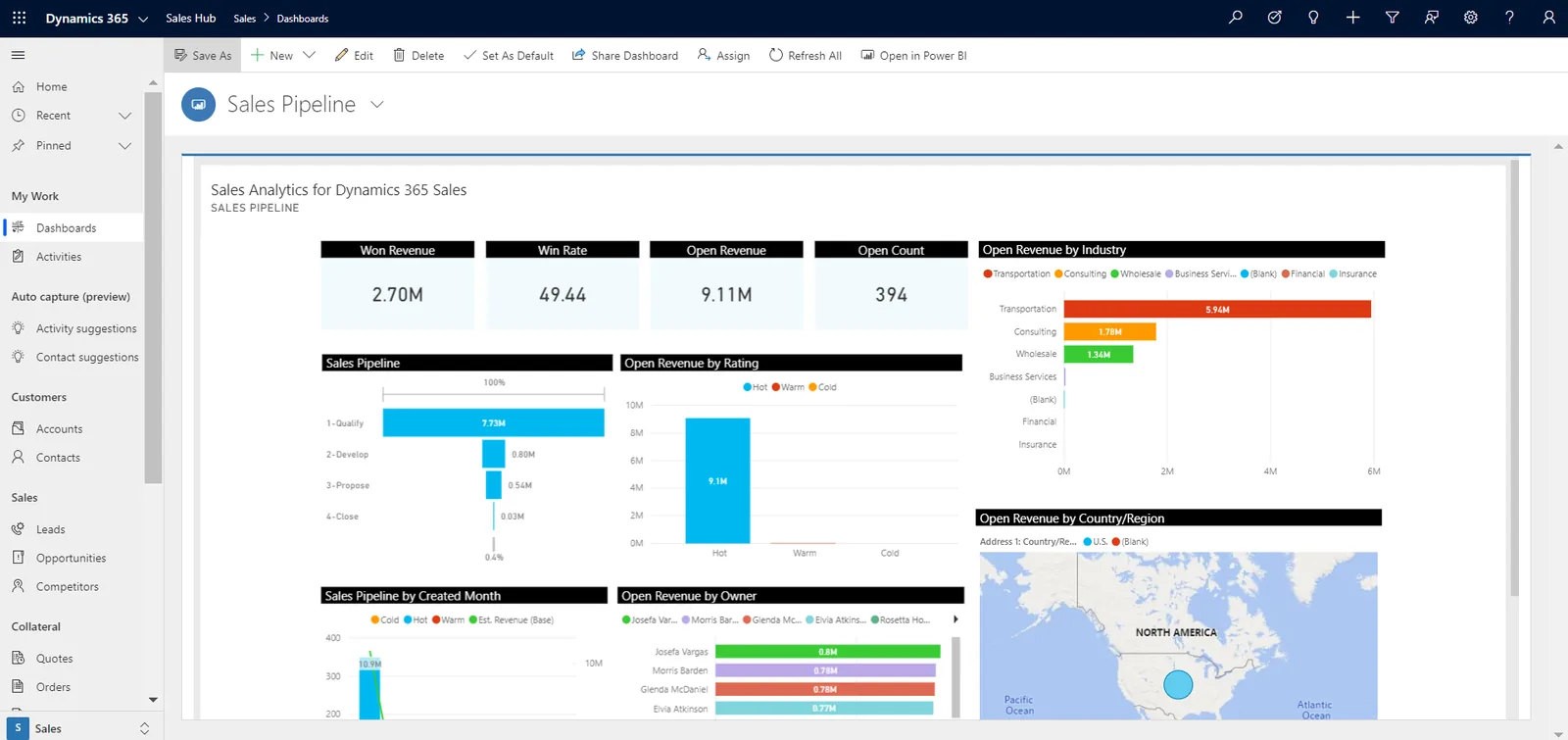
For existing CRMs we start with usage and data quality evidence before giving opinions.
A balanced starting view; the final recommendation depends on your requirements and scripted demos.
| Zoho | Odoo | ERPNext | Dynamics 365 | |
|---|---|---|---|---|
| Core strength | Dedicated CRM with a wide app ecosystem | CRM inside a full business suite | Open-source CRM and ERP on one data model | Enterprise CRM on Microsoft Dataverse |
| Typical buyer | Sales-led SMEs and mid-size teams | SMEs wanting sales, stock and accounts together | Cost-aware firms with some technical capacity | Microsoft 365 organizations and larger sales teams |
| Customization approach | Configuration, Blueprint and Deluge scripts | Settings, Studio (Enterprise) or Python modules | Custom fields, scripts and Frappe apps | Power Apps, Power Automate and plugins |
| Link to accounting | Zoho Books or another ERP via integration | Native, same database | Native, same database | Business Central or Finance, via Dataverse |
| Licensing model | Per user per edition | Per user, with app scope by edition | Open source; pay for hosting and services | Per user by Sales edition |
| Watch-outs | Many apps to govern; check edition limits | Studio and some apps need Enterprise | Needs disciplined hosting and upgrades | Higher total cost and admin effort |
Summaries are general; confirm current editions and pricing with each vendor.
Each one is documented with direction, frequency and owner so the implementer is not guessing.
These shape requirements and hosting choices. Confirm legal and tax matters with your advisors.
Customer TRN, place of supply and tax categories on products affect every invoice that follows a won deal. Requirements should state who maintains them.
With PINT AE e-invoicing phasing in from 2027 for most businesses, buyer master data from the CRM must be accurate. Check the latest MoF/FTA guidance for dates and scope.
Tax records generally must be kept for at least five years (seven for real estate). Requirements should cover how quotations and order history are retained and archived.
General information, not tax or legal advice. Rules change; confirm current FTA, MOHRE and Ministry of Finance guidance with your advisor.
The value is in fewer wrong turns, not in documents for their own sake.
A weighted scoring of platforms against written requirements gives management a clear rationale.
Implementers receive defined processes and data rules, which reduces change requests mid-project.
Health checks often show the current CRM can work with simpler layouts and better routines.
Shared definitions of customer, deal value and won order end the monthly argument about numbers.
Most engagements are short. Ranges below are typical, not fixed.
Durations are typical ranges; your plan is agreed after discovery.
Sessions with the sales head, team leads, marketing, finance and IT.
Current-state map, pain points and a prioritized requirements list.
Two or three platforms demonstrated against your own scenarios, scored by your team.
Recommended platform, phasing, integration plan and the main cost drivers.
We configure the system for the rules UAE businesses report against, and test it before go-live.
General information, not tax or legal advice. Confirm current requirements with the FTA, MOHRE or your advisor. See all UAE compliance guides.
On-site workshops in Dubai, Abu Dhabi and Sharjah, and remote or on-site delivery across the Northern Emirates and free zones.
Official sources and references
Facts on this page were checked against these sources in October 2026. Rules change, so confirm current requirements before acting.
Still have a question? Our consultants are happy to help.
Ask an ExpertFor a team of five with a simple process, a short workshop is often enough. For companies with several product lines, branches or long B2B deals, a few weeks of consulting usually saves far more in avoided rework. Our CRM for SMEs page covers the lighter route.
We implement Zoho, Odoo, ERPNext and Dynamics 365 and say so. If your requirements point to keeping your current CRM, we will tell you, and we can still help improve its process and data.
Yes. A health check looks at configuration, data quality, usage and integrations, and gives a prioritized fix list. You decide who carries out the fixes.
Typically a process map, a requirements document, a scored platform comparison and a phased roadmap with cost drivers. For CRM-ERP decisions, see ERP and CRM integration for how the two are connected.
Yes. Platform-specific advice is available, for example through our Zoho consulting services or Odoo consulting teams.
Usually as a fixed-scope engagement based on the number of workshops, stakeholders and deliverables. We agree scope before starting so there are no open-ended hours.
Related Solutions
Related Industries
Related ERP Platforms
Book a session with a CRM consultant to review your sales process, current tools and the options that genuinely fit.
Dubai, United Arab Emirates