
L
O
A
D
I
N
G


Zoho, Odoo, ERPNext, Dynamics 365 and custom ERP, delivered by one accountable team.

Profit does not pay salaries on the 28th. Cash does. An ERP pulls receivables, payables, cheques, payroll and tax dates into one forecast you can act on.
An ERP supports cash flow management by building a rolling 13-week forecast from live data: reconciled bank balances, open receivables with realistic payment dates, approved payables, post-dated cheques given and received, WPS payroll, VAT payments, rent and loan installments. UAE companies can then spot weeks where salaries, rent and supplier payments coincide and decide early whether to chase collections, delay payments or arrange funding.
An ERP for cash flow management in the UAE answers a simple question with real data: how much cash will we have in each bank account on each of the next 13 weeks, and what do we need to do about it? For most SMEs the honest answer today comes from an owner's spreadsheet that is rebuilt every Sunday from bank balances, a list of cheques and the AR ageing.
UAE businesses face a particular cash pattern. Customers pay on long terms or by post-dated cheque, suppliers want advances on imports, salaries must go through WPS on a fixed cycle, the VAT payment falls due after each tax period, and project businesses carry retention for a year or more. A profitable company can still run short in the week rent, salaries and a large LC fall together.
This page is about forecasting and controlling cash. It draws on the receivables and payables processes described in ERP for accounts receivable and accounts payable, and on reliable bank balances from bank reconciliation.

The issue is rarely a lack of effort. It is that cash data lives in too many places to combine every week.
Someone exports AR, AP and bank balances into Excel every week. By the time it is ready, the numbers are already a few days old and the formulas have drifted.
Cheques received and cheques issued sit in separate registers. A large PDC given to a landlord or supplier is missed until it hits the bank.
Customers rarely pay on the invoice due date. A forecast that assumes they do overstates incoming cash, sometimes by a wide margin.
Payroll, visa and labor costs, VAT payments, loan installments and annual license renewals are known in advance but not entered anywhere the forecast can see.
Groups with AED, USD and EUR accounts at several banks cannot see a consolidated position without logging into each portal.
Good cash management is a weekly routine supported by the ERP, not a one-off report.
One shared database: every step updates stock, finance and reports in real time.
A cash forecast is only as good as the transactions behind it. These modules supply the data.
Reconciled balances for every account, the starting point for any forecast.
Open invoices with expected payment dates based on customer history, plus PDCs in hand.
Approved bills by due date, PDCs issued and planned supplier advances.
Salary, overtime and end-of-service amounts on the WPS cycle. See payroll accounting integration.
Confirmed sales orders and open purchase orders that will turn into cash flows in later weeks.
Rent, loan installments, insurance and license fees set up as recurring commitments.
Foreign currency balances and payables translated at current rates for one consolidated view.
Cash forecast versus actual, by week and by bank, in a dashboard owners actually open.
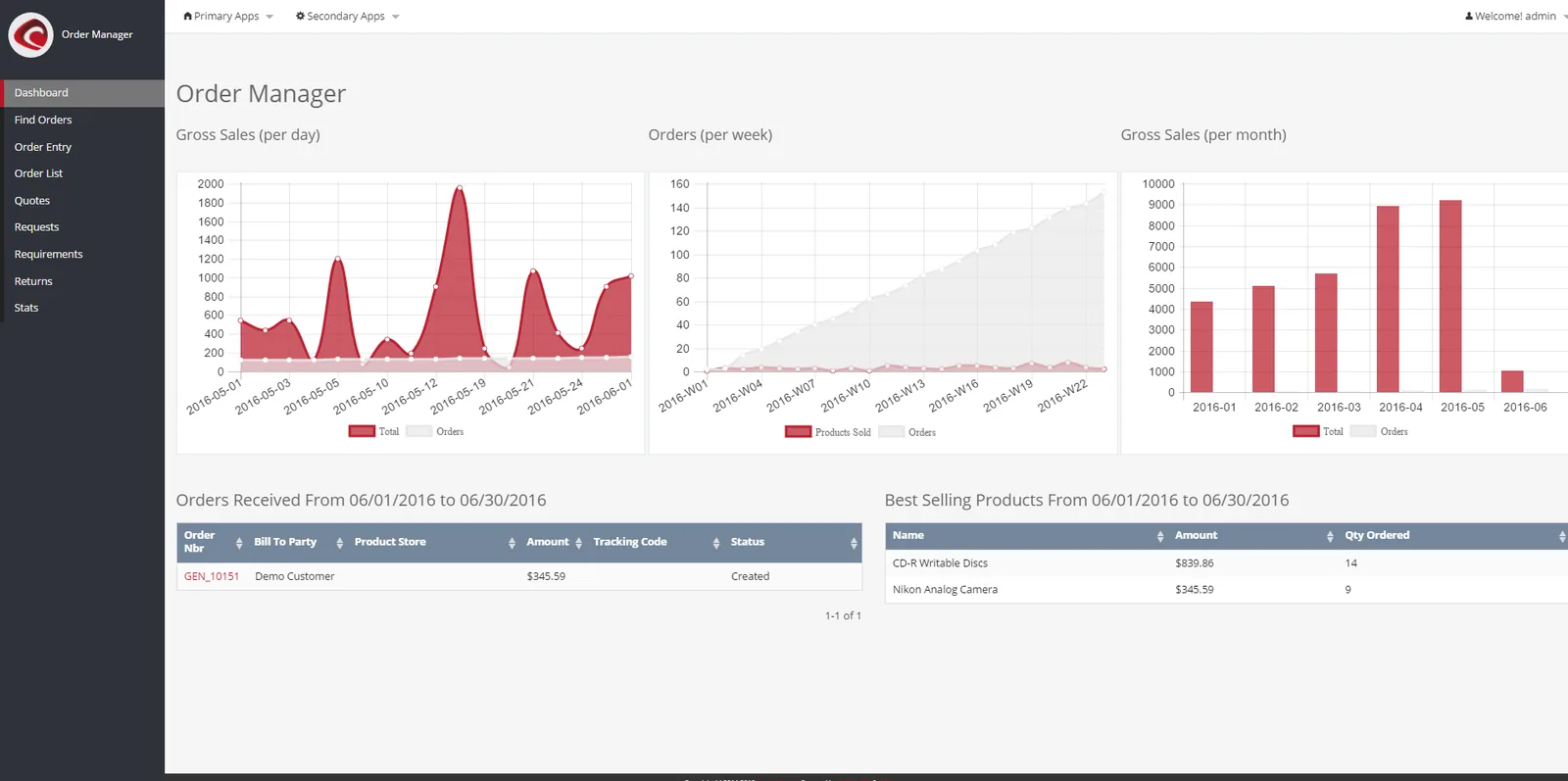
Owners and CFOs typically review this once a week, with the finance manager checking the daily position.
Each platform produces a cash flow statement. Forward-looking forecasting differs more. Confirm details for your version.
| Zoho | Odoo | ERPNext | Dynamics 365 | |
|---|---|---|---|---|
| Cash flow statement | Cash flow report in Zoho Books | Cash flow statement in Accounting reports | Cash Flow report, with optional cash flow mapping | Cash flow statement in Business Central and Finance |
| Forward forecast | Cash flow insights in Zoho Books; deeper forecasts usually via Zoho Analytics | Typically built with spreadsheets or a custom report from AR/AP data | Usually a custom report or dashboard from receivables and payables | Cash flow forecast feature in Business Central; Finance has cash flow forecasting |
| Bank balances in one view | Banking overview across connected accounts | Accounting dashboard per bank journal | Bank account balances and dashboards | Bank account list and Role Center tiles |
| PDC visibility | Depends on how PDCs are configured | Depends on configuration or localization | Reference and clearance dates on payment entries | Depends on partner design |
| BI and dashboards | Zoho Analytics | Odoo spreadsheets and dashboards (Enterprise) | Built-in dashboards and query reports | Power BI |
Forecasting depth varies by edition. We design the forecast logic around the data your platform holds.
The more cash data flows in automatically, the less the forecast depends on manual updates.
Tax and payroll obligations are some of the most predictable outflows, so they belong in the forecast. Confirm dates with your tax advisor.
VAT returns and payments are generally due by the 28th day after the end of each tax period, usually quarterly. The ERP can place the estimated payable on that date.
Corporate tax at 9% above the AED 375,000 threshold is generally payable within nine months of the financial year end. See ERP for corporate tax compliance.
Salaries paid through WPS follow a fixed schedule, and late payment can trigger MOHRE action. Payroll is usually the largest fixed outflow in the forecast.
Gratuity accrues at 21 days' basic wage per year for the first five years and 30 days after that. Large settlements on resignations should be visible in the forecast.
General information, not tax or legal advice. Rules change; confirm current FTA, MOHRE and Ministry of Finance guidance with your advisor.
These benefits come from routine use of the forecast, not from the report alone.
Shortfalls show up weeks ahead, giving time to chase collections, delay a payment or arrange funding.
The forecast refreshes from ERP data, so finance spends time on decisions instead of copying.
A credible forecast supports facility renewals and working capital requests.
Comparing forecast to actual each week improves the assumptions. AI financial forecasting can help with payment-date predictions.
Cash forecasting works best once AR, AP and bank are already clean in the ERP. Durations are typical ranges.
Durations are typical ranges; your plan is agreed after discovery.
Confirm bank reconciliations are current and that AR, AP and PDC registers are complete.
Agree categories, horizon, assumptions for customer payment behavior and fixed commitments.
Build the forecast report or dashboard and test it against the last few months of actual cash.
Run the weekly cash meeting from the ERP and refine assumptions as variances appear.
We configure the system for the rules UAE businesses report against, and test it before go-live.
General information, not tax or legal advice. Confirm current requirements with the FTA, MOHRE or your advisor. See all UAE compliance guides.
On-site workshops in Dubai, Abu Dhabi and Sharjah, and remote or on-site delivery across the Northern Emirates and free zones.
Official sources and references
Facts on this page were checked against these sources in October 2026. Rules change, so confirm current requirements before acting.
Still have a question? Our consultants are happy to help.
Ask an ExpertIt is a week-by-week projection of receipts and payments for roughly one quarter. It is short enough to be accurate and long enough to act on, which is why lenders and CFOs favor it.
Petty cash floats are usually small and treated as a fixed weekly outflow. Our petty cash management page covers how to control the floats themselves.
It can use each customer's average days to pay instead of the invoice due date. Some platforms add AI-based predictions, but they still need a finance review.
Most UAE SMEs and mid-sized groups do not. ERP data plus a well-designed forecast report covers their needs. Large groups with complex funding may add treasury tools later.
Balances and flows are translated into AED at current rates for the consolidated view, while each account can still be viewed in its own currency.
Related Solutions
Related Industries
Related ERP Platforms
We will look at where your cash data lives today and design a weekly forecast inside your ERP.
Dubai, United Arab Emirates










