
L
O
A
D
I
N
G


Zoho, Odoo, ERPNext, Dynamics 365 and custom ERP, delivered by one accountable team.

Move expense control from month-end variance hunting to checks at the point of commitment: requisition, purchase order, card spend and claim.
ERP software controls expenses by checking spending at the point of commitment rather than after invoices post. Purchase requisitions, purchase orders, corporate card spend, employee claims and recurring contracts such as rent, AMCs and subscriptions are each checked against an approved budget line, cost center and spending policy, then routed for approval by limit. Finance sees variances during the month instead of weeks after month-end.
ERP for expense control UAE is about one question: can the business stop a cost before it is committed, rather than explain it after the invoice is posted? In most Dubai and Sharjah SMEs the answer today is no. Department heads approve purchase requests by email, staff pay for fuel, visas, courier and client lunches with personal cards, and finance only sees the full picture when the general ledger closes three weeks after month-end.
Real control sits at the commitment points: the purchase requisition, the purchase order, the corporate card swipe, the employee claim and the recurring contract (rent, AMC, software subscriptions). An ERP that checks each of these against an approved budget line, a cost center and a spending policy turns expense control into a daily routine instead of a quarterly argument. It also feeds the wider ERP finance and accounting setup, so every committed amount shows up in reports before the bill is booked.
This page covers the control framework: budgets, policies, coding rules and the reports a CFO reviews. The approval routing itself is covered in detail on our page on ERP for expense approval, and the purchasing side of commitments sits under procurement control.

These are the patterns finance managers in UAE trading, contracting and services firms describe most often.
A manager approves a request on WhatsApp or email without knowing that the marketing or maintenance budget is already 90% used. The overspend is only visible in the next management pack.
Purchase orders, signed AMCs and annual software renewals are not recorded until the supplier invoice arrives. Finance forecasts actual spend while the real exposure is much higher.
The same courier cost is booked to admin in one month and to sales in the next. Cost center reports become unreliable, so nobody trusts them for decisions.
Hotel limits, per diems, mobile allowances and client entertainment rules exist on paper, but nothing stops a claim that breaks them. Reviewers catch some exceptions and miss the rest.
Client entertainment and certain vehicle costs carry special VAT and corporate tax treatment. When they are lumped into general expense accounts, the tax team has to re-analyse ledgers at return time.
The flow below applies the control before the money is committed, then reconciles against what was actually spent.
One shared database: every step updates stock, finance and reports in real time.
Expense control is not a single app. It is a set of rules spread across these modules.
Annual and monthly budgets by account, cost center, project or branch, with warn or block actions when a document exceeds the remaining amount.
Captures the commitment early so that open POs reduce available budget before any bill is posted.
Mobile receipt capture, category limits, per diem rules and manager approval for out-of-pocket spend.
Mandatory cost center, department, project or branch tags so every expense lands in the right report.
Multi-level approval by amount, category and department, with delegation when an approver is on leave.
Three-way match between PO, goods receipt and supplier bill so that unapproved costs cannot slip in through invoices.
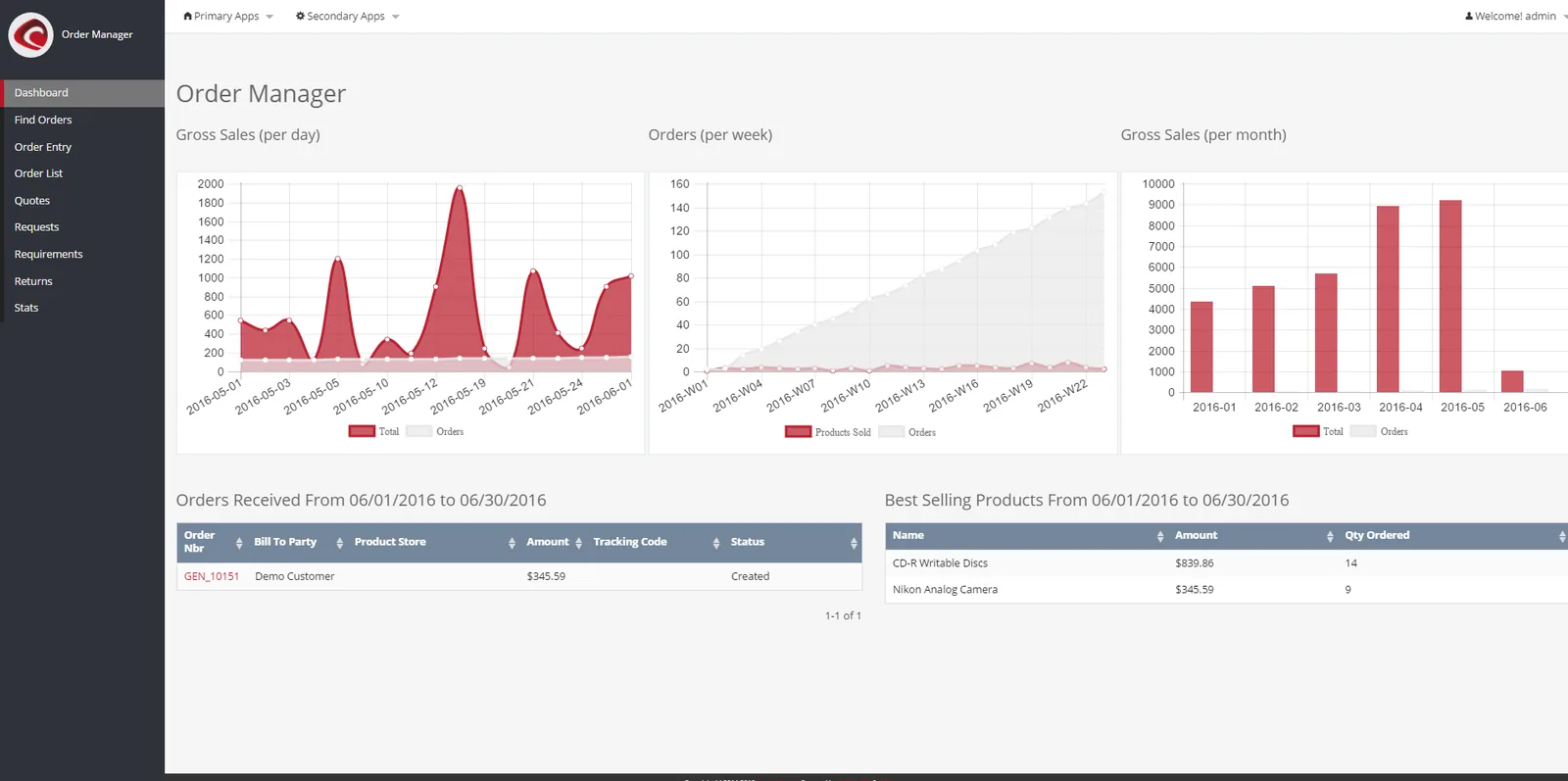
A good control dashboard shows commitments and actuals together, so the remaining budget is real.
All four platforms we implement can enforce expense control. They differ in where the budget check sits and how much is native. Capabilities vary by edition and version, so confirm for yours.
| Zoho | Odoo | ERPNext | Dynamics 365 | |
|---|---|---|---|---|
| Budget setup | Budgets in Zoho Books by account and reporting tags | Budgets on analytic accounts (Accounting app) | Budget doctype per cost center or project | G/L budgets with dimensions (Business Central); budgeting module in Finance |
| Check at PO / requisition | Mainly reporting; hard stops usually via custom functions or Zoho Creator | Budget reporting; blocking typically needs configuration or a module | Native warn or stop on material request, PO and actual expense | Commitment and budget control available, strongest in Dynamics 365 Finance |
| Employee expense policy | Zoho Expense: policies, per diem, receipt scan, card feeds | Expenses app with categories and approval | Expense Claim with types and approver | Native in Finance; Business Central usually via a partner app |
| Cost center coding | Reporting tags, can be made mandatory | Analytic distribution on lines | Cost center mandatory on GL entries | Dimensions with default and mandatory rules |
| Commitment visibility | Open PO reports | Purchase analysis by analytic account | Budget variance report includes POs | Encumbrance options in Finance |
| Best fit | SMEs wanting quick policy control on staff spend | Growing firms wanting one database for purchasing and expenses | Firms that want hard budget stops without licence cost per user | Larger or multi-entity groups needing formal commitment control |
Feature names and availability change between versions. We confirm the exact behavior in a demo on your edition.
Spend enters the ERP from many channels. Each one needs to be connected or controlled.
Expense categories carry tax consequences. Configure them at setup so returns do not need manual analysis. This is general information, not tax advice; confirm the treatment with your tax advisor.
Input VAT is recoverable only with a valid tax invoice and only for business use. Expense categories should carry default tax codes, and entertainment for non-employees is generally blocked from recovery, so it needs its own category.
Under Federal Decree-Law No. 47 of 2022, 50% of qualifying entertainment expenditure for customers, shareholders and suppliers is not deductible. Tracking it in a separate account makes the corporate tax computation simpler.
Tax records, including receipts and approvals, are generally kept for at least five years (seven for real estate). Store receipt images against the transaction, not in a shared folder.
From the 2027 e-invoicing phases, supplier invoices will arrive through Accredited Service Providers as structured data. Matching them to POs and budgets becomes easier if your coding rules are already clean. Check the latest Ministry of Finance / FTA guidance for dates.
General information, not tax or legal advice. Rules change; confirm current FTA, MOHRE and Ministry of Finance guidance with your advisor.
The benefits are practical and show up in the monthly close and budget meetings.
Department heads see that a budget is running out while there is still time to delay or re-scope spend.
Mandatory coding means the P&L by department reflects reality, so budget conversations focus on decisions, not data.
Blocked and non-deductible items are separated at entry, reducing rework on VAT and corporate tax returns.
Every commitment has a requester, an approver and a budget line, with a full audit trail.
Durations are typical ranges for a mid-sized UAE company and depend on how clean your chart of accounts and cost centers are.
Durations are typical ranges; your plan is agreed after discovery.
Agree cost centers, expense categories, approval limits and which budgets warn versus block.
Set up budgets, dimensions, expense categories, tax codes and workflow rules.
Connect card and bank feeds and set up mobile receipt capture.
Run live with a willing department and one high-spend department, then tune limits.
Extend to all cost centers and start the weekly variance review.
We configure the system for the rules UAE businesses report against, and test it before go-live.
General information, not tax or legal advice. Confirm current requirements with the FTA, MOHRE or your advisor. See all UAE compliance guides.
On-site workshops in Dubai, Abu Dhabi and Sharjah, and remote or on-site delivery across the Northern Emirates and free zones.
Official sources and references
Facts on this page were checked against these sources in October 2026. Rules change, so confirm current requirements before acting.
Not quite. Expense management software focuses on employee claims and receipts. Expense control in an ERP also covers purchase orders, contracts and budgets, so it controls supplier spend as well as staff spend.
Most UAE companies start with warnings on operating budgets and hard stops on a few discretionary categories such as marketing events or capex. Blocking everything on day one usually creates workarounds outside the system.
For many SMEs, Zoho Books with Zoho Expense covers claims, policies, card feeds and budget reports. Hard budget stops on purchase orders usually need custom functions, so larger firms sometimes choose ERPNext, Odoo or Dynamics 365 instead.
Tag expenses to projects as well as cost centers. Our page on project expense management explains site costs, reimbursable expenses and project budgets in more detail.
Petty cash is a common leak because it bypasses POs. Treat each float as a controlled account with its own replenishment workflow, as described in ERP for petty cash management.
Expense control is the preventive side; budget vs actual reporting is the review side. Both rely on the same budgets and cost center structure, so design them together.
Related Solutions
Related Industries
Related ERP Platforms
Related Guides
We review your budgets, approval limits and coding rules and show where commitments slip past finance today.
Dubai, United Arab Emirates










