L
O
A
D
I
N
G


Zoho, Odoo, ERPNext, Dynamics 365 and custom ERP, delivered by one accountable team.

Manage gold, diamond and gemstone stock by weight, karat and piece, price every sale from the daily rate, and keep the records UAE regulators expect from precious metal dealers.
An ERP for jewellery stores in the UAE prices each sale from the daily gold rate by karat plus a making charge, and values stock by gross, net and stone weight rather than units. It also handles old gold exchange with purity testing, workshop and karigar issues, and customer due diligence records that precious metal dealers need under UAE anti-money-laundering obligations.
An ERP for jewellery stores in the UAE has to price and value stock in a way ordinary retail software cannot. A 22-karat bangle is sold by weight at today's gold rate plus a making charge, while a diamond ring carries stone weight, clarity, color and a certificate number. The same piece can be worth noticeably more or less this week than last week, even though nothing about it changed.
Jewellers in the Dubai Gold Souk, Meena Bazaar, Abu Dhabi and Sharjah's Central Souk also handle old gold exchange, customer orders sent to workshops, gold given to karigars for making, and frequent stock checks by weight. Each of these flows involves gold moving between hands, and every gram needs to be accounted for.
On top of that, dealers in precious metals and stones have anti-money-laundering obligations in the UAE. We set up jewellery ERP on Odoo, ERPNext or a custom build, with gold rate pricing, weight-based inventory and customer due diligence records in one place. Most jewellers start with the retail and stock core, then add workshop and wholesale flows once those are stable. See our retail ERP overview for how this compares with other store types.
These come from souk-based family jewellers as well as mall chains with several showrooms.
Every morning staff update a rate board and calculate prices with a calculator. Mistakes on heavy pieces cost real money, and customers sometimes see different prices at different counters.
Pieces are counted, but total weight per tray or karat does not match the books. Small differences accumulate and are hard to trace back to a transaction.
Old gold taken in exchange is weighed, tested and deducted on paper. Later, when it is sent for melting or refining, the expected and actual pure gold cannot be compared.
Gold handed to craftsmen for making orders is tracked in a ledger book. Wastage allowances and returned weights are argued over rather than measured.
Precious metal dealers must identify customers on certain transactions and report qualifying cash transactions. Collecting IDs on paper makes it difficult to show compliance when asked.
Retail sales, exchanges and custom orders all follow the gold rate set at the start of the day.
One shared database: every step updates stock, finance and reports in real time.
Most of these are configured or extended on top of standard inventory and sales modules.
Daily rates per karat and metal, with history kept so every past sale shows the rate it used.
Each piece tagged with gross weight, net metal weight, stone weight and karat, with tray and showroom location.
Small jewellery tags with barcode, weight and design code, printed when pieces are received or made.
Price calculated from weight and rate at the counter, making charge rules, discounts within limits, and mixed payments.
Purchase of old gold by weight and tested purity, with deductions and a separate scrap gold stock for melting.
Gold issued for making orders, returned weight, wastage allowance and labour charge per job.
Stone details and certificate numbers linked to each piece, with scanned certificate files attached.
Customer ID capture, expiry tracking and flags on transactions that may need reporting.
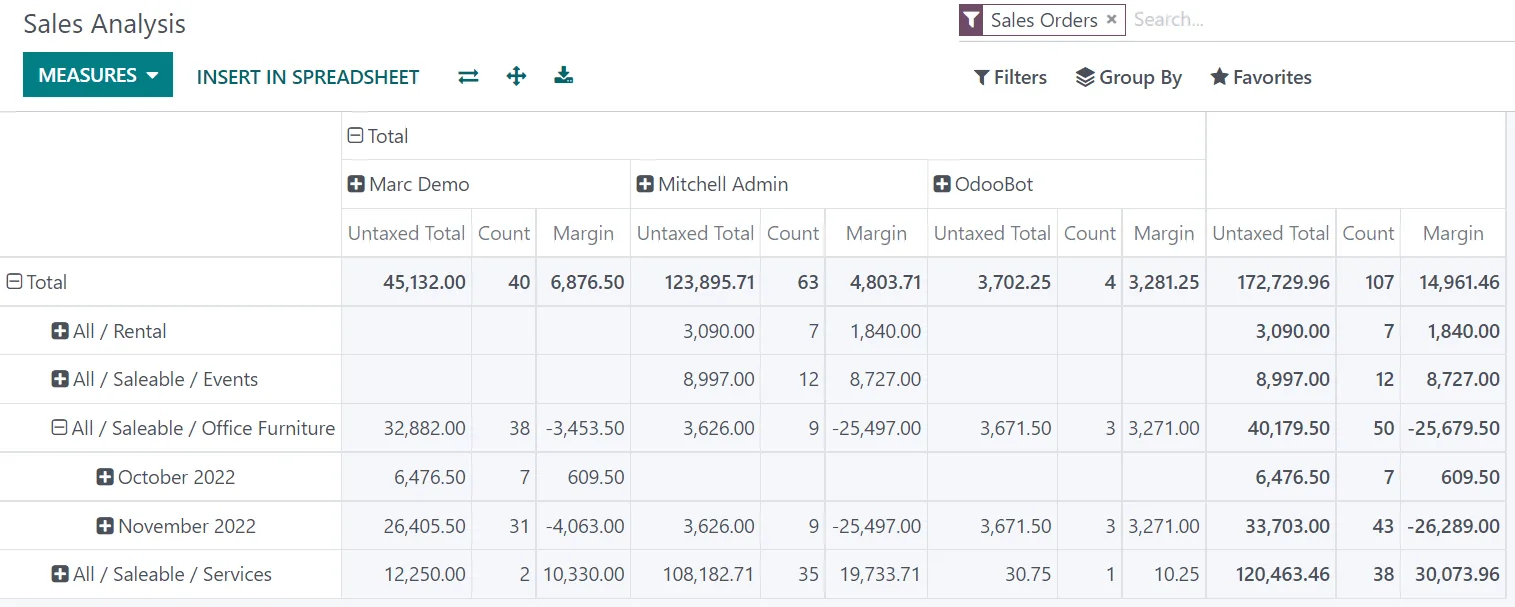
Owners want to know what sold today and how much gold the business holds at the current rate.
Jewellery needs more configuration than general retail on any platform. Be wary of anyone promising a fully standard setup.
| Jewellery business profile | Often a good fit | Why | Watch-outs |
|---|---|---|---|
| Single souk shop, family-run | ERPNext with jewellery customization | Flexible item fields and custom pricing logic on an open-source base. | Custom pricing needs testing on real pieces before go-live. |
| Mall chain with several showrooms | Odoo with jewellery extensions | Multi-store POS and inventory with rate-based pricing added. | Choose and test any third-party jewellery add-on carefully. |
| Retailer with in-house workshop | Odoo or ERPNext with manufacturing | Gold issue, making orders and wastage tracked against jobs. | Wastage rules must be agreed with craftsmen in advance. |
| Bullion and jewellery wholesale | Custom ERP or extended ERPNext | Fixing rates, metal accounts and dealer-to-dealer reverse charge flows. | Requires strong accounting review of metal account logic. |
| Small boutique selling branded fashion jewellery | Zoho Inventory with POS, or Odoo | Priced per piece rather than weight, so standard retail flows work. | Not suitable for gold sold by weight without customization. |
We configure the system to support these requirements. They are summaries, not legal or tax advice. Confirm with your tax advisor and compliance officer.
Retail jewellery sales are generally subject to 5% VAT on the full selling value, including metal and making charges. Special rules apply to investment-grade precious metals and to certain gold and diamond supplies between VAT-registered dealers under a reverse charge, so tax codes must be set per transaction type.
Dealers in precious metals and stones are designated non-financial businesses with AML obligations, including customer due diligence and reporting of qualifying cash transactions through the goAML system. Thresholds and procedures are set by the Ministry of Economy; check current guidance.
Gold jewellery sold in the UAE is subject to hallmarking and purity standards. The ERP can store hallmark and purity details per piece so records match the physical item.
Sales invoices must show your TRN and required fields. When old gold is deducted, the invoice and accounting entries need to show the exchange clearly; your advisor should confirm the treatment.
General information, not tax or legal advice. Rules change; confirm current FTA, MOHRE and Ministry of Finance guidance with your advisor.
We avoid quoting numbers we cannot back. These are the outcomes jewellery clients ask us to design for.
Prices are calculated by the system from one daily rate, so two salespeople cannot quote different figures for the same piece.
Every gram in or out is posted, making tray checks and year-end counts faster and easier to reconcile.
Gold issued to and returned from craftsmen is recorded with agreed wastage, removing guesswork from settlements.
Customer IDs and flagged transactions are stored centrally, so the compliance officer can produce them quickly.
Timelines depend heavily on how much customization pricing and workshop flows need. Ranges below are typical.
Durations are typical ranges; your plan is agreed after discovery.
We document your rate setting, making charge rules, exchange policy, workshop flow and AML procedures.
Rate-based pricing, weight fields, tag printing and exchange flows are built and tested with sample pieces.
Every piece is weighed and tagged, and opening stock is loaded by karat, category and showroom.
Showrooms switch over, with daily reconciliation of weight and cash during the first weeks.
More on retail, custom development and compliance.
We configure the system for the rules UAE businesses report against, and test it before go-live.
General information, not tax or legal advice. Confirm current requirements with the FTA, MOHRE or your advisor. See all UAE compliance guides.
On-site workshops in Dubai, Abu Dhabi and Sharjah, and remote or on-site delivery across the Northern Emirates and free zones.
Official sources and references
Facts on this page were checked against these sources in October 2026. Rules change, so confirm current requirements before acting.
Still have a question? Our consultants are happy to help.
Ask an ExpertYes. Staff enter the day's rate per karat, or it is fetched from a rate source you choose, and the system recalculates prices for weight-based pieces. Pieces priced individually, such as branded watches, keep their fixed prices.
The old gold is weighed and its purity recorded, then the agreed deduction is applied. Its value is offset against the new purchase on the same transaction, and the old gold goes into a scrap stock for melting or refining.
Standard Odoo, ERPNext, Zoho and Dynamics 365 do not include full gold rate pricing out of the box. We configure and extend them, or use a vetted add-on, and test it against your real pieces.
No. The ERP collects customer IDs and flags transactions that may need reporting. Your compliance officer submits reports through goAML in line with current Ministry of Economy requirements.
Yes. Gold issued for each job is recorded by weight, and the returned piece and any scrap are weighed back in. The difference is compared with the agreed wastage allowance.
Related Solutions
Related Industries
Related ERP Platforms
Talk to us about a jewellery ERP that prices from the daily rate and tracks every gram.
Dubai, United Arab Emirates