L
O
A
D
I
N
G


Zoho, Odoo, ERPNext, Dynamics 365 and custom ERP, delivered by one accountable team.

Your LIMS knows the sample and the result. We set up the ERP that knows what each test cost, who pays for it and which reagent lot and instrument produced it.
ERP for laboratories in the UAE sits alongside the LIMS rather than replacing it. The LIMS handles samples and results; the ERP handles billing to insurers, hospitals or commercial clients, reagent lots with expiry dates, instrument assets, HR and accounts. Clinical labs and testing or calibration labs both use it to calculate cost per test from reagents, depreciation and technologist time.
ERP for laboratories in the UAE covers two quite different businesses that share the same back-office headaches. Clinical diagnostic labs in Dubai Healthcare City, Abu Dhabi or Sharjah process patient samples for insurers, hospitals and referring clinics. Testing and calibration labs in Jebel Ali, Mussafah or Sharjah industrial areas test food, water, construction materials, oil or environmental samples for commercial clients and government projects. Both run expensive instruments, consume reagents with short shelf lives and bill many small transactions.
A laboratory information management system (LIMS) handles sample registration, worklists, results and reports. It is rarely good at purchasing, stock valuation, client credit control, payroll or financial reporting. The ERP fills that gap: it receives billable tests from the LIMS, invoices referral clients and insurers, tracks reagent and consumable lots against expiry and storage conditions, schedules instrument maintenance and calibration, and works out the real cost per test.
We implement lab back offices on Odoo, ERPNext, Zoho, Dynamics 365 or custom ERP, and integrate with your existing LIMS through its API or scheduled exports. Medical groups that run a lab inside a larger facility may also want to read our ERP for medical centers page.
Lab directors and finance managers usually come to us with some mix of these issues.
Price lists are set by competitors and insurer tariffs, while reagent kits, controls, calibrators and repeat runs drive cost. Without test-level costing, some tests quietly lose money.
Kits are ordered in bulk to get pricing, then partly used before expiry. Opened-on dates and on-board stability are tracked on paper, so waste is invisible.
Clinics and hospitals sending samples each have their own tariff, credit terms and monthly statement format. Reconciling hundreds of tests per client by hand takes days.
Missed preventive maintenance or overdue calibration leads to downtime and findings during accreditation assessments. Service contracts and records are spread across email and folders.
Testing labs often quote per project or per sample batch, with mobilization, site sampling and urgent surcharges. Tracking quote versus actual by project is difficult in a LIMS.
We map the ERP to the way samples move through your lab, so finance and operations use the same records.
One shared database: every step updates stock, finance and reports in real time.
These modules handle what the LIMS does not, and connect back to it where data overlaps.
Billable tests, client codes and sample counts flow from the LIMS to the ERP daily or in real time through APIs or file imports.
Price lists per referral client, insurer or contract, with monthly consolidated invoices and statements.
Lot numbers, expiry dates, storage location and opened-on dates, with alerts before kits go out of date.
Standing orders, reagent rental agreements and price comparisons across suppliers and distributors.
Depreciation, service contracts, preventive maintenance and calibration schedules with certificates attached.
Non-conformances, corrective actions and document control that support accreditation evidence.
For testing labs, projects collect samples, site work, subcontracted tests and invoices so margin is visible per job.
Technologist licenses and competency records, shift rosters and WPS payroll.
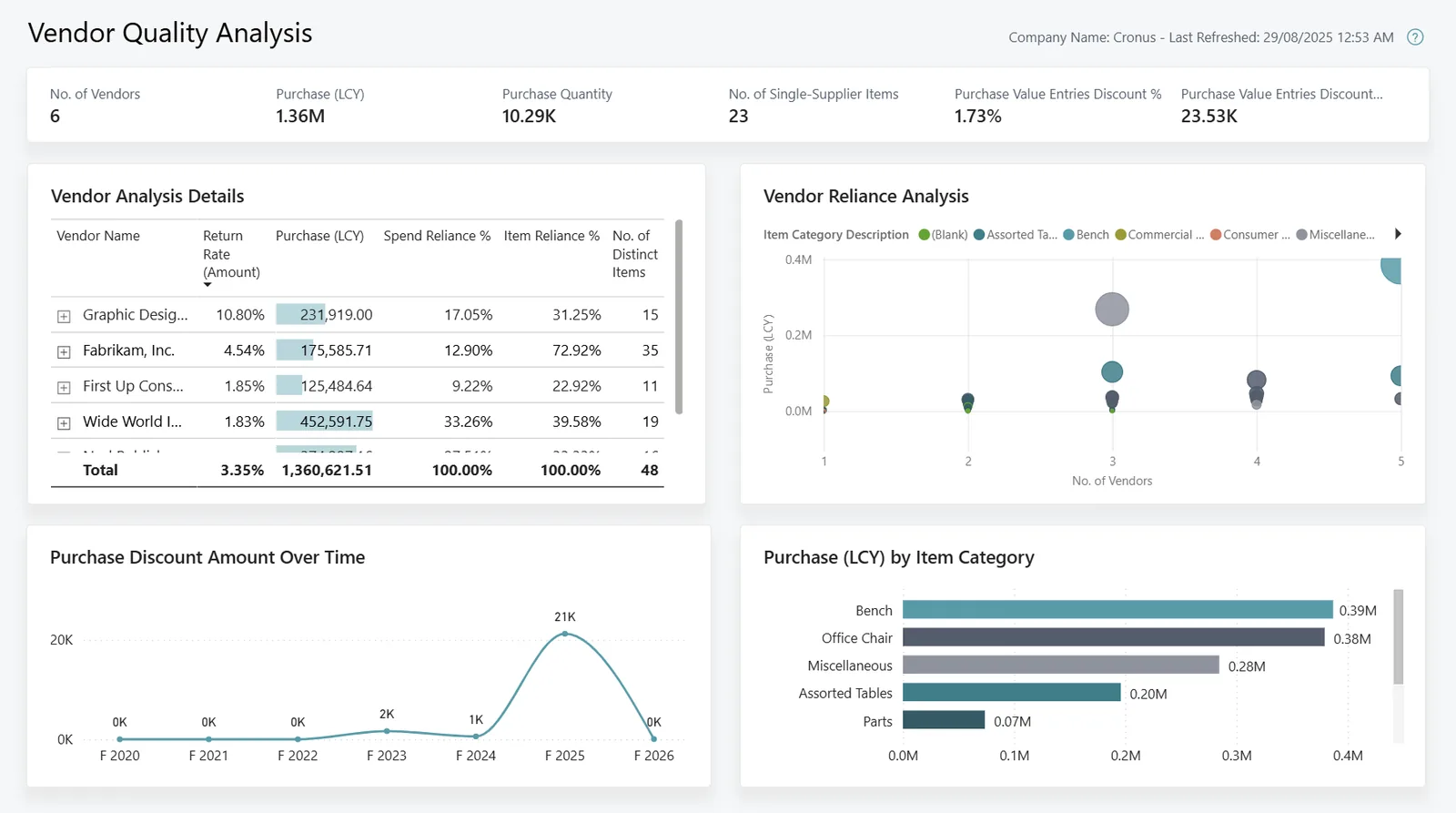
We combine LIMS volumes with ERP cost, stock and maintenance data in one place.
The deciding factors are LIMS integration, stock complexity and whether you need project costing.
| Lab profile | Platform that usually fits | Why it fits | Watch-out |
|---|---|---|---|
| Single clinical lab with referral clients | Zoho Books with Zoho Inventory | Simple client billing, VAT invoicing and batch tracking at modest cost | Test-level costing needs custom logic in Zoho Creator or Analytics |
| Clinical lab with heavy reagent use | Odoo | Lots and expiry, maintenance, quality and purchase in one system | Plan the LIMS interface early; it drives the whole design |
| Testing or calibration lab with projects | ERPNext | Projects, timesheets, quality inspection and assets with no per-user licence fees | Needs a reliable hosting and upgrade arrangement |
| Lab within a larger group using Microsoft | Dynamics 365 Business Central | Consolidation, Power BI and strong finance controls | Higher licensing and implementation effort |
| Lab with a unique workflow or in-house LIMS | Custom ERP | Can merge LIMS and ERP data models where that is truly needed | Ownership, documentation and support must be planned |
We implement Zoho, Odoo, ERPNext, Dynamics 365 and custom ERP. We integrate with your LIMS rather than replace it.
The ERP supports these requirements with records and controls. Confirm specific obligations with your regulator, accreditation body and tax advisor.
Labs working toward or holding ISO 15189 or ISO/IEC 17025 accreditation, for example through the Emirates International Accreditation Centre, need traceable records of equipment calibration, reagent lots and corrective actions. The ERP keeps these linked and dated.
Diagnostic tests that form part of qualifying healthcare may be zero-rated, while commercial testing for businesses is generally standard-rated at 5%. Separate tax codes per service keep invoices and VAT returns right; confirm with your tax advisor.
Most lab revenue is billed to businesses, insurers and government clients, so it falls within the planned PINT AE e-invoicing scope through an Accredited Service Provider. Check the latest Ministry of Finance and FTA guidance on your start date.
For clinical labs, patient results stay in the LIMS and the ERP holds only the identifiers needed for billing, which helps with UAE health data storage rules.
General information, not tax or legal advice. Rules change; confirm current FTA, MOHRE and Ministry of Finance guidance with your advisor.
These are the targets we work toward with lab clients; the size of the gain depends on your starting point.
Cost per test shows which tests to reprice, outsource or bring in-house.
Expiry and opened-kit alerts reduce discards and support smarter order sizes.
Referral client statements are produced from LIMS data in hours rather than days.
Calibration, maintenance and corrective action records are ready when assessors ask.
Indicative durations; the LIMS integration is usually the critical path.
Durations are typical ranges; your plan is agreed after discovery.
Review test menu, tariffs, client contracts, reagent catalogue and LIMS export options.
Define costing method, client billing rules, item master structure and quality records.
Configure modules, build the LIMS interface and load instruments with their maintenance plans.
Bill one month from both old and new processes and reconcile every client.
Refine cost allocations and dashboards as real volumes come through.
Explore healthcare ERP pages and the modules most relevant to labs.
We configure the system for the rules UAE businesses report against, and test it before go-live.
General information, not tax or legal advice. Confirm current requirements with the FTA, MOHRE or your advisor. See all UAE compliance guides.
On-site workshops in Dubai, Abu Dhabi and Sharjah, and remote or on-site delivery across the Northern Emirates and free zones.
Official sources and references
Facts on this page were checked against these sources in October 2026. Rules change, so confirm current requirements before acting.
Still have a question? Our consultants are happy to help.
Ask an ExpertNo. In almost every project the LIMS stays in place and the ERP is connected to it. The LIMS sends billable tests and client information; the ERP handles invoicing, stock, assets, HR and accounts.
We combine reagent and consumable usage per test, a share of controls and calibrators, instrument depreciation and maintenance, and an allocation of technologist time. The method is agreed with you and can be refined as data improves.
Yes. Storage locations such as fridges and freezers are set up as stock locations, and each lot carries expiry and opened-on dates. Temperature monitoring itself usually stays with dedicated loggers, but their records can be linked.
Yes, and project costing matters even more for you. Quotes, sample batches, site sampling and subcontracted tests are tracked by project so you see margin per client job.
A single-site lab with a LIMS that exports cleanly often goes live in 10-14 weeks. Multi-site labs or complex integrations take longer and are often phased.
Related Solutions
Related Industries
Related ERP Platforms
Call +971 55 145 3265 or email contact@uaeerpexperts.com and we will look at your LIMS, test menu and billing model together.
Dubai, United Arab Emirates