L
O
A
D
I
N
G


Zoho, Odoo, ERPNext, Dynamics 365 and custom ERP, delivered by one accountable team.

Replenishment is more than reordering from suppliers. It is how stock flows from vendor to central warehouse, to branch, van and pick face, and an ERP can plan every leg.
ERP inventory replenishment in the UAE keeps every stocking point topped up, from central warehouses in Al Quoz or Jebel Ali to branches, vans and pick faces. Rules such as min-max or reorder point run per item and location, and the ERP suggests internal transfers before new purchases. Zoho, Odoo, ERPNext and Dynamics 365 all support rule-based replenishment with differing planning depth.
ERP for inventory replenishment UAE is about keeping every stocking point topped up without filling it with the wrong items. In a typical Dubai trading or retail company there are several of those points: a main warehouse in Al Quoz or Jebel Ali, a showroom or two, branches in Sharjah and Abu Dhabi, salesmen's vans, and the forward pick locations inside the warehouse itself. Each one empties at its own pace and each one is refilled from a different source.
Replenishment therefore has three legs. External replenishment buys from a supplier, local or overseas. Internal replenishment moves stock from the central warehouse to a branch, store or van. Location replenishment moves cases from bulk racking to the pick face so pickers never stand in front of an empty slot. Most UAE companies run all three from spreadsheets, WhatsApp messages and the storekeeper's memory, which is why one branch runs out while another sits on months of the same item.
An ERP turns each leg into a rule: when this location drops below a level, propose this quantity from that source. This page explains how to choose the method per item and design the cycle. The detailed mechanics sit on sibling pages: automatic reordering for system-generated purchase orders, minimum stock levels for setting the trigger points, and safety stock management for the buffer that protects you against late containers.
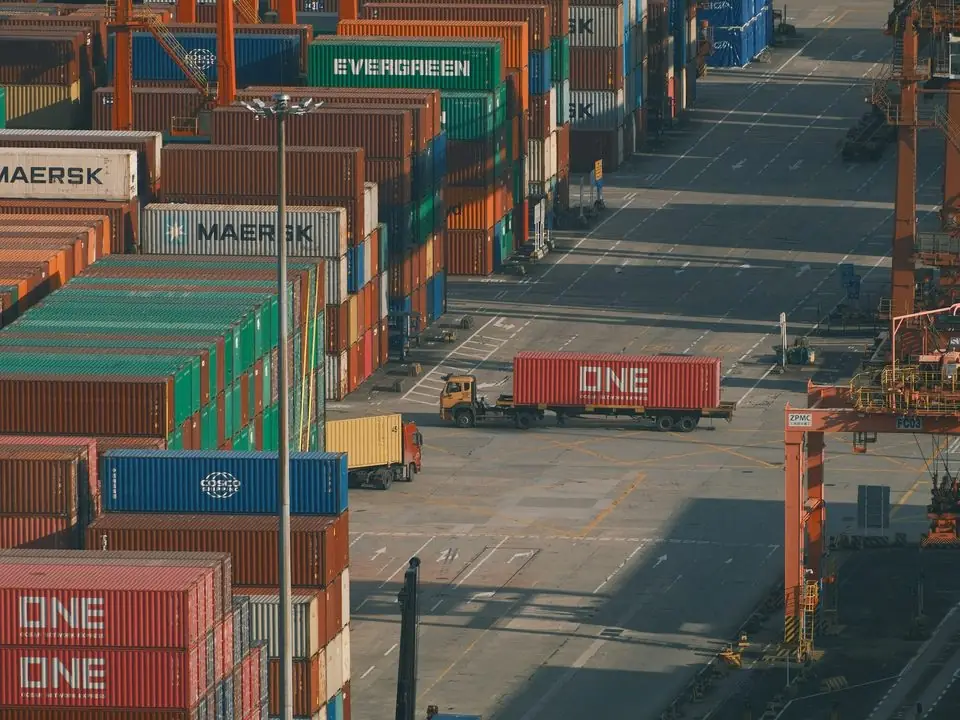
These are the patterns we see when reviewing stock processes in UAE distributors, retailers and contractors.
Branch managers call the warehouse when shelves look thin, often after a customer has already left without the item. Nobody compares their request with actual sales velocity, so popular branches are short and slow ones are overstocked.
Fast-moving consumables and slow, high-value spare parts are reordered the same way, usually by a fixed monthly purchase. The result is stockouts on the movers and dead stock on the slow lines.
A local supplier in Deira delivers in two days while a container from China takes weeks including Jebel Ali clearance. When both are triggered at the same level, the imported items run out every time.
The system shows plenty on hand company-wide, so purchasing does not buy, yet the branch that needs it has none. Without transfer suggestions, buyers raise a PO for stock that is already sitting in another emirate.
Bulk pallets are in the upper racking but the picking slot is empty. Pickers wait for a forklift or skip lines, and orders leave the warehouse short.
Open purchase orders and in-transit transfers are tracked in email, so a second order is raised for goods that are already on a vessel.
The cycle runs daily or weekly depending on the item class. Every step uses on-hand, reserved, incoming and forecast quantities per location.
One shared database: every step updates stock, finance and reports in real time.
Replenishment touches stock, purchasing and planning. These are the parts of the ERP that carry it.
Separate stock per warehouse, branch, van and bin, with reserved and incoming quantities shown alongside on-hand.
Min-max, reorder point, periodic review or order-to-demand settings per item and location, each with its own source.
Defines whether a location is refilled by purchase, by transfer from a parent warehouse or by manufacturing.
Turns approved suggestions into RFQs or purchase orders with vendor, price list, MOQ and lead time.
Creates transfer orders from the central warehouse to branches and vans, with in-transit tracking.
Sales and consumption history by location that sets realistic levels and flags seasonal swings such as Ramadan or summer.
Handheld scanning for receiving, transfers and pick-face moves so stock positions stay accurate.
Value-based approval of purchase suggestions so planners propose and managers release.
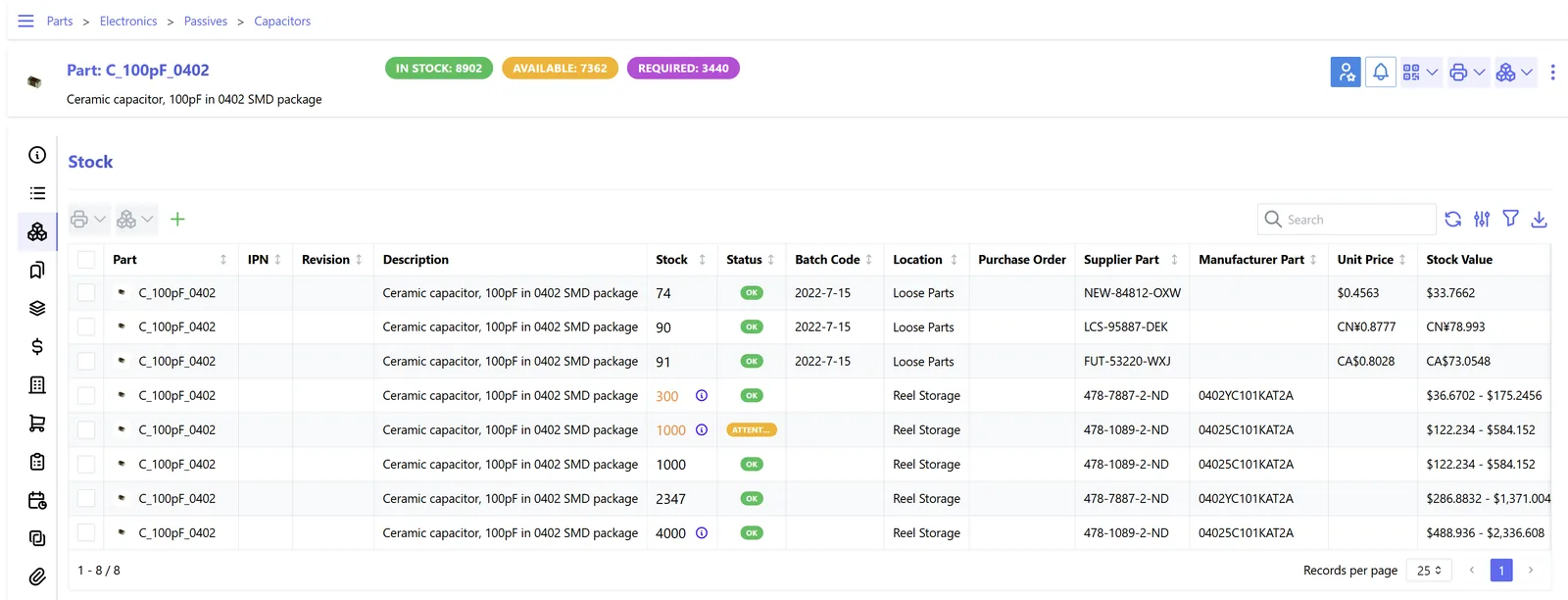
Planners should open one screen in the morning and see what needs to move, from where and why. See the wider inventory dashboard for management-level stock KPIs.
All four platforms we implement can run rule-based replenishment. They differ in how far the planning goes and how much is native versus configured. Confirm details for your edition.
| Zoho | Odoo | ERPNext | Dynamics 365 | |
|---|---|---|---|---|
| Trigger setting | Reorder level per item in Zoho Inventory, with alerts when stock falls below it | Reordering rules with min and max per product and location | Item reorder table per warehouse with level and quantity | Reorder point, reordering policy and safety stock on item or SKU (Business Central) |
| What the trigger creates | Notification; purchase orders are raised by the user or via custom automation | RFQs, transfers or manufacturing orders, depending on the route | Material requests of type purchase, transfer or manufacture | Planning or requisition worksheet lines that create POs or transfers |
| Branch / inter-warehouse refill | Transfer orders between warehouses, raised manually | Resupply routes from a parent warehouse | Material request of type transfer | Transfer orders from planning with SKU-level replenishment source |
| Lead time handling | Basic; usually reflected in the reorder level | Vendor lead time and purchase security lead time | Lead time days on item, used in planning | Lead time calculation and safety lead time |
| Review screen | Low-stock reports and reorder alerts | Replenishment report with forecast and order buttons | Material request list and reports | Planning worksheet with action messages |
| Best fit | Smaller traders with one or two warehouses | Multi-warehouse traders and retailers with routes | Distributors wanting open-source control | Companies needing formal MRP-style planning |
Feature names and depth vary by edition and version. We confirm behavior during discovery.
Replenishment is only as good as the demand and stock data behind it.
Replenishment is operational, but the documents it creates carry tax and record-keeping consequences. Confirm specifics with your tax advisor.
Supplier purchase orders lead to tax invoices that must show the supplier TRN for input VAT recovery. Transfers between your own mainland branches are not supplies, but moves into or out of a designated free zone warehouse may need review.
Overseas replenishment carries customs duty, freight and clearing charges. Capturing them as landed cost keeps item valuation and reorder economics correct.
Purchase orders, receipts and transfer records form part of the tax records that must be kept for at least five years under Cabinet Decision 74 of 2023.
Supplier invoices will increasingly arrive as structured PINT AE documents through accredited service providers. Clean PO references make automatic matching far easier; check the latest MoF/FTA guidance for your phase.
General information, not tax or legal advice. Rules change; confirm current FTA, MOHRE and Ministry of Finance guidance with your advisor.
Benefits depend on data quality and discipline, but these are the outcomes companies aim for.
Branches are refilled by rule from central stock before customers notice gaps.
Slow movers stop being bought on the same cycle as fast movers.
Existing stock in another location is used before new money is committed.
Routine suggestions are approved quickly, leaving time for supplier issues and promotions.
For a company already on an ERP, a focused replenishment project often takes 6-10 weeks. Durations are indicative.
Durations are typical ranges; your plan is agreed after discovery.
Clean item masters, units of measure, vendor lead times and location structure.
ABC/XYZ analysis on sales history to group items by value and variability.
Set method, source and levels per class and location; agree approval limits.
Run suggestions in parallel with the current process for one warehouse and a few branches.
Extend to all locations and review fill rate and excess stock monthly.
We configure the system for the rules UAE businesses report against, and test it before go-live.
General information, not tax or legal advice. Confirm current requirements with the FTA, MOHRE or your advisor. See all UAE compliance guides.
On-site workshops in Dubai, Abu Dhabi and Sharjah, and remote or on-site delivery across the Northern Emirates and free zones.
Official sources and references
Facts on this page were checked against these sources in October 2026. Rules change, so confirm current requirements before acting.
Still have a question? Our consultants are happy to help.
Ask an ExpertReordering usually means buying from a supplier. Replenishment is broader: it also covers moving stock from a central warehouse to branches and vans, and from bulk storage to pick faces. A good ERP setup plans all three from the same data.
It depends on the item. Fast, steady movers suit min-max or reorder point rules. Expensive, slow or project-specific items are usually better bought to order. Items with seasonal peaks need levels reviewed before the season, not after.
Yes, if branches are set up as locations refilled from a parent warehouse. The system then proposes a transfer first and only suggests a purchase at the central warehouse level.
Many UAE traders run it daily for fast movers and weekly for the rest. The important part is that someone reviews and releases the suggestions on a fixed schedule.
Not always. Odoo, ERPNext and Business Central can handle bin-level stock and internal moves. A dedicated WMS is worth considering for high-volume sites; see inventory software for trading companies for typical setups.
We implement Zoho Inventory, Odoo Inventory, ERPNext stock and Dynamics 365, so we recommend by fit: number of locations, planning depth and budget.
Related Solutions
Related Industries
Related ERP Platforms
Share your warehouse and branch structure and we will map the right replenishment method for each item group.
Dubai, United Arab Emirates