L
O
A
D
I
N
G


Zoho, Odoo, ERPNext, Dynamics 365 and custom ERP, delivered by one accountable team.

Fit-out projects move in weeks, not years, and every delay costs the tenant rent. We set up ERP so your design team, joinery workshop, buyers and site supervisors work from one project file.
An ERP for fit-out companies in the UAE needs one project file shared by design, joinery workshop, buyers and site supervisors, because programmes are short, overlapping and tied to tenant handover dates. It should produce quick estimates from rate libraries, link client change requests to cost, track long-lead imported furniture and lighting, and record subcontracted trades such as glass and ceilings.
ERP for fit-out companies in the UAE has to keep up with short, overlapping projects. An interior contractor in Al Quoz might be finishing a restaurant in Dubai Mall, starting an office floor in DIFC, and pricing a villa interior in Arabian Ranches in the same week. Programmes are compressed because tenants pay rent from handover dates, landlords set strict working rules, and the client changes finishes up to the last minute.
The work combines design, procurement and production. Drawings and material boards need client sign-off, joinery is made in the company's own workshop or by a partner, loose furniture and lighting are often imported from Europe or Asia with long lead times, and specialist trades such as glass, flooring and ceilings are subcontracted. Approvals from landlords, master developers, civil defence and the municipality must be in place before work starts on site.
We implement Odoo, ERPNext, Dynamics 365 Business Central and Zoho for fit-out businesses. This page focuses on the interior fit-out model; for heavy contracting and retention-driven billing, see ERP for contracting companies, and for furniture production at scale, see ERP for furniture manufacturing.
Fit-out owners and project managers usually point to the same pressure points.
Clients change finishes, add power points or move partitions after approval. When changes are agreed verbally on site and not costed, they quietly absorb the margin.
Imported furniture, sanitaryware and lighting can take many weeks to arrive. If orders are placed after design sign-off without tracking, installation slips past the handover date.
The joinery workshop builds to drawings that have since changed, or finishes items before the site is ready to receive them, filling the factory with stored work.
Landlord, developer and authority approvals take time and require specific documents. Missing a submission can delay site mobilisation by weeks.
Snag lists are kept on paper or in photos on phones. Final payment and retention depend on closing them, but nobody has one clear list per project.
We model the whole cycle so cost, programme and approvals stay connected.
One shared database: every step updates stock, finance and reports in real time.
These modules cover the design, buying, workshop and site sides of a fit-out company.
Standard rates for gypsum partitions, ceilings, flooring, painting, glazing and joinery to build quotes quickly, with margins by project type.
Programmes with milestones for design, approvals, procurement, site works and handover, shared across design and site teams.
Drawings, material boards and client approvals stored by revision, so the workshop and site always use the approved version.
Workshop jobs with material lists, cutting and finishing stages, and delivery to site linked to the project budget.
Purchase orders for furniture, lighting and fixtures with supplier lead times, shipping status and installation location.
Specialist trade packages awarded, measured and paid against the project budget, with back-charges where needed.
Client changes recorded, priced, approved and invoiced, with their impact on programme and margin visible immediately.
Snag items logged with photos, responsible trade and due date, closed on a mobile device and summarised for the client.
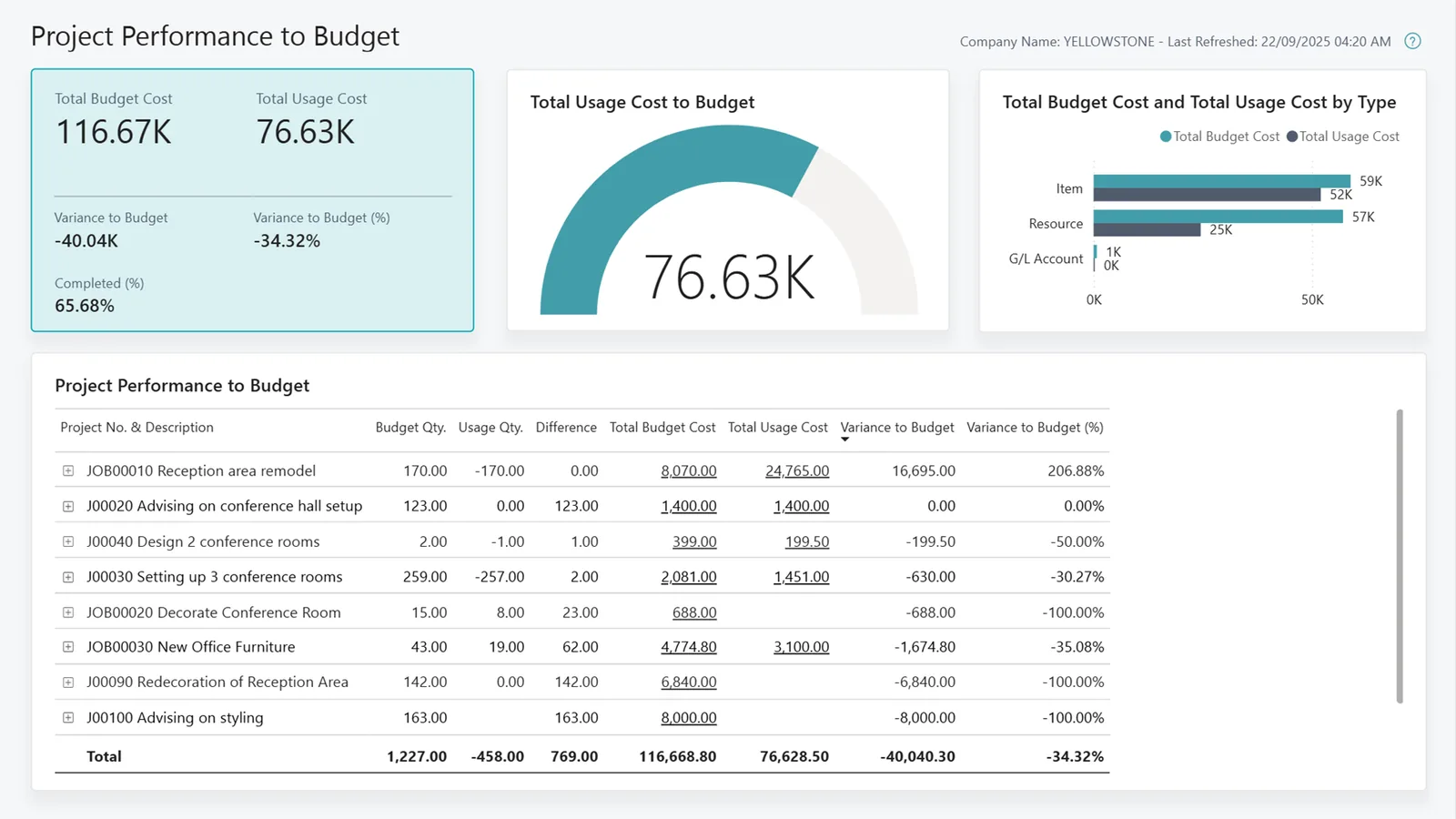
With many short projects running in parallel, management needs to see which ones are at risk this week.
Fit-out firms differ in size, in-house production and the mix of design and build work.
| Company profile | Often a good fit | Why | Watch out for |
|---|---|---|---|
| Small design studio subcontracting all works | Zoho (Books, Projects, CRM) | Simple quoting, project tracking and client billing with good collaboration tools | Limited workshop and stock features |
| Mid-size design-and-build firm with a joinery workshop | Odoo (Project, Manufacturing, Purchase, Accounting) | Projects, workshop production and procurement in one database | Rate libraries and variation tracking usually need configuration |
| Fit-out contractor wanting an owned, adaptable system | ERPNext | Projects, BOMs for joinery and purchasing on an open-source base | Mobile snagging may need a small custom app |
| Regional fit-out group across several countries | Dynamics 365 Business Central | Multi-company, multi-currency finance and jobs with strong reporting | Design document workflows may sit in SharePoint or another tool |
We implement Zoho, Odoo, ERPNext, Dynamics 365 and custom ERP and recommend based on your mix of design, workshop and site work.
The ERP keeps documents and tax data in order; confirm specific treatments with your tax advisor and approval requirements with the relevant landlord or authority.
Fit-out works usually need landlord or master developer approval and, depending on scope, civil defence and municipality permits. The ERP can track submissions, approvals, fees and expiry against each project.
Fit-out services and supplied materials are generally standard-rated at 5%. Imported FF&E carries import VAT, which may be recoverable through the VAT return if the conditions are met. Confirm the treatment with your tax advisor.
Taxable income above AED 375,000 is taxed at 9%. Projects spanning financial year-ends need consistent revenue recognition, which project accounting supports.
B2B e-invoicing via Accredited Service Providers becomes mandatory in phases from 2027; check the latest Ministry of Finance and FTA guidance. Site and workshop staff salaries go through the Wage Protection System using a SIF generated from payroll.
General information, not tax or legal advice. Rules change; confirm current FTA, MOHRE and Ministry of Finance guidance with your advisor.
Outcomes clients typically target; results depend on adoption by site and design teams.
Variations are recorded and approved before work, so they appear on the final account.
Long-lead orders are placed and tracked against the installation programme.
Joinery is built from approved drawings and delivered when the site is ready.
Snag lists close quickly and handover documents are ready when the client asks.
Typical ranges; a joinery workshop or multiple entities extend the plan.
Durations are typical ranges; your plan is agreed after discovery.
We review recent projects from estimate to final account, including workshop and FF&E processes.
Rate libraries, project templates, workshop routes, procurement rules and variation workflows are set up.
Customers, suppliers, rate libraries and running projects are loaded.
One new project runs fully in the system with design, buying and site teams.
All new projects move to ERP with ongoing support and report improvements.
Construction, project and platform pages relevant to interior fit-out.
We configure the system for the rules UAE businesses report against, and test it before go-live.
General information, not tax or legal advice. Confirm current requirements with the FTA, MOHRE or your advisor. See all UAE compliance guides.
On-site workshops in Dubai, Abu Dhabi and Sharjah, and remote or on-site delivery across the Northern Emirates and free zones.
Official sources and references
Facts on this page were checked against these sources in October 2026. Rules change, so confirm current requirements before acting.
Still have a question? Our consultants are happy to help.
Ask an ExpertYes. We set up a rate library for common items such as partitions, ceilings, flooring and joinery, so estimators build quotes from measured quantities and adjust margins per project.
Joinery items are created as workshop jobs linked to the project, with material lists and stages such as cutting, assembly, finishing and delivery. Costs flow to the project budget automatically.
Yes. Purchase orders carry supplier lead times, shipping status and expected arrival, and each item is linked to the room or area where it will be installed so delays show against the programme.
Each change is recorded as a variation with description, cost and price. Once the client approves it, it is added to the contract value and can be invoiced, and its cost impact appears in project reports.
Most platforms we implement offer mobile access. Site supervisors can log snags with photos, assign them to a trade and close them on site, giving the client a clear status report at handover.
Related Solutions
Related Industries
Related ERP Platforms
Share a recent project and we will show how estimate, procurement, workshop and snagging would run in ERP.
Dubai, United Arab Emirates