
L
O
A
D
I
N
G


Zoho, Odoo, ERPNext, Dynamics 365 and custom ERP, delivered by one accountable team.

Consolidated results, cash headroom, corporate tax exposure and audit-ready controls, built into the ERP instead of rebuilt in Excel every month.
A CFO in the UAE should look for an ERP that produces one defensible set of numbers for the board, banks, auditors and the Federal Tax Authority. Key capabilities are multi-entity consolidation with intercompany eliminations, cash and 13-week forecasting, budget and scenario versions, a ledger structured for VAT and corporate tax, evidenced controls, and board packs built from live data instead of Excel.
An ERP for CFO work in the UAE is not about posting entries faster. It is about having one set of numbers the CFO can defend in front of the board, the banks, the external auditors and the Federal Tax Authority. In many UAE groups the CFO still receives a consolidated pack stitched together in Excel from three or four ledgers: a mainland LLC, a free zone company, perhaps a branch in Saudi Arabia or Oman, each with its own chart of accounts and its own closing calendar.
A typical CFO week in a Dubai or Abu Dhabi group runs like this. Monday starts with the treasury position and the rolling 13-week cash forecast. Mid-week brings a bank call about facility utilization and covenant ratios, then a session with the tax advisor on corporate tax provisioning and which free zone income still qualifies. Month-end ends with a board pack: P&L by entity, budget variance, working capital and capex. Every one of those tasks depends on data that already sits in the ERP, but only if the ERP was designed with the CFO's questions in mind.
This page covers what the CFO role should get from the system: consolidation, liquidity, tax exposure, controls and forecasting. The mechanics of running the monthly close belong to the finance manager, and the single-screen KPI view is described on our CFO dashboard page.

These are the problems we hear most often from CFOs and group finance directors when an ERP project starts.
Each entity closes separately, then someone maps accounts by hand and eliminates intercompany balances with formulas only they understand. One wrong mapping and the group P&L the board approves is simply wrong.
Balances sit in five bank portals, receivables ageing in one report and committed purchase orders in another. The CFO hears about a cash squeeze when the supplier payment run is already due.
Taxable income by entity, non-deductible expenses, related-party transactions and qualifying free zone income all need clean tagging. Without it the tax computation becomes a forensic exercise every year.
The budget is built in Excel in November and never loaded into the ledger. By the second quarter nobody trusts the variance report, so forecasting turns into opinion rather than analysis.
Manual journals posted without review, one user who can both create a supplier and release its payment, and approvals done over WhatsApp. Auditors flag the same issues every year.
The UAE mandate requires appointing an Accredited Service Provider and producing PINT AE compliant invoice data. Someone has to own master data quality, ERP readiness and the deadline.
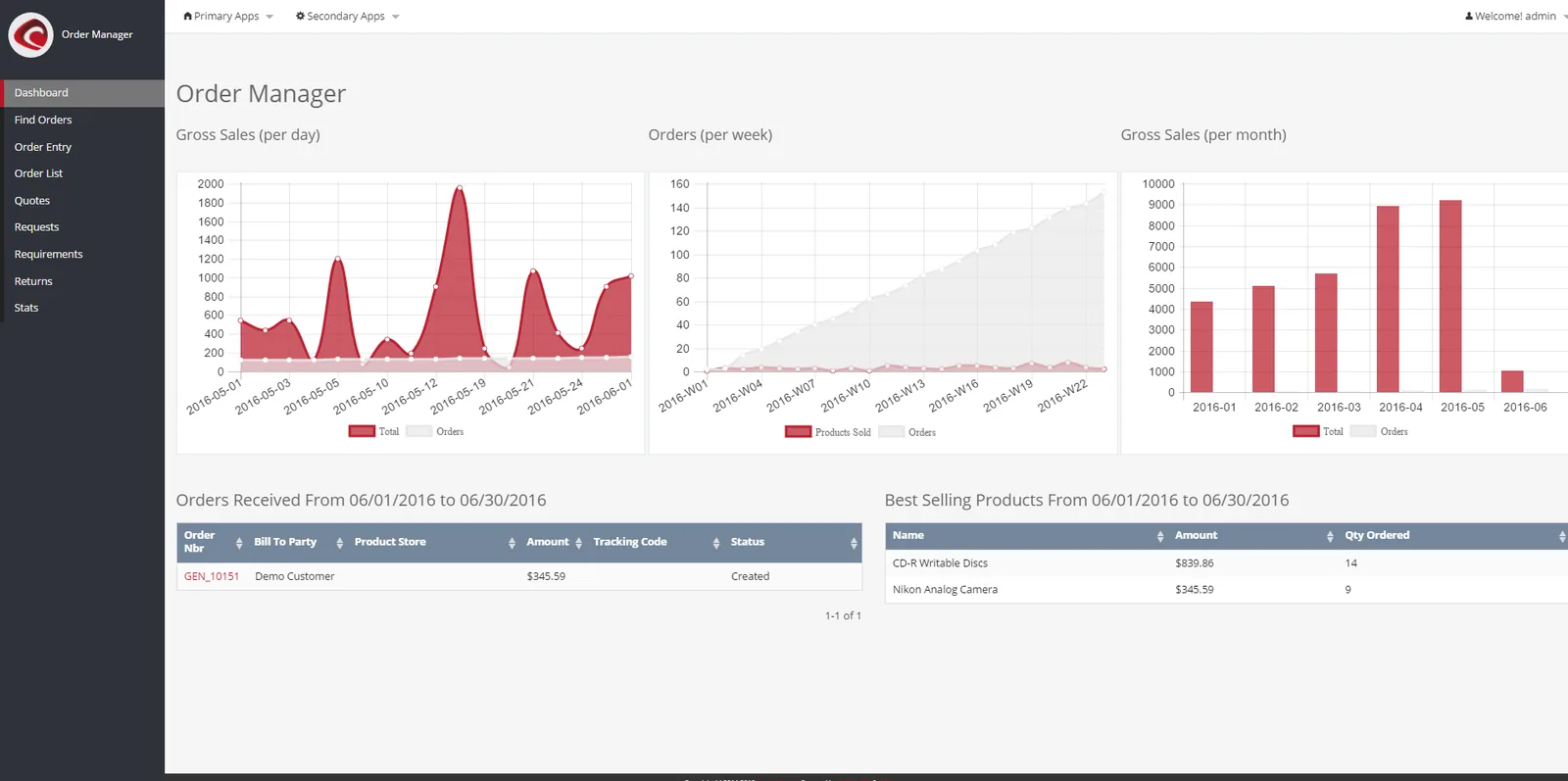
A CFO home screen should answer four questions in under a minute: how much cash do we have and need, are we on budget, where is profit coming from, and what tax and control risks are open.
These capabilities matter more to a CFO than any individual screen, and they should be designed in from the first workshop.
Each legal entity keeps its own books and currency while a shared chart of accounts and intercompany rules feed a group view. See how we approach financial consolidation in ERP.
Expected receipts from customer due dates, committed outflows from approved POs and payroll, and bank facility limits combine into a forward cash view. Our page on cash flow management in ERP shows the mechanics.
Load the approved budget into the ledger, keep a monthly reforecast as a separate version, and compare both to actuals without rebuilding spreadsheets, as described in budget vs actual reporting.
VAT codes on every line, plus account and dimension tagging for non-deductible items, related parties and free zone income, so the corporate tax computation starts from tagged data.
Role-based permissions, approval limits, locked periods and a full audit trail give auditors something to test instead of something to question.
Standard report layouts for the board and lenders refresh from the ledger, with drill-down from a group number to the underlying journal or invoice.
This is the recurring loop the CFO owns. The entity-level close feeds it; the board pack and reforecast come out of it.
One shared database: every step updates stock, finance and reports in real time.
Use this list in the design phase. Each item is cheap to get right early and expensive to retrofit.
We implement all four platforms, so this is a fit assessment rather than a sales ranking. Capabilities vary by edition and version, so confirm details for your plan.
| Zoho | Odoo | ERPNext | Dynamics 365 | |
|---|---|---|---|---|
| Multi-entity and consolidation | One Zoho Books organization per entity; group views usually built in Zoho Analytics | Multi-company in one database; consolidation tools depend on edition and version | Multi-company with parent company and a consolidated financial statement report | Business Central consolidates business units; Dynamics 365 Finance suits larger, complex groups |
| Budgets and forecasts | Budgets by account and reporting tag with budget vs actual reports | Budgets by analytic account in Enterprise; spreadsheet dashboards for forecasts | Budgets per cost center or project with warn or stop actions on overspend | G/L budgets with dimensions; Finance adds budget planning and budget control |
| Cash visibility | Bank feeds where supported, cash flow statement, Analytics forecasts | Bank statement import or sync where available; cash forecast via reports | Bank reconciliation tool and statement import; custom cash forecast reports | Cash flow forecast features and Power BI reporting |
| Tax structure | UAE VAT return report; corporate tax via account and tag mapping | UAE localization with VAT reporting; CT via account and analytic tags | UAE VAT 201 report in regional settings; CT via accounts and dimensions | VAT posting setup, often with UAE partner extensions; CT via dimensions |
| Controls and audit trail | Transaction approvals, roles, audit trail | Access rights, approval rules, chatter history, lock dates | Role permissions, workflows, document versioning, period closing | Approval workflows, permission sets, change log, posting periods |
| Best fit for the CFO when | Group is SME-sized and wants low admin effort | Operations and finance must share one integrated database | Group wants open source and full control of data and code | Group is larger, bank or auditor scrutiny is heavy, Microsoft stack in place |
Not a feature guarantee. Editions, localizations and add-ons change; we verify against your version during discovery.
We configure the system for the rules UAE businesses report against, and test it before go-live.
General information, not tax or legal advice. Confirm current requirements with the FTA, MOHRE or your advisor. See all UAE compliance guides.
On-site workshops in Dubai, Abu Dhabi and Sharjah, and remote or on-site delivery across the Northern Emirates and free zones.
Official sources and references
Facts on this page were checked against these sources in October 2026. Rules change, so confirm current requirements before acting.
Still have a question? Our consultants are happy to help.
Ask an ExpertYes. Each is set up as its own legal entity with its own ledger, VAT registration details and currency settings, then reported together at group level. Whether free zone income qualifies for the 0% rate depends on conditions your tax advisor must confirm; the ERP's role is to tag that income cleanly.
It does not calculate your tax position on its own. It gives you tagged data: entity-level taxable income, non-deductible expenses, related-party transactions and the records you must keep. Confirm the computation and any reliefs with your tax advisor.
In most mid-sized UAE companies the CFO is the natural sponsor because finance touches every process. The CEO should still set business priorities, which we cover on the ERP for CEOs page.
You can, but load the approved budget and each reforecast back into the ERP as versions. That keeps variance reporting automatic and lets the team spend time on analysis rather than reconciliation.
Under the current timeline, businesses with revenue of AED 50 million or more must be live from 1 January 2027 and smaller businesses from 1 July 2027, through an Accredited Service Provider. Check the latest Ministry of Finance and FTA guidance, and start with master data quality now.
A focused finance rollout for one or two entities often takes 8-14 weeks. Multi-entity groups with consolidation, budgets and integrations typically need longer; we confirm the range after discovery.
Related Solutions
Related Industries
Related ERP Platforms
Tell us how your group is structured and we will show you how consolidation, cash and tax tagging would work in your ERP.
Dubai, United Arab Emirates










