
L
O
A
D
I
N
G


Zoho, Odoo, ERPNext, Dynamics 365 and custom ERP, delivered by one accountable team.

One place to see orders, margin, cash and delivery performance, with approvals you can delegate and a platform that grows with new branches and entities.
A UAE CEO benefits from an ERP because sales, finance and operations post to one database, giving the leadership team a single version of pipeline, margin, cash, overdue receivables and backlog. Approval rules by amount and document type let the CEO delegate without losing control, mobile approvals keep work moving during travel, and new branches, entities and currencies become configuration rather than new systems.
An ERP for CEOs in the UAE is less about features and more about how the company is run. Many UAE businesses grew quickly: a trading company that added a second warehouse in Jebel Ali, a contractor that took on three projects at once, a services firm that opened in Abu Dhabi and Riyadh. Each step added a spreadsheet, an app or a person to bridge the gap. The CEO or owner-manager ends up asking for the same report every week and getting a different answer from sales, finance and operations.
The CEO's week usually includes a leadership meeting, a handful of approvals that should have been delegated, calls with key customers or banks, and decisions on hiring, pricing and expansion. Each decision needs a reliable view of sales pipeline, gross margin by product or project, cash, overdue receivables and operational backlog. When those numbers arrive late or disagree, decisions are delayed or made on instinct.
This page looks at ERP from the CEO's chair: visibility, delegation, scalability and return on investment. The detailed finance view belongs to the CFO, and the screen-level layout of KPIs is covered on our CEO dashboard page.

These issues usually trigger the decision. They are business problems first and system problems second.
Sales reports bookings, finance reports invoiced revenue and operations reports deliveries. The leadership meeting spends half its time reconciling numbers instead of deciding.
Discounts, purchase orders, payments and hires all wait for one signature. Work slows down when the CEO travels, and urgent items get approved on WhatsApp without context.
Each new branch or product line needs another coordinator to move data between systems. Overheads rise faster than revenue.
Pricing logic, customer terms and supplier history live in the heads of a few long-serving staff. When one leaves, the company loses knowledge it never recorded.
VAT, corporate tax and the coming e-invoicing mandate all depend on clean, structured data. Spreadsheet-based processes make each new rule a project of its own.
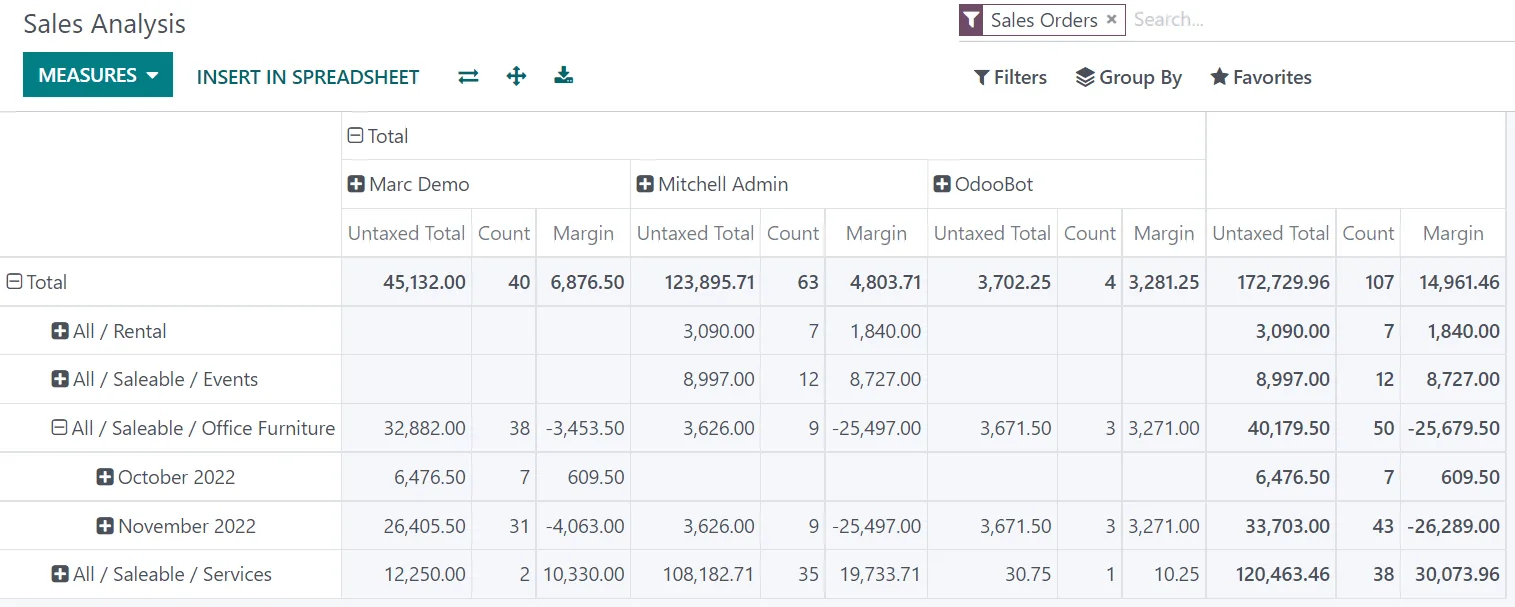
A CEO screen should be short. A handful of numbers, each with a trend and a drill-down to the person responsible.
These are the outcomes a CEO should hold the implementation team accountable for.
Sales, finance and operations post into the same database, so pipeline, revenue and delivery figures agree by design. A business KPI dashboard sits on top.
Approval rules by amount, department and document type let managers act within limits while the CEO sees exceptions only.
New branches, warehouses, entities and currencies are configuration, not a new software purchase. See multi-branch ERP for how this works.
Approvals and key numbers on the phone, with the supporting documents attached, so travel does not stop the business.
Customer terms, price lists, supplier history and process rules are stored in the system rather than in individual memory.
VAT codes, corporate tax tagging and e-invoicing data come out of normal transactions instead of separate projects.
A simple rhythm that replaces report requests with a standing review of live data.
One shared database: every step updates stock, finance and reports in real time.
We implement all four platforms. From the CEO's chair, the questions are ownership cost drivers, fit with the business model and how far each can scale.
| Zoho | Odoo | ERPNext | Dynamics 365 | |
|---|---|---|---|---|
| Typical company profile | SMEs and service or trading firms wanting quick adoption | Growing SMEs needing operations and finance in one system | Cost-conscious firms wanting open source and control | Mid-market and larger groups, often already on Microsoft 365 |
| Main cost drivers | Per-user subscriptions across apps; Zoho One bundles many apps | Per-user subscription plus implementation and customization | Hosting, implementation and support; no license fee for the open-source core | Per-user licences by role plus partner implementation |
| How far it scales | Well for SMEs; very complex groups need careful design | Multi-company and multi-warehouse; scales with good architecture | Multi-company; scaling depends on hosting and support quality | Designed for multi-entity, high-volume and complex operations |
| Speed to first value | Often fastest for focused rollouts | Fast for standard flows, longer with heavy customization | Moderate; depends on partner and scope | Moderate to longer; more structured projects |
| Leadership reporting | Zoho Analytics across Zoho apps | Built-in dashboards and spreadsheet reporting | Report builder and dashboards; BI tools via connectors | Power BI and built-in role centers |
No prices are quoted here. Total cost depends on users, scope, integrations and support. We compare options for your case after discovery.
We configure the system for the rules UAE businesses report against, and test it before go-live.
General information, not tax or legal advice. Confirm current requirements with the FTA, MOHRE or your advisor. See all UAE compliance guides.
On-site workshops in Dubai, Abu Dhabi and Sharjah, and remote or on-site delivery across the Northern Emirates and free zones.
Official sources and references
Facts on this page were checked against these sources in October 2026. Rules change, so confirm current requirements before acting.
Still have a question? Our consultants are happy to help.
Ask an ExpertStart from costs you already carry: hours spent re-keying and reconciling, stock write-offs, late collections and delayed decisions. Our ERP ROI guide explains how to estimate benefits without inflated assumptions.
The common causes are unclear scope, no internal owner, poor data and too much customization. A CEO who names an owner, protects their time and holds scope decisions prevents most of them. See why ERP implementations fail.
Define your processes and priorities first, then evaluate platforms and partners together. A good fit on paper can fail with the wrong implementation approach.
Heavily at the start to set priorities and approve the design, lightly during build, and visibly at go-live. Staff follow the system when they see leadership using it in reviews.
All four platforms support multiple companies and currencies. Local tax and e-invoicing rules differ by country, so each new entity needs its own localization review.
Day-to-day process performance such as order fulfilment and delivery. We cover that in ERP for operations managers.
Related Solutions
Related Industries
Related ERP Platforms
Book a short session and we will outline the KPIs, approvals and platform options that fit how you run the company.
Dubai, United Arab Emirates