
L
O
A
D
I
N
G


Zoho, Odoo, ERPNext, Dynamics 365 and custom ERP, delivered by one accountable team.

A close calendar the system enforces, sub-ledgers that reconcile themselves, and management accounts that leave finance on time every month.
An ERP helps UAE finance managers close faster by tracking month-end tasks with owners and deadlines, posting AR, AP, inventory and payroll sub-ledgers to the general ledger by rule, and auto-matching bank lines. Tax codes on every line feed the quarterly VAT return, and management accounts by cost center and branch are produced on a fixed day.
An ERP for finance managers in the UAE has a very practical job: get the books closed on time, accurately, with a small team. The finance manager sits between the accountants who post transactions and the CFO or owner who reads the results. In a typical Dubai trading or services company with two to six people in finance, that means chasing missing supplier invoices, approving payment runs, reviewing accruals, preparing the quarterly VAT return and delivering management accounts by a fixed working day.
Most of that time is not analysis. It is chasing. Sales has not raised the credit note, the warehouse has not posted the GRN, the project team has not approved the subcontractor bill, and the bank statement for the USD account has not been downloaded. When those inputs come late, the close slips and the management accounts arrive after the decisions they were supposed to inform.
A well-set-up ERP changes the role from chasing to reviewing. Operational documents flow into the ledger automatically, exceptions surface in a queue, and the close becomes a checklist with owners and due dates. This page focuses on that operating rhythm; group-level questions such as consolidation and funding sit on the ERP for CFOs page, and posting-level work is covered under ERP for accountants.

These pain points come up in almost every finance discovery workshop we run.
GRNs, delivery notes, timesheets and expense claims sit in other teams' inboxes. The close cannot start until finance has chased each of them by phone or email.
Inventory valuation differs from the stock account, and the AP ageing does not match the supplier control balance. Hours go into finding which manual journal caused the gap.
Sales and purchase listings are exported, filtered and re-mapped to the VAT return boxes each quarter. Reverse-charge imports and blocked input VAT are easy to miss.
Payment approvals happen on email, WhatsApp and paper. There is no single record of who approved what, which becomes a problem at audit time.
Cost center and branch P&Ls are rebuilt in Excel because the chart of accounts was never designed for them. Each month's pack is a new manual exercise.
Where a CFO looks at outcomes, the finance manager needs to see the state of the close and the queues that block it.
These are the capabilities that shorten the close and reduce rework for a small UAE finance team.
Recurring close tasks with owners, due days and dependencies, so the team sees what is open without a status meeting.
Invoices, GRNs, stock moves and payroll post to the GL by rule. Learn more about ERP finance and accounting design.
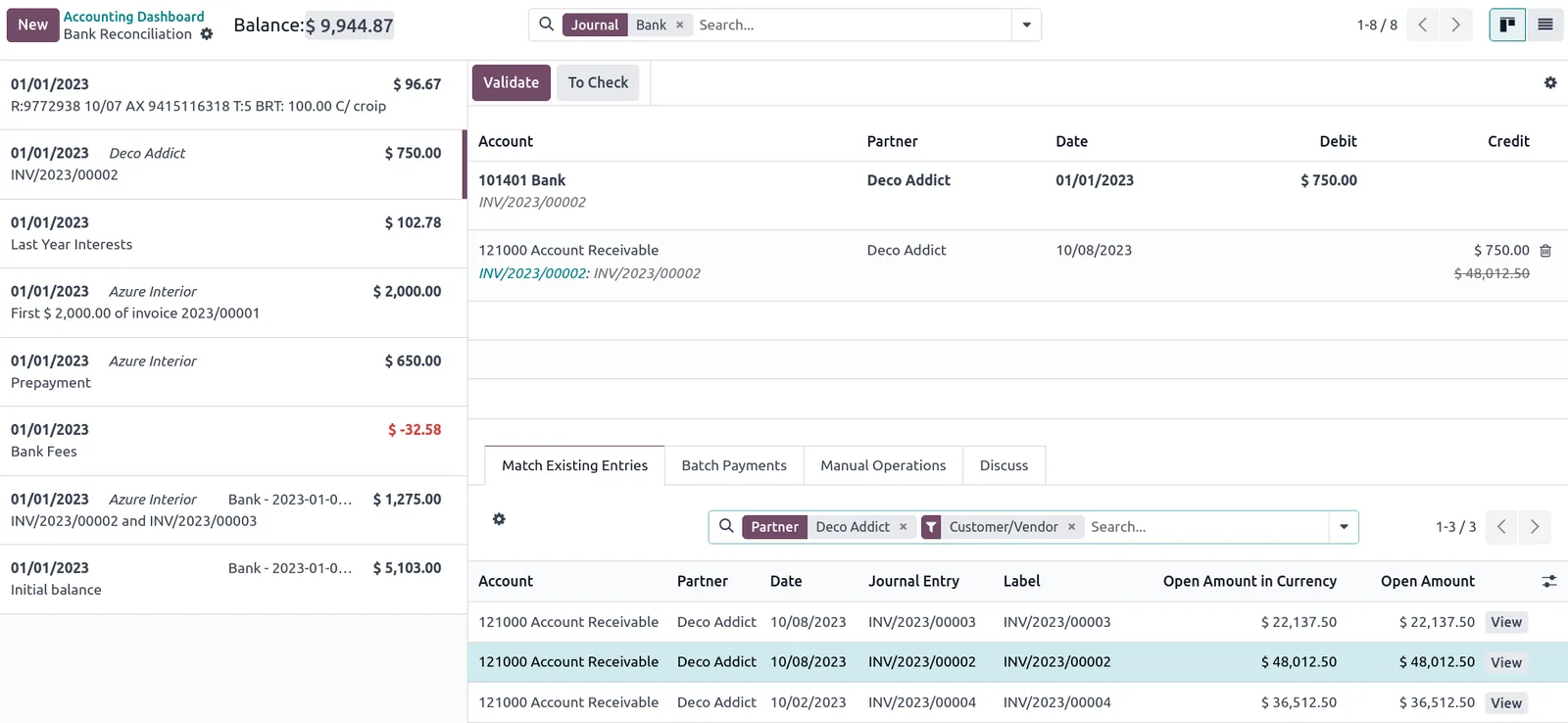
Statement import with matching rules for common transactions such as card settlements, bank charges and customer receipts, leaving only exceptions to review.
Tax codes on every line feed the return boxes, including reverse charge and adjustments, so the quarterly return is reviewed rather than rebuilt.
Bills, payment runs and manual journals routed by amount and cost center, with the approval history stored on the document.
P&L by branch, cost center or project from the same ledger, which is what a finance ERP should deliver without spreadsheets.
A practical close sequence for a UAE SME. Most teams aim to finish within the first several working days once this runs in the ERP.
One shared database: every step updates stock, finance and reports in real time.
All four platforms can run a disciplined close. The differences are in how much is built in and how much needs configuration. Confirm for your edition.
| Zoho | Odoo | ERPNext | Dynamics 365 | |
|---|---|---|---|---|
| Close control | Transaction locking by module and date; checklist often kept in Zoho Projects or Creator | Lock dates for all users or non-advisers; activity schedules for close tasks | Period closing voucher and accounting period locks; ToDo assignments | Posting periods, user setup restrictions; close task tooling varies by product |
| Bank reconciliation | Bank feeds where supported plus matching rules | Reconciliation models to auto-match recurring lines | Bank Reconciliation Tool with statement import | Bank reconciliation with matching rules |
| VAT return | UAE VAT return report in Zoho Books | UAE localization tax report | UAE VAT 201 report | VAT statements configured, often via UAE partner extension |
| Approvals | Approval workflows on bills, invoices and journals | Approval rules and purchase approvals; Studio for custom rules | Workflow builder on any document | Approval workflows in Business Central and Finance |
| Management reporting | Reporting tags plus Zoho Analytics | Analytic accounts and plans, spreadsheet dashboards | Accounting dimensions and cost centers | Dimensions with financial reporting and Power BI |
Indicative only. We confirm what your edition and localization support during discovery.
We configure the system for the rules UAE businesses report against, and test it before go-live.
General information, not tax or legal advice. Confirm current requirements with the FTA, MOHRE or your advisor. See all UAE compliance guides.
On-site workshops in Dubai, Abu Dhabi and Sharjah, and remote or on-site delivery across the Northern Emirates and free zones.
Official sources and references
Facts on this page were checked against these sources in October 2026. Rules change, so confirm current requirements before acting.
Still have a question? Our consultants are happy to help.
Ask an ExpertIt depends on volume, the number of entities and how disciplined cut-off is in other departments. Many SMEs move from a two-to-three week close to a matter of working days once sub-ledgers post automatically, but we do not promise a specific number before seeing your process.
It produces the figures for each box from coded transactions, which the finance manager reviews before filing on EmaraTax. Correct tax codes at transaction level are what make that work. Confirm treatments with your tax advisor.
Make their documents the source of the accounting entry. When a GRN in the warehouse posts inventory and an accrual automatically, the deadline becomes part of their workflow. See how this looks from the warehouse manager's side.
Yes, if dimensions such as branch, cost center and project are agreed before go-live and enforced on transactions. Retrofitting them later is possible but painful.
This page covers how the finance manager works in the ERP. The finance dashboard page focuses on the KPI layout and data sources.
Usually procurement and sales. Late purchase orders and missing credit notes are common blockers, which is why we design the procurement and sales workflows alongside finance.
Related Solutions
Related Industries
Related ERP Platforms
Share your current close calendar and we will show you which steps the ERP can take off your team's plate.
Dubai, United Arab Emirates










