L
O
A
D
I
N
G


Zoho, Odoo, ERPNext, Dynamics 365 and custom ERP, delivered by one accountable team.

Track every project against its BOQ, from site material requests to subcontractor bills and monthly IPCs. Spot cost overruns and unbilled variations while there is still time to act.
An ERP for UAE construction project managers turns the priced BOQ into a budget by cost code, checks every material request, PO and subcontractor bill against remaining budget, logs and prices each variation, and builds monthly IPCs from measured progress, approved variations and retention. Project managers see cost overruns and unbilled variations while there is still time to act.
An ERP for construction project managers in the UAE has to follow how contracting actually works here. A project manager on a villa compound in Dubai South, a fit-out in Business Bay or an infrastructure package in Abu Dhabi deals with consultants, main contractors or developers, a dozen subcontractors, site engineers sending material requests on WhatsApp, and a monthly interim payment certificate that decides the project's cash flow.
The commercial side is often run by a quantity surveyor in Excel: the BOQ, cost codes, variation log, subcontractor valuations and retention schedule all live in separate workbooks. The project manager sees cost only after accounts posts supplier invoices, and variations that were instructed on site are discovered unpriced at the final account stage.
This page is for contracting work with BOQs, IPCs and retention. For general services projects without these documents, see the project manager page. For the full construction platform view, read ERP for construction companies.
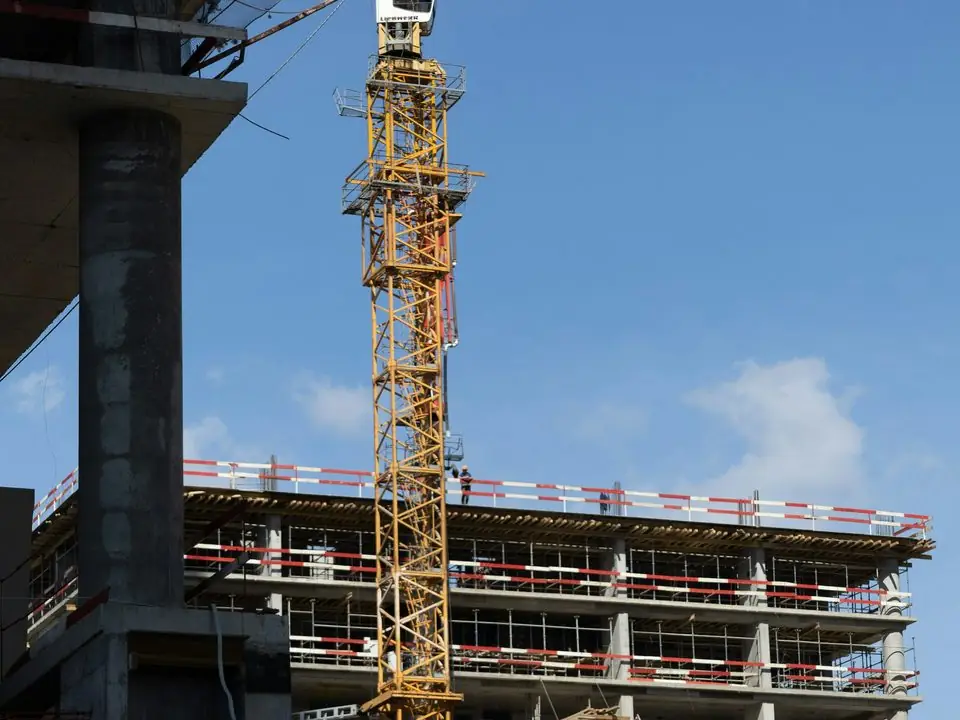
These are the commercial and site control problems we see most in UAE contracting companies.
Supplier and subcontractor invoices reach the project cost report weeks after materials arrive on site. By then, an overrun on a cost code is locked in.
Site instructions from the consultant are executed but never formalized as variation orders. Revenue is lost and disputes appear at the final account.
Site engineers request materials by message. Purchasing buys without checking BOQ quantities, leading to over-ordering, theft risk and surplus on site.
Progress, retention, advance recovery and back-charges for each subcontractor are tracked in Excel. Overpayments happen when one sheet is not updated.
The QS rebuilds progress, variations, materials on site and retention every month. Late submissions delay certification and cash.
Workers and equipment move between sites, but timesheets and plant hours are not charged to the right project. Margins by project are unreliable.
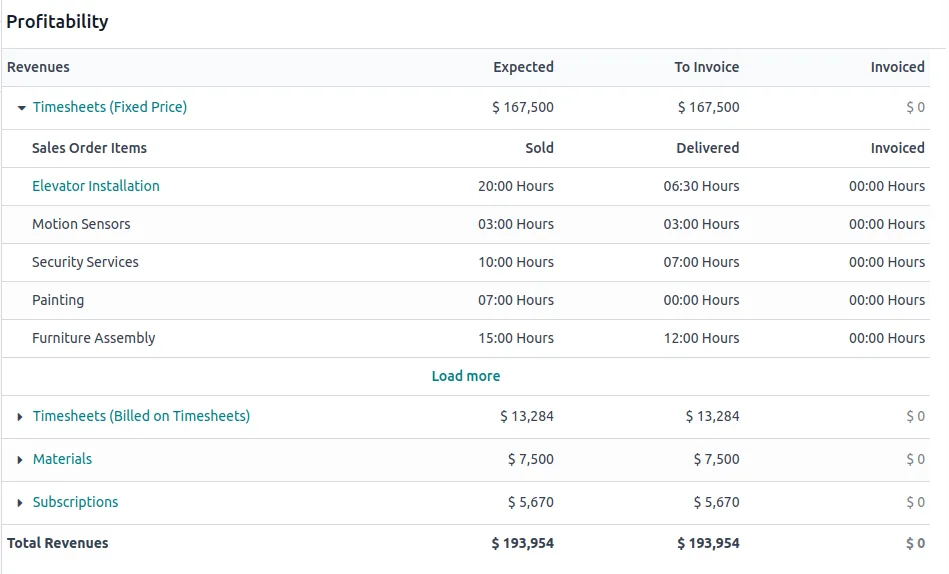
A contract and cost view per project. The full set of metrics is on our construction project dashboard page.
These features connect site activity to the contract and the cost report.
The priced BOQ becomes the project budget by cost code, so every PO and bill is checked against remaining budget. See construction project costing.
Site engineers raise material requests on mobile against the project and cost code, then purchasing converts approved requests into POs with delivery to site.
Subcontract orders, progress valuations, retention, advance recovery and back-charges per subcontractor, with payment certificates from the system.
Each instruction is logged with status, priced, approved and added to the contract value, so nothing executed on site goes unbilled.
Monthly claims built from measured progress, approved variations and retention, producing the tax invoice once certified.
Daily manpower and equipment timesheets charged to projects, so labor camps and plant pools are reflected in project margin. See timesheets for projects.
This is the cycle a construction project manager drives every month with the QS and site team. Approvals sit at material requests, subcontractor valuations and variations.
One shared database: every step updates stock, finance and reports in real time.
None of the four platforms is a construction-only product, so the setup and any add-ons matter. Confirm features for your edition and version.
| Zoho | Odoo | ERPNext | Dynamics 365 | |
|---|---|---|---|---|
| BOQ and budgets | Typically Zoho Projects plus Books, with Zoho Creator for BOQ apps | Project and analytic budgets; BOQ often via apps or customization | Projects with cost centers; BOQ commonly customized | Business Central jobs with budget lines, or Project Operations |
| Material requests and POs | Purchase flows in Books or Inventory, approvals configured | Purchase requests and POs linked to projects | Material Request to PO natively | Requisitions and purchase orders to jobs |
| Subcontractors and retention | Usually custom apps in Zoho Creator | Construction apps or customization | Customization for retention and valuations | Partner construction add-ons common |
| Progress billing and IPC | Milestone or progress invoices; IPC format customized | Milestone and progress invoicing; IPC often customized | Progress billing via sales orders; IPC customized | Progress billing on jobs; partner add-ons extend it |
| Best fit | Smaller contractors already on Zoho | Mid-sized contractors wanting one integrated system | Contractors wanting open source with tailored BOQ logic | Larger groups with multi-entity reporting |
We implement all four and recommend by contract type, project count and existing systems.
We configure the system for the rules UAE businesses report against, and test it before go-live.
General information, not tax or legal advice. Confirm current requirements with the FTA, MOHRE or your advisor. See all UAE compliance guides.
On-site workshops in Dubai, Abu Dhabi and Sharjah, and remote or on-site delivery across the Northern Emirates and free zones.
Official sources and references
Facts on this page were checked against these sources in October 2026. Rules change, so confirm current requirements before acting.
Still have a question? Our consultants are happy to help.
Ask an ExpertYes. The BOQ is imported as budget lines by cost code or item, and committed and actual costs are tracked against it. For estimating and tender-stage BOQs, the setup may need an add-on or customization depending on the platform.
Each claim records cumulative progress, approved variations, materials on site, advance recovery and retention. The certified amount produces the tax invoice, and retention is tracked until release.
Every site instruction is logged as a variation with status and value. Approved variations update the contract value and become billable in the next IPC. Our construction project management ERP page covers the full contract flow.
Yes. Material requests, delivery confirmations, daily manpower and site diaries can be captured on mobile, and approvals happen on the same app.
Each certified claim is issued as a tax invoice with 5% VAT where applicable, and retention treatment follows the contract and VAT rules. Confirm the tax point for retention and advances with your tax advisor.
It depends on project count, BOQ complexity and how much custom work is needed for IPCs and subcontractors. A phased rollout starting with procurement and cost control often takes a few months.
Related Solutions
Related Industries
Related ERP Platforms
Share a sample BOQ and IPC, and we will show how an ERP would track cost, variations and retention on your projects.
Dubai, United Arab Emirates