
L
O
A
D
I
N
G


Zoho, Odoo, ERPNext, Dynamics 365 and custom ERP, delivered by one accountable team.

Sales, purchasing, warehouse, delivery and service working from the same order, so the operations manager can see bottlenecks before customers do.
An ERP helps UAE operations managers by linking the sales order to its stock reservations, purchase orders, picks, deliveries and invoice, so status is visible without phone calls. Available-to-promise checks stop unrealistic delivery dates, mobile proof of delivery replaces WhatsApp updates, exception alerts flag slipping supplier ETAs or unpicked orders, and on-time delivery becomes a measured KPI.
An ERP for operations managers in the UAE has one central purpose: make the hand-offs between departments visible and reliable. The operations manager in a Dubai distributor, an Abu Dhabi contractor or a Sharjah manufacturer rarely owns a single process. They own the chain: a confirmed sales order needs stock, stock may need a purchase order, the warehouse must pick and pack, a driver or a third-party courier must deliver, and finance must invoice. Every gap between those steps lands on their desk.
A typical week starts with the order backlog and a list of urgent customer escalations. Then come the daily stand-ups with the warehouse and transport teams, a call with a supplier whose container is held at Jebel Ali, a resource clash between two jobs, and questions from sales about promised dates. Without an integrated system, the operations manager spends the day calling people to find out the status of things the system should already know.
This page covers the operations manager's cross-functional view. Specialist roles have their own pages: warehouse managers, inventory managers and supply chain managers each go deeper into their part of the chain.
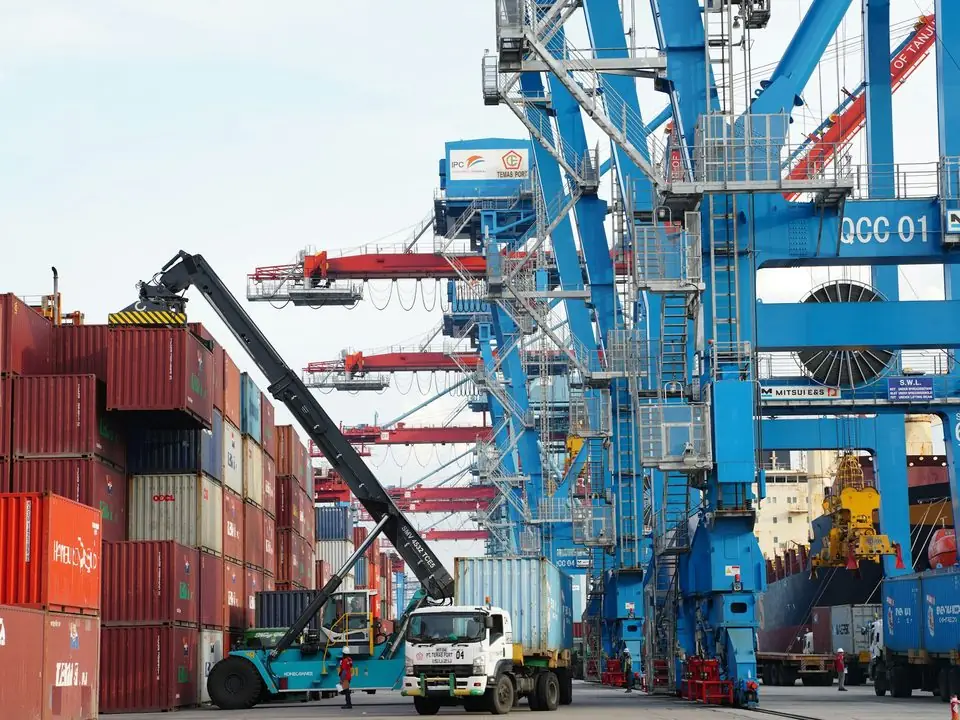
These are the problems that pull operations managers into firefighting.
Sales confirms a delivery date without seeing stock or warehouse capacity. Operations finds out when the customer calls to ask where the goods are.
Drivers, storekeepers and site supervisors report progress in chat groups. The information exists but cannot be searched, measured or escalated.
Partially available orders are shipped in pieces without a clear record of what is still owed, leading to duplicate deliveries or missed balances.
Purchasing buys in bulk to get a price break, the warehouse runs out of space, and transport ends up with half-empty trips. Nobody sees the whole cost.
On-time delivery, order cycle time and return rate are estimated rather than measured, so improvement efforts have no baseline.
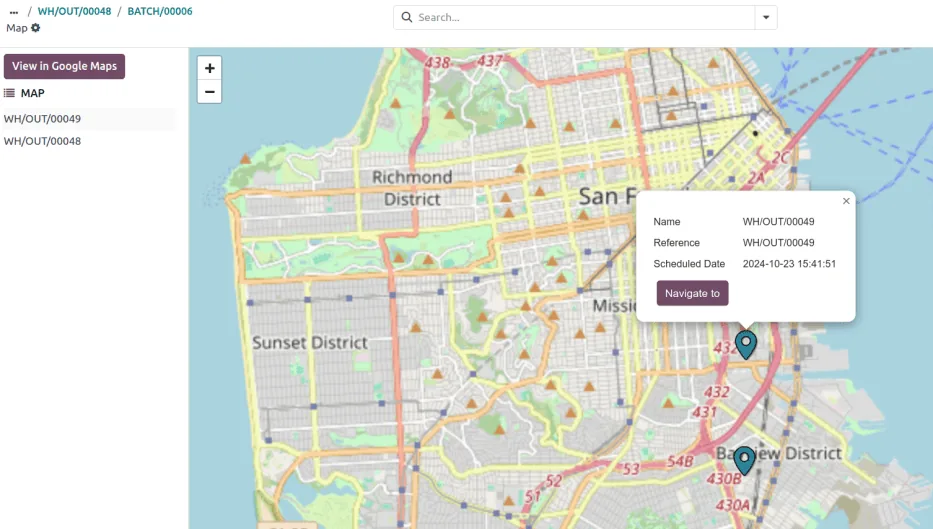
The operations view combines order status, stock availability and delivery performance in one place.
The value for operations comes from linking documents across departments, not from any single module.
The sales order links to its reservations, purchase orders, picks, delivery notes and invoice, so status is a click away. See sales order management.
Sales sees on-hand, reserved and incoming stock before confirming a date, which cuts unrealistic promises at the source.
Trips by area and vehicle, with mobile proof of delivery and signatures. More in delivery management in ERP.
Automatic notifications when a supplier ETA slips, an order sits unpicked too long or a delivery fails.
Assign pickers, drivers, technicians or crews against workload, so capacity issues show up before the day starts.
On-time in-full, order cycle time, fill rate and returns calculated from transaction timestamps rather than estimates.
A typical flow for a UAE distributor or trading company. Manufacturers add production, service businesses add scheduling, but the control points are the same.
One shared database: every step updates stock, finance and reports in real time.
Each platform can link orders to fulfilment. The differences are depth of warehouse and delivery features. Confirm specifics for your edition.
| Zoho | Odoo | ERPNext | Dynamics 365 | |
|---|---|---|---|---|
| Order status tracking | Sales orders in Zoho Inventory with package and shipment status | Sales orders linked to pickings and deliveries in one view | Sales order with linked delivery notes and per-item delivered quantities | Sales orders linked to warehouse shipments and posted documents |
| Stock availability | Available-for-sale stock across warehouses | Forecasted quantities including incoming and reserved | Projected quantity per warehouse | Availability by location with planning features |
| Warehouse operations | Pick lists and packages; deeper WMS via apps | Routes, multi-step picking and barcode app | Pick lists, batches and serials; barcode support | Warehouse management features; deeper in Supply Chain Management |
| Delivery and field teams | Shipment tracking; Zoho FSM for service visits | Delivery orders; Field Service app in Enterprise | Delivery trips and drivers | Shipment handling; Field Service module for service operations |
| Operational reporting | Zoho Analytics | Built-in reporting and spreadsheet dashboards | Script and query reports, dashboards | Power BI and role centers |
Indicative. Courier and fleet integrations depend on providers; we confirm during design.
We configure the system for the rules UAE businesses report against, and test it before go-live.
General information, not tax or legal advice. Confirm current requirements with the FTA, MOHRE or your advisor. See all UAE compliance guides.
On-site workshops in Dubai, Abu Dhabi and Sharjah, and remote or on-site delivery across the Northern Emirates and free zones.
Official sources and references
Facts on this page were checked against these sources in October 2026. Rules change, so confirm current requirements before acting.
Still have a question? Our consultants are happy to help.
Ask an ExpertNot entirely. The aim is that status changes happen in the ERP, for example a driver marking delivery on mobile, while WhatsApp notifications can be sent from the system through an approved provider. The record lives in the ERP.
Yes, orders can be grouped by zone and vehicle for trip planning. Advanced route optimization usually comes from a specialist routing tool integrated with the ERP.
The supply chain manager plans demand, suppliers and replenishment over weeks and months. The operations manager runs execution day to day. See ERP for supply chain managers.
Yes, with production orders added between stock check and dispatch. Shop-floor detail is covered under ERP for manufacturing managers.
The same control logic applies to work orders, technicians and SLAs instead of picks and deliveries. See ERP for facility managers.
Start with on-time in-full, order cycle time and backlog age. They are simple to measure from ERP timestamps and point straight at bottlenecks.
Related Solutions
Related Industries
Related ERP Platforms
Walk us through one order from confirmation to delivery and we will map where the ERP removes calls, chats and delays.
Dubai, United Arab Emirates










