
L
O
A
D
I
N
G


Zoho, Odoo, ERPNext, Dynamics 365 and custom ERP, delivered by one accountable team.

Make the credit limit an actual control: the ERP checks open invoices, unbilled deliveries and open orders before goods leave the warehouse, and only an authorized person can release a hold.
An ERP enforces credit limits by checking each customer's total exposure, meaning open invoices, delivered but unbilled goods, open orders and uncleared post-dated cheques, when a sales order is confirmed and again at delivery. Customers over the limit or overdue beyond agreed days are put on hold automatically, and only an authorized credit controller can release the hold, with the reason logged.
Most UAE distributors, contractors' suppliers and wholesalers set a credit limit for every account customer. The problem is timing. The limit is written on the customer file, but the salesperson confirms the order, the storekeeper loads the truck and the invoice is raised before anyone in accounts compares the exposure with the limit. An ERP for credit limit control in the UAE moves that check to the moments that matter.
Exposure is more than the receivable balance. It includes posted invoices, delivered but not yet invoiced goods, confirmed orders not yet delivered, and in many UAE companies post-dated cheques (PDCs) received but not yet cleared. A good setup decides which of these count, checks exposure against the limit at sales order confirmation and again at delivery, and also blocks customers with invoices overdue beyond a set number of days, even if they are under the limit.
This page focuses on the enforcement mechanism: checks, holds, overrides and reports. Setting limits, assessing new customers and collecting overdue amounts is the wider process covered in ERP for customer credit management.

These issues are typical in companies that track limits in Excel or only check them at invoice time.
Accounts see the breach when the invoice is posted, after the goods have already been delivered. At that point the only option is to chase payment.
A customer at half their limit places three large orders in a week. Each looks fine alone, but together they double the exposure.
A customer is under the limit because the limit is high, yet invoices are 120 days overdue. Without an overdue rule, orders continue to flow.
The sales manager calls the store to release a truck. There is no record of who accepted the risk or why.
Related trading entities under common ownership each have their own limit, and the combined exposure to the group is never seen.
Post-dated cheques are recorded as if paid, which frees up the limit for new orders even though the cheque may not clear.
The ERP runs the checks; finance only handles the holds.
One shared database: every step updates stock, finance and reports in real time.
Enforcement needs the sales, delivery and receivables data to be in one place.
Limit, payment terms, overdue tolerance days and hold status on each customer, per company.
Credit check on confirmation; held orders stay visible but cannot be delivered.
Second check when the delivery note is validated, so stale approvals do not release goods.
Open invoices, ageing and unapplied receipts that feed the exposure calculation. See ERP for accounts receivable.
Post-dated cheques tracked by maturity date and treated as exposure until cleared.
Override and temporary increase requests routed to the credit controller or CFO.
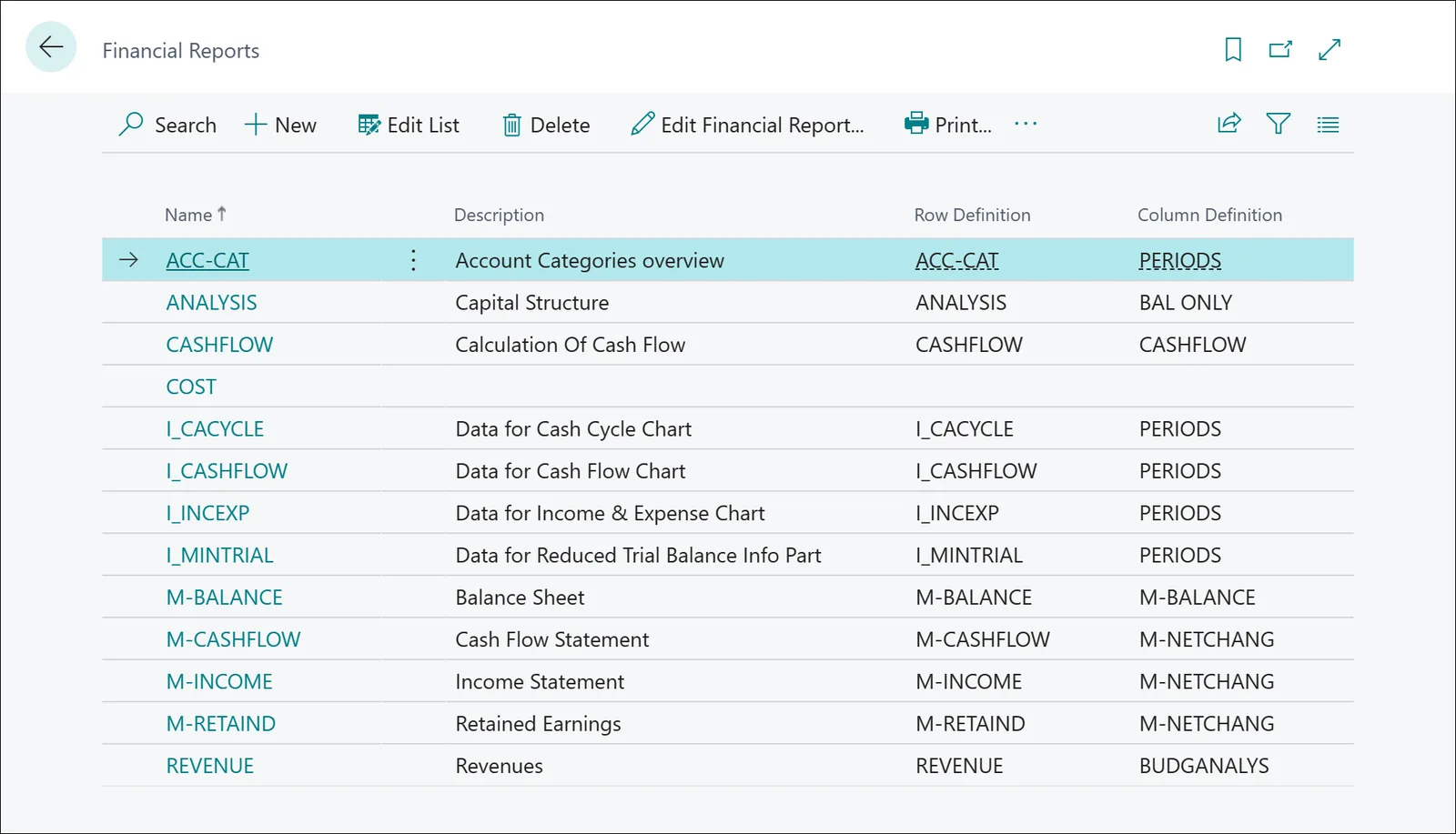
Credit controllers start the day with the hold list and the customers closest to their limits.
A hedged comparison of native credit limit handling. Confirm for your edition and version.
| Zoho | Odoo | ERPNext | Dynamics 365 | |
|---|---|---|---|---|
| Credit limit on customer | Customer credit limit in recent Zoho Books editions; confirm for your plan | Credit limit setting in Accounting (recent versions) | Credit limit per customer and company | Credit limit on customer card in Business Central |
| Behavior when exceeded | Warn or restrict, depending on settings | Warning on sales order; hard blocking usually customized | Blocks submission unless the user has the credit controller role | Credit warnings setting: limit, overdue balance or both |
| Overdue-based block | Usually via custom function or workflow | Customization or follow-up rules | Custom validation or workflow | Overdue balance warning; Blocked field on customer |
| Override approval | Approval through workflow where supported | Studio approval rules or customization | Role-based bypass plus Workflow | Credit limit approval workflow template |
| Open orders in exposure | Depends on configuration | Configurable in recent versions; confirm | Option to check at sales order or invoice | Includes outstanding orders in the credit check |
Behavior differs across versions; we test the exact rule with your data before go-live.
Exposure is only accurate if every source of debt and payment reaches the ERP quickly.
Credit control is commercial, but it touches tax and data rules. Confirm specifics with your advisors.
UAE VAT allows relief on output tax for bad debts when specific conditions are met, including written-off debts and notification to the customer. Good credit records make that evidence easier to produce. See VAT in ERP.
Credit files contain personal and financial data. Restrict access by role in line with the UAE Personal Data Protection Law (Federal Decree-Law 45 of 2021).
Override approvals and credit decisions are useful audit evidence; keep them with the accounting records for at least 5 years.
General information, not tax or legal advice. Rules change; confirm current FTA, MOHRE and Ministry of Finance guidance with your advisor.
Outcomes depend on how consistently overrides are managed.
Breaches are caught at order and dispatch, not after invoicing.
Every override has an approver, a reason and an expiry.
Overdue holds prompt customers to pay before the next order.
Related entities can be monitored together.
Typical ranges; data cleanup of opening balances often takes the longest.
Durations are typical ranges; your plan is agreed after discovery.
Decide what counts as exposure, where checks happen and who can override.
Confirm limits, terms and open balances, including PDCs, for every account customer.
Set checks at order and delivery, overdue rules and override approvals.
Train sales, warehouse and finance teams on what a hold means.
We configure the system for the rules UAE businesses report against, and test it before go-live.
General information, not tax or legal advice. Confirm current requirements with the FTA, MOHRE or your advisor. See all UAE compliance guides.
On-site workshops in Dubai, Abu Dhabi and Sharjah, and remote or on-site delivery across the Northern Emirates and free zones.
Official sources and references
Facts on this page were checked against these sources in October 2026. Rules change, so confirm current requirements before acting.
Still have a question? Our consultants are happy to help.
Ask an ExpertIdeally both. The order check stops new commitments early, and the delivery check catches orders approved weeks ago when the customer's position has since changed.
Most UAE credit controllers treat PDCs as exposure until they clear, because cheques can bounce or be replaced. The ERP can show them separately so the sales team understands the position.
That is a policy choice. A common approach is that finance owns releases, with sales able to request an override that is approved or rejected within a set time.
Set a zero limit, so any order without payment is held. Advances received can be applied to the order; see customer advance management.
Yes, especially where contractors pay late and retention is common. Suppliers to contractors often combine limits with project-wise exposure tracking. Contractors managing their own budgets can see construction budget control.
Credit limit control protects receivables. Stock control and procurement control protect inventory and spend, using similar approval engines.
Related Solutions
Related Industries
Related ERP Platforms
We can review your customer limits, open orders and overdue balances and show how the ERP would hold them.
Dubai, United Arab Emirates