
L
O
A
D
I
N
G


Zoho, Odoo, ERPNext, Dynamics 365 and custom ERP, delivered by one accountable team.

By the time an overrun shows in the accounts, the purchase order was signed weeks ago. Budget control means checking commitments against the budget at the moment they are made.
UAE contractors control construction budgets by baselining the approved estimate as a budget by cost code and WBS, then checking every purchase requisition, purchase order and subcontract against the remaining budget before approval. Variation orders revise the budget formally, actual costs flow in from GRNs, timesheets and invoices, and the commercial team forecasts cost to complete monthly instead of waiting for the final account.
Construction budget control in the UAE is less about reporting and more about timing. A quantity surveyor in Dubai can produce a perfect cost report at month end, yet the damage was done when a site engineer ordered extra formwork, a buyer accepted a higher rebar price, or a subcontract was awarded above the allowance. By then the money is committed and the report only explains the loss.
In a well-run ERP, the budget is set by cost code when the contract is signed, normally converted from the approved estimate. Every purchase requisition, purchase order and subcontract is checked against the remaining budget for that cost code before approval. Variation orders adjust the budget formally, and the commercial team forecasts cost to complete each month instead of waiting for the final account.
This page is about that control loop. Capturing actual costs from timesheets, store issues and invoices is covered under construction project costing, while the purchasing step itself is covered in construction purchase requisitions. For non-construction teams, the general approach to project budget management applies too.

Most overruns trace back to one of these gaps rather than to a single bad decision.
The QS keeps the budget in Excel while purchasing works in accounting software. Nothing stops a PO from exceeding the allowance, so overruns appear only at reconciliation.
Reports show invoiced cost but not open POs and subcontracts. A cost code can look healthy while most of its budget is already promised to suppliers.
Client-instructed variations are agreed on site, but the budget is never revised. Extra cost then looks like an overrun, and genuine overruns hide behind variations.
The estimate uses one breakdown, accounts another and site a third. Comparing budget to actual becomes a manual mapping exercise every month.
Monthly reports show spend to date but not expected final cost. Management learns about a loss-making project when it is nearly finished.
Project managers approve requests they recognize, without seeing remaining budget. Small overspends across dozens of codes add up.
The control point is step four; everything before it sets it up and everything after it keeps it honest.
One shared database: every step updates stock, finance and reports in real time.
Budget control is a thread through several modules, not one screen.
Projects broken into phases, buildings or trades with cost codes that match the estimate.
Original budget, approved revisions and current budget per cost code, with a history of every change.
Requests tagged to project and cost code so the budget check can run before purchasing starts.
POs and subcontract orders recorded as commitments against the budget.
Approval routing that escalates when a request exceeds remaining budget or a value threshold.
Material issues to site posted at cost to the right code, backed by proper stock control.
Labor hours costed to cost codes so labor overruns show up weekly.
Budget, committed, actual and forecast columns in one report, reconciled to the general ledger.
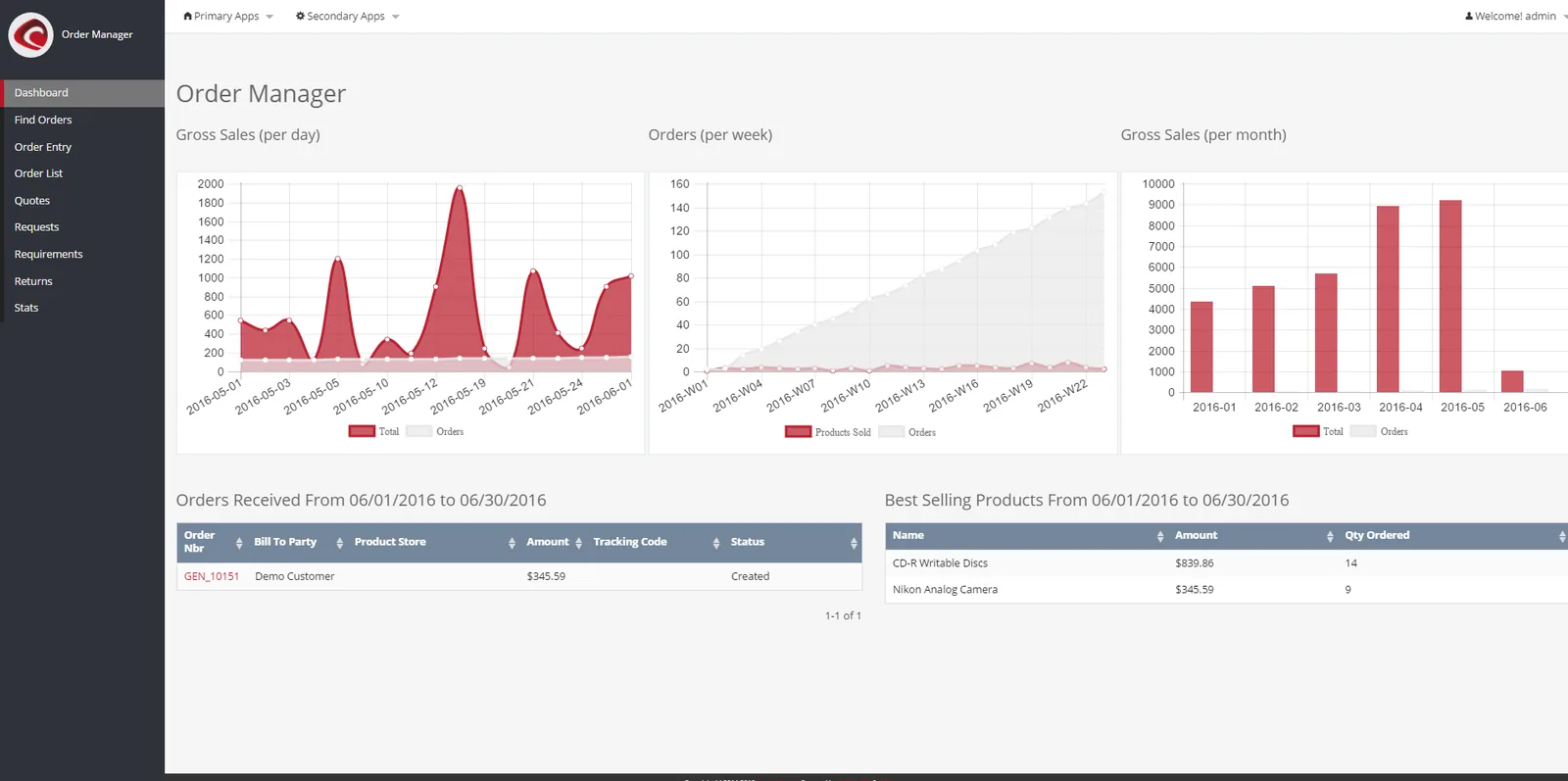
The commercial manager's view should answer one question per cost code: will we finish within budget?
Capabilities vary by edition and version; treat this as a starting point and confirm for your setup.
| Zoho | Odoo | ERPNext | Dynamics 365 | |
|---|---|---|---|---|
| Budget structure | Budgets in Zoho Books and project budgets in Zoho Projects | Analytic accounts and budgets per project (Accounting app) | Budget DocType against project or cost center | Job tasks and job planning lines in Business Central |
| Check at requisition/PO | Usually via approval rules or a custom check in Zoho Creator / Deluge | Budget visibility on POs; hard blocks typically need configuration or customization | Budget actions (stop or warn) on Material Request, Purchase Order and actual expense | Approval workflows; budget checks often added through extensions |
| Committed cost | Open POs reported via Zoho Analytics | Committed amounts visible in analytic and budget reports in recent versions | Ordered amounts tracked per budget | Commitment reporting via job ledger and purchase lines |
| Variation handling | Revised budgets entered manually or via Creator app | Budget revisions and change orders via configuration | Budget amendments with version trail | Revised job planning lines |
| Forecasting | Spreadsheet or Analytics-based | Spreadsheet views and custom forecast fields | Custom forecast fields and reports | Job WIP and forecast via reports or Power BI |
| Typical fit | Smaller contractors, simpler projects | Mid-size contractors needing an integrated suite | Firms wanting hard budget blocks at low cost | Larger contractors on Microsoft |
A budget report is only as current as the transactions feeding it.
These affect how costs are recorded and reported. Confirm details with your tax advisor.
Budget the net cost and track recoverable input VAT separately, so 5% VAT on supplier invoices does not distort budget versus actual.
Revenue and cost recognition on long contracts affects taxable income. Consistent budget and forecast data helps finance support its revenue recognition approach.
Keep budget revisions, approvals and overrides with user and date, and retain records for at least 5 years in line with UAE rules.
Supplier invoices will increasingly arrive as structured PINT AE data via Accredited Service Providers, which makes automatic cost coding easier. Check the latest MoF/FTA guidance for your phase.
General information, not tax or legal advice. Rules change; confirm current FTA, MOHRE and Ministry of Finance guidance with your advisor.
These are the outcomes contractors look for; the size of the gain depends on starting discipline.
Requests above remaining budget are stopped or escalated before money is promised.
QS, finance and project managers see the same budget, committed and actual figures.
Monthly forecasts show the expected final cost while there is still time to act.
Every budget change links to an approved variation or internal decision.
Typical ranges for a contractor with several live projects; actual duration depends on data quality.
Durations are typical ranges; your plan is agreed after discovery.
Agree one cost code structure used by estimating, site, procurement and finance.
Load baselines for live projects, including commitments already placed.
Configure warn and block rules, approval escalation and variation handling.
Build the cost report and forecast template, then reconcile to the ledger.
Run forecasts with the commercial team and tune thresholds.
We configure the system for the rules UAE businesses report against, and test it before go-live.
General information, not tax or legal advice. Confirm current requirements with the FTA, MOHRE or your advisor. See all UAE compliance guides.
On-site workshops in Dubai, Abu Dhabi and Sharjah, and remote or on-site delivery across the Northern Emirates and free zones.
Official sources and references
Facts on this page were checked against these sources in October 2026. Rules change, so confirm current requirements before acting.
Still have a question? Our consultants are happy to help.
Ask an ExpertMost contractors start with warnings plus escalation to the project manager, then switch high-risk codes to hard blocks. Blocking everything on day one tends to slow sites and encourages workarounds.
Committed cost is money promised through approved POs and subcontracts but not yet invoiced. Without it, a cost code can look under budget while it is effectively spent.
An approved variation adds a budget revision to the affected cost codes, with a reference to the variation. The details of pricing and approving variations are covered in construction variation order software.
Yes. Labor hours from site timesheets are costed to the same codes, so a trade running over its hours shows up weekly. See construction timesheet software for how hours are captured.
The principles are similar, but construction budgets are per project and cost code with commitments and variations. Our page on ERP for expense control covers overhead and departmental spend.
ERPNext has built-in stop or warn budget actions on requests and orders, Odoo and Dynamics 365 Business Central handle project budgets well with some configuration, and Zoho works for simpler projects. We implement all four and recommend by fit; see construction ERP for the wider picture.
Related Solutions
Related Industries
Related ERP Platforms
Share a live project's cost report and we will show how budget checks and forecasts would work in your ERP.
Dubai, United Arab Emirates










