L
O
A
D
I
N
G


Zoho, Odoo, ERPNext, Dynamics 365 and custom ERP, delivered by one accountable team.

The UAE has dozens of ERP products on offer. Most of them fall into four families, and knowing which family fits you narrows the field quickly.
ERP software in the UAE falls into four families: cloud application suites such as Zoho, open-source ERP such as Odoo and ERPNext, Microsoft business applications such as Dynamics 365, and custom-built systems. UAE buyers usually shortlist by defining requirements, building a long list, running scripted demos and reviewing cost and fit. SAP Business One and NetSuite are also common shortlist names.
Buyers looking at ERP software in the UAE meet a crowded market: global brands with regional resellers, open source products with local implementers, Microsoft's business applications, and software houses offering to build something from scratch. The labels overlap, so it helps to sort the options by how they are built, licensed and supported before comparing features.
This page is a map of that market rather than a sales pitch for one product. We describe the four main families of ERP software, the way UAE companies typically build a shortlist, and how the five platforms we work with (Zoho, Odoo, ERPNext, Microsoft Dynamics 365 and custom ERP) differ at a glance. Where we mention products we do not implement, such as SAP Business One or NetSuite, we say so.
If you already know the family you prefer, the detailed pages on best ERP software in the UAE and the four-platform comparison go deeper.
The difficulty is rarely a lack of options. It is comparing options that are not described in the same terms.
One vendor's 'ERP' is an accounting app with add-ons, another's is a full suite. Comparing them line by line without a common module list gives misleading results.
Per-user subscriptions, per-app pricing, open source with paid hosting and perpetual licenses all coexist. A cheap entry price can hide costs that appear once you add users or modules.
VAT, corporate tax records and the coming e-invoicing rules need specific fields and reports. Some products ship a UAE localization, others rely on the implementer to configure it.
A strong product with a thin local partner network can leave you waiting for help. The quality of the implementer often matters as much as the software.
Bilingual invoices, free zone and mainland entities under one group, and multi-currency trading are common in the UAE but are often tested only after purchase.
Nearly every product you will be shown belongs to one of these groups. Each has a typical buyer and typical trade-offs.
Vendor-hosted families of apps sold by subscription, such as Zoho One. Quick to start and easy to scale by user, with less control over the hosting environment.
Products like Odoo Community and ERPNext, where the source code is available. You can self-host or use a hosting service, and pay mainly for implementation and support.
Dynamics 365 Business Central for growing companies and Dynamics 365 Finance and Supply Chain for larger groups, closely tied to Microsoft 365 and Power Platform.
Software designed around one company's processes. It fits unusual workflows well but needs a long-term owner for maintenance and upgrades.
Names like SAP Business One and NetSuite are widely sold in the UAE. We do not implement them, but we compare against them and migrate data from them.
Tally, QuickBooks and Sage are common starting points. Many UAE companies move from these to a full ERP when stock, projects or branches grow.
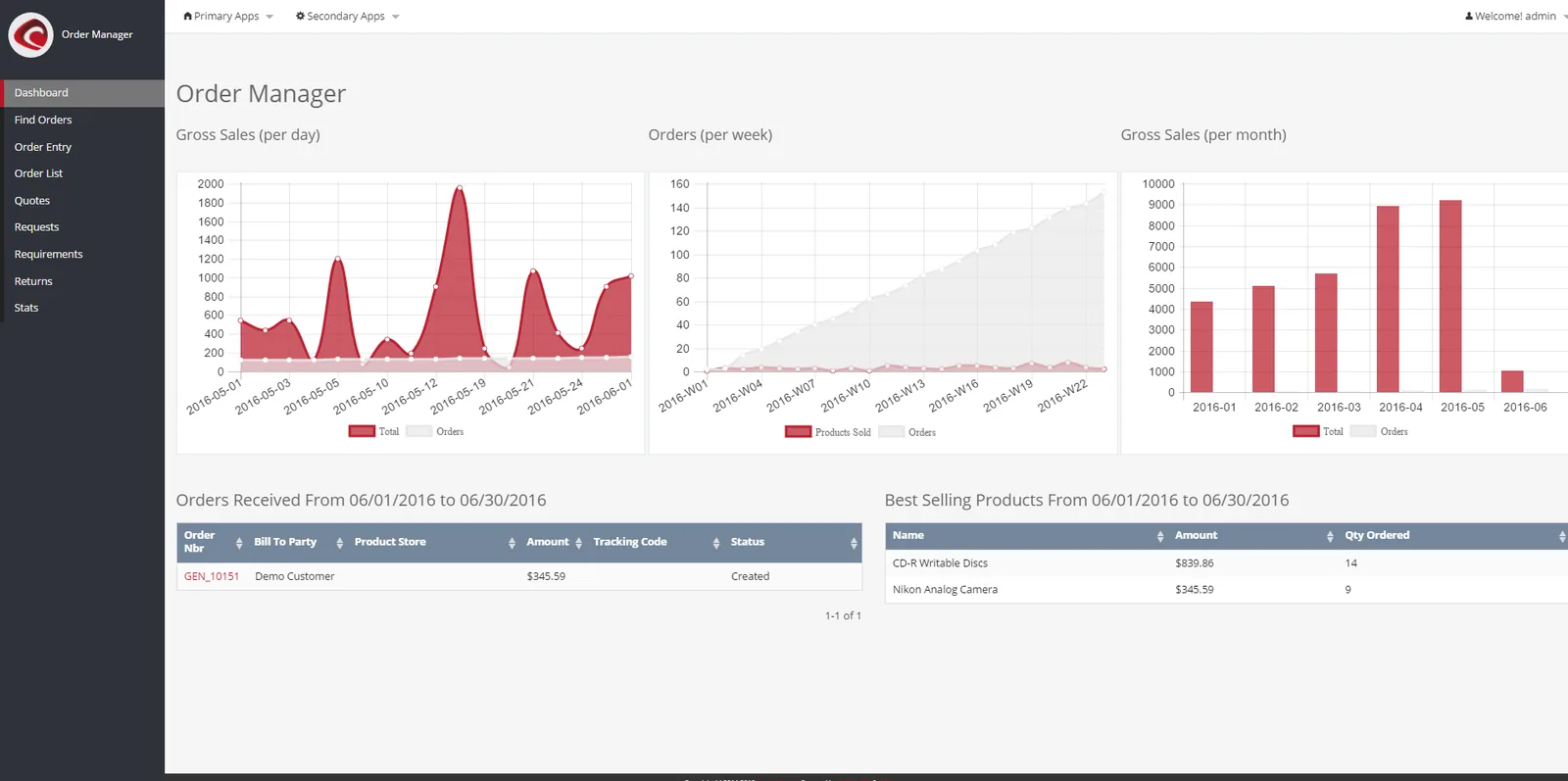
Whichever family you choose, the home screen should answer the questions owners ask every morning without exporting to Excel.
A short comparison of the platforms we implement. Treat it as a starting point; the right answer depends on your processes, users and budget.
| Zoho | Odoo | ERPNext | Dynamics 365 | Custom ERP | |
|---|---|---|---|---|---|
| Family | Cloud suite | Open core (Community and Enterprise) | Open source | Microsoft business apps | Built to order |
| Typical buyer | Small and mid-size firms wanting quick start | SMEs to mid-market wanting one integrated system | Cost-aware SMEs, manufacturers, distributors | Mid-market and enterprise groups on Microsoft 365 | Firms with processes packaged ERP cannot model |
| Hosting | Vendor cloud | Odoo cloud, Odoo.sh or self-hosted | Frappe Cloud or self-hosted | Microsoft cloud (Business Central also on-premise) | Your choice |
| Licensing | Per user, per app or bundle | Per user for Enterprise; Community free | Free license; pay for hosting and services | Per user subscription | Development cost plus maintenance |
| Customization | Low-code (Creator, Deluge) | Python modules, Studio | Python, Frappe framework | AL extensions, Power Platform | Unlimited, at a cost |
| UAE VAT support | UAE edition of Zoho Books | UAE localization | UAE tax templates configured | UAE localization via partner setup | Built to specification |
| Arabic | Supported in key apps | Supported | Supported | Supported | As designed |
| Best fit | Sales-led and service businesses | Trading, retail, light manufacturing | Manufacturing and distribution on a budget | Multi-entity groups needing depth | Unique or regulated workflows |
Product features change with each release. Confirm current capabilities during a demo with your own data.
A disciplined shortlist saves months. These phases reflect what tends to work for mid-size UAE firms; durations are typical ranges, not promises.
Durations are typical ranges; your plan is agreed after discovery.
List the processes that must work on day one, the documents you issue, and reports management relies on. Mark which are must-have and which are nice-to-have.
Pick one or two products from each relevant family. Drop any that lack UAE VAT support or a credible local implementer.
Give every vendor the same scenarios, such as a quotation to invoice with VAT, or a stock transfer between Dubai and Sharjah warehouses.
Compare three-year costs including licenses, hosting, implementation and support. Check references from similar UAE companies.
Choose the platform and partner, then agree a phased scope so the first go-live is manageable.
Ask each vendor to show these working in the demo rather than on a slide. Rules change, so confirm details with your tax advisor.
5% standard rate administered by the FTA. The software should produce tax invoices with your TRN and required fields, and a VAT return summary that supports filing through EmaraTax.
Corporate tax at 9% above AED 375,000 of taxable income applies to financial years starting on or after 1 June 2023. Your chart of accounts and reporting should separate the figures your advisor needs.
The UAE is moving to Peppol-based e-invoicing using the PINT AE specification through Accredited Service Providers, mandatory from 1 January 2027 for businesses with revenue of AED 50 million or more and 1 July 2027 for others. Check the latest Ministry of Finance and FTA guidance.
If payroll runs in the ERP, it should produce a Salary Information File for the MOHRE Wage Protection System and calculate end-of-service gratuity under UAE Labour Law.
General information, not tax or legal advice. Rules change; confirm current FTA, MOHRE and Ministry of Finance guidance with your advisor.
Results depend on the scope and the discipline of the rollout, but these are the improvements companies most often look for.
Sales, stock and finance read from the same records, so management stops reconciling spreadsheets before every meeting.
Tax codes applied at the transaction level mean the quarterly return starts from a system report rather than manual collation.
Warehouse and branch quantities are updated as transactions post, which reduces emergency purchases and stock-outs.
New branches, entities or users can be added without replacing the system or rebuilding reports.
Go deeper into a platform, a comparison, or the cost side of choosing ERP software.
We configure the system for the rules UAE businesses report against, and test it before go-live.
General information, not tax or legal advice. Confirm current requirements with the FTA, MOHRE or your advisor. See all UAE compliance guides.
On-site workshops in Dubai, Abu Dhabi and Sharjah, and remote or on-site delivery across the Northern Emirates and free zones.
Official sources and references
Facts on this page were checked against these sources in October 2026. Rules change, so confirm current requirements before acting.
Still have a question? Our consultants are happy to help.
Ask an ExpertThere is no single published ranking we can point to. In practice, UAE buyers most often shortlist Zoho, Odoo, Microsoft Dynamics 365, ERPNext, SAP Business One and NetSuite. Popularity matters less than fit with your processes and the strength of the local partner.
Yes, when it is hosted, backed up and supported properly. Odoo and ERPNext run many businesses worldwide. The risk is not the code but running it without a maintenance plan.
No. We implement Zoho, Odoo, ERPNext, Microsoft Dynamics 365 and custom ERP. We can compare those products honestly against SAP Business One or NetSuite and migrate data from them if you decide to switch.
The FTA keeps a Tax Accounting Software Register of accredited tax accounting software; check its current list for the products on your shortlist. Whatever the product, it must be configured correctly to produce compliant tax invoices, records and reports. Confirm specifics with your tax advisor.
Three is usually enough for scripted demos, ideally from different families so you see genuine trade-offs. More than four tends to blur the comparison.
Related Solutions
Related Industries
Related ERP Platforms
Share your processes and we will tell you which family and platform we think fits, and why.
Dubai, United Arab Emirates