
L
O
A
D
I
N
G


Zoho, Odoo, ERPNext, Dynamics 365 and custom ERP, delivered by one accountable team.

Logistics margins are won or lost one shipment at a time. We shape ERPNext around your job files, trucks, warehouses and drivers so every AED of cost lands on the job that caused it.
ERPNext can serve UAE logistics companies, such as freight forwarders, 3PL warehouses and trucking operators, but it has no dedicated freight forwarding module. Instead, custom Frappe records such as Shipment Job, Container and Rate Card are built on top of standard multi-currency accounting, stock, assets and Frappe HR, so profit can be reported per job, branch, vehicle or trade lane.
ERPNext for logistics in the UAE appeals to a specific kind of operator: a freight forwarder in Deira, a 3PL with racking in Dubai Investment Park, or a trucking company running containers between Jebel Ali, Khalifa Port and Sharjah that wants full control of its system without per-user licence costs climbing every time it adds a dispatcher. ERPNext is open source, built on the Frappe framework, and can be extended with your own document types instead of being bent around a generic sales order.
That last point matters more in logistics than in most industries. ERPNext does not ship with a dedicated freight forwarding module. What it does provide is solid multi-currency accounting, stock and warehouse control, projects, assets, HR and payroll through Frappe HR, plus a framework that lets us add a Shipment Job, a Container, or a Rate Card as first-class records with their own workflows, permissions and print formats. You own that code and that data.
Our Dubai team designs the job structure first, then configures standard ERPNext around it, so operations and finance see the same margin when a job closes. For the cross-platform view, see our ERP for logistics companies page.
The products we configure, integrate and support on projects like this one.
 ERPNext
 Frappe HR
 Frappe Framework
 Frappe CRM
Product names and logos are trademarks of their respective owners and are shown only to identify the software we implement.
Before choosing modules we look at where money and time leak out of a UAE logistics business. These are the issues we see most often.
Shipping line, DO, port and trucking charges often reach accounts weeks after the customer was billed. Without accruals against the job, the margin looks healthy at invoicing and then quietly erodes.
Freight is bought in USD or EUR, local charges are in AED, and the customer may be billed in a third currency. Exchange differences need to land on the right job, not in a general pool.
Charging per pallet per day, per CBM, or per handling movement is tedious in spreadsheets. Missed days and unbilled handling are common when month-end gets busy.
Fuel, Salik, fines, tyres and servicing are paid centrally. Without tagging them to a truck and a trip, you cannot tell which routes or customers are actually profitable.
This is a typical forwarding and transport flow as we configure it. Each step is a document in ERPNext or a custom Frappe doctype, so the trail from quote to cash is linked and auditable.
One shared database: every step updates stock, finance and reports in real time.
We combine standard ERPNext apps with a small number of purpose-built doctypes. Keeping the custom layer thin makes upgrades between ERPNext versions far easier.
One record per job holding mode, incoterm, POL/POD, containers, BL or AWB numbers and status. Sales and purchase invoices link back to it so revenue and cost sit together.
ERPNext Accounting Dimensions let every GL entry carry a job, branch, vehicle or trade lane. Profit and loss can then be filtered by any of them.
Quotations from rate cards, customer sales orders, and supplier purchase invoices from carriers, agents and hauliers, each in its own currency with automatic exchange handling.
Multi-warehouse and bin-level stock, batch and serial tracking, and stock entries for receiving, put-away and dispatch of customer goods in a 3PL setup.
ERPNext Delivery Trip groups delivery stops for a driver and vehicle. Vehicle and Vehicle Log records capture odometer, fuel and service history per truck.
Trucks, trailers, forklifts and reach stackers registered as assets with depreciation schedules, maintenance logs and the ability to tag running costs to each unit.
Driver records, licence and visa expiry tracking, attendance, trip allowances as salary components, end-of-service gratuity, and a WPS SIF export configured for your bank.
Frappe's web portal can give shippers a login to see their jobs, documents and invoices, cutting down on status-update calls and emails.
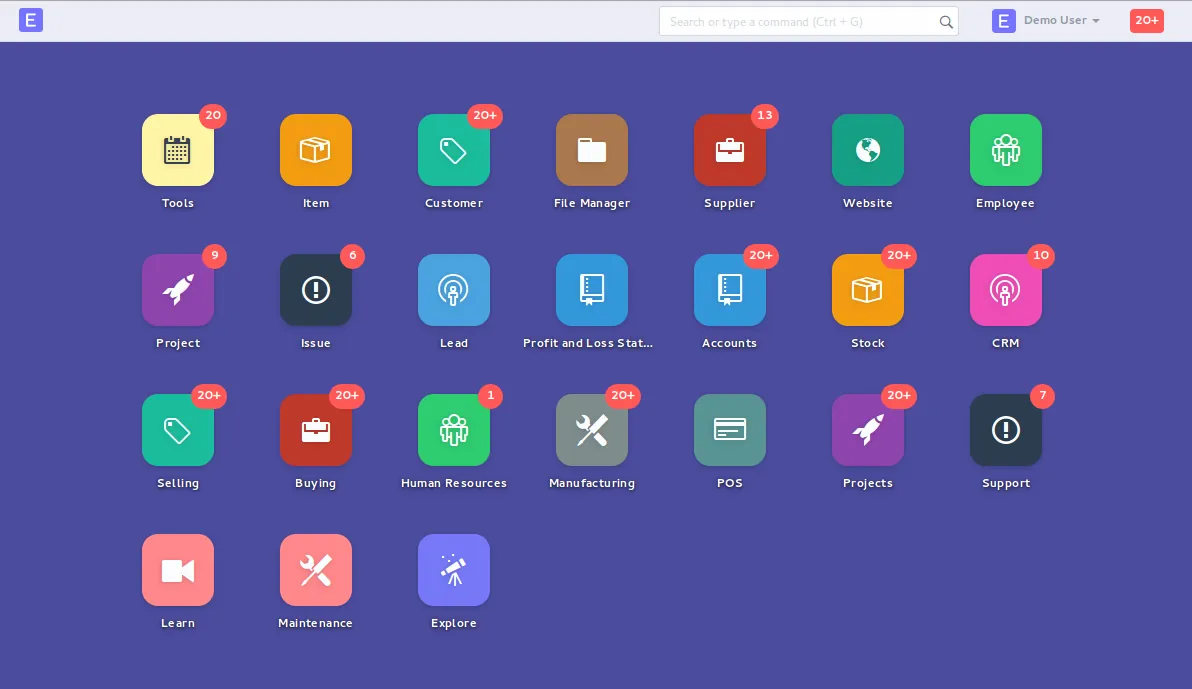
ERPNext workspaces and number cards can be built for each role. A logistics operations workspace typically looks like this.
Logistics touches several UAE tax and labor rules at once. We configure ERPNext to support them and recommend you confirm treatment of specific services with your tax advisor.
VAT is 5% at the standard rate, filed through EmaraTax, usually quarterly. Some international transport and related services can qualify for zero-rating under conditions, so we set up separate tax templates and item tax rules per service type. Confirm the treatment of each service with your tax advisor.
Goods moving through designated zones such as parts of Jebel Ali can have specific VAT treatment. ERPNext warehouses can be flagged by zone so movements and invoices pick the right tax template, subject to your advisor's guidance.
Corporate tax under Federal Decree-Law No. 47 of 2022 is 0% up to AED 375,000 of taxable income and 9% above. Clean job, branch and intercompany records in ERPNext make the return and transfer-pricing files easier to prepare.
The UAE is moving to Peppol-based e-invoicing using PINT AE through Accredited Service Providers. Businesses with revenue of AED 50 million or more are mandatory from 1 January 2027, others from 1 July 2027. We map ERPNext invoice fields to the required data set and connect to your chosen ASP. Check the latest Ministry of Finance and FTA guidance, as dates have changed before.
Salaries must be paid through MOHRE's Wage Protection System using a Salary Information File. We configure Frappe HR payroll to produce the SIF format your bank or exchange house expects, and to calculate gratuity under Federal Decree-Law No. 33 of 2021.
General information, not tax or legal advice. Rules change; confirm current FTA, MOHRE and Ministry of Finance guidance with your advisor.
Durations depend on how many branches, modes and custom doctypes are in scope. These ranges are typical for a single-entity forwarder or transporter, not a promise.
Durations are typical ranges; your plan is agreed after discovery.
We map job types, charge codes, rate cards and cost approvals with operations, finance and the warehouse.
Shipment Job doctype, accounting dimensions, tax templates, print formats for invoices and delivery notes, and role-based workspaces.
Customers, carriers, open jobs, opening balances, assets and driver records moved from Tally, QuickBooks, spreadsheets or a legacy forwarding tool.
End-to-end test jobs per mode, a parallel month-end where practical, and role-specific training for coordinators, dispatchers and accountants.
Hypercare support on-site in Dubai or remotely, closing the first month together and tuning reports once real data flows.
Compare platforms, see the modules involved, or read about the services behind an ERPNext logistics project.
We configure the system for the rules UAE businesses report against, and test it before go-live.
General information, not tax or legal advice. Confirm current requirements with the FTA, MOHRE or your advisor. See all UAE compliance guides.
On-site workshops in Dubai, Abu Dhabi and Sharjah, and remote or on-site delivery across the Northern Emirates and free zones.
Official sources and references
Facts on this page were checked against these sources in October 2026. Rules change, so confirm current requirements before acting.
Still have a question? Our consultants are happy to help.
Ask an ExpertNo. Standard ERPNext covers accounting, stock, buying, selling, assets, projects and delivery trips, but not a dedicated forwarding job file. We add one as a custom doctype on the Frappe framework and link it to invoices and costs, which keeps the custom code small and upgrade-friendly.
Yes, when it is set up for it. We tag every sales and purchase entry with the job through Accounting Dimensions, and add cost accruals so carrier charges that arrive late still land on the right job. A job profitability report then compares billed revenue with actual and accrued cost.
ERPNext handles multi-warehouse stock, bins, batches and serial numbers well. For storage billing per pallet or per CBM per day, we usually add a billing routine that reads stock ledger data and creates periodic invoices. Very high-volume operations with RF scanning may still need a specialist WMS integrated to ERPNext; see our warehouse management software page.
ERPNext gives you open-source code and no per-user licence on the self-hosted edition, which suits firms with technical capacity or a long-term support partner. Odoo has more ready-made apps, and Zoho is quicker for smaller teams. Our four-platform comparison covers the trade-offs.
The FTA maintains a Tax Accounting Software Register, and you should check the current register directly for any product you are considering. What we do is configure ERPNext with compliant tax invoice formats, TRN fields, VAT return mapping, audit trails and an FTA Audit File export to support your obligations.
Related Solutions
Related Industries
Related ERP Platforms
Send us one real shipment job file and we will show you how it would look, costed and invoiced, in ERPNext.
Dubai, United Arab Emirates