L
O
A
D
I
N
G


Zoho, Odoo, ERPNext, Dynamics 365 and custom ERP, delivered by one accountable team.

Stop pricing products from a spreadsheet built three years ago. Capture what each manufacturing order actually consumed and compare it with what it should have cost.
An ERP calculates production cost by adding three parts for each manufacturing order: materials issued at their valuation rate including landed cost, conversion cost from labor and machine time at work center rates, and overhead absorbed on a chosen basis. UAE manufacturers compare this actual cost with a standard cost rolled up from the BOM and routing, splitting variances into price, usage, labor and overhead.
An ERP for production costing in the UAE answers one question that most factory owners in Jebel Ali, Al Quoz, Sharjah and the Ajman industrial areas cannot answer with confidence: what did this batch really cost us to make? The answer has three parts. Material cost comes from the components issued against the order at their valuation rate. Conversion cost covers direct labor hours and machine time at agreed rates. Overhead covers power, rent, depreciation and supervision, absorbed on a basis you choose.
In many UAE SMEs the cost sheet is an Excel file prepared when the product was launched. Raw material prices have moved since then, imported resin or steel carries freight and duty that was never added, and the overhead rate was a guess. Sales then quotes from that sheet, and the real margin only appears at year end when the auditors adjust closing stock.
This page covers how an ERP builds the cost of each manufacturing order and explains variances. The recipe itself sits in the bill of materials, and when and where the order runs is the job of production planning software. Costing is the finance view of both.
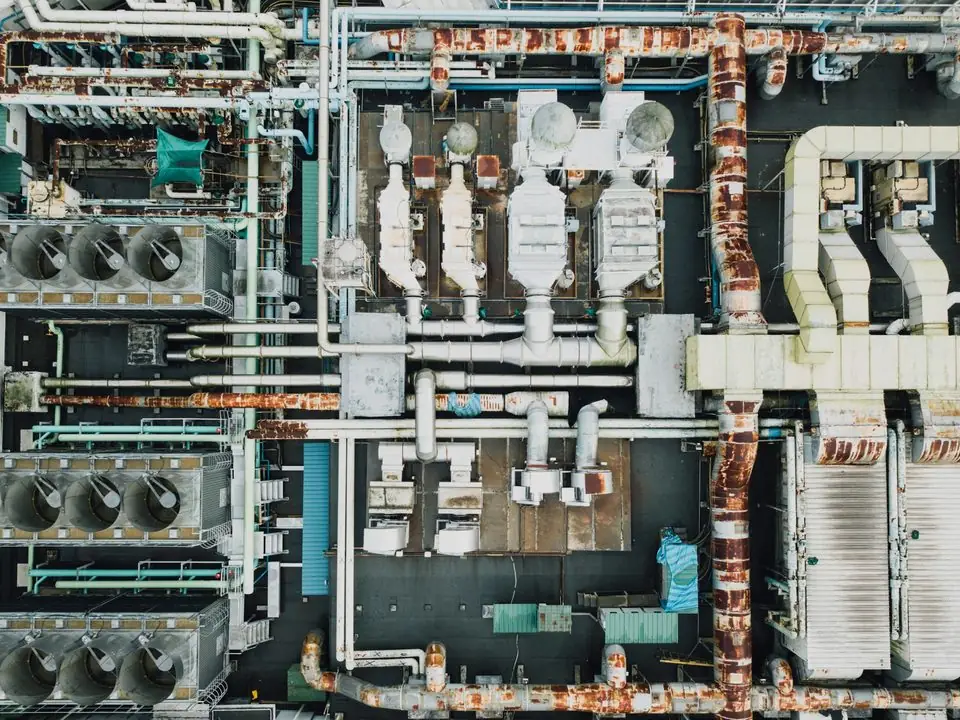
The issues below are common in food, plastics, furniture, metal fabrication and chemical blending plants we review. Each one quietly distorts selling prices.
Imported materials are valued at the supplier invoice price, while freight, customs duty, clearing and port charges go straight to expenses. Every product made from those materials looks cheaper than it is.
Operators do not log hours against orders, so labor is spread evenly across all products. A slow, complex item and a fast, simple one end up with the same conversion cost.
Power, rent and depreciation are added as a flat percentage of material. Energy-heavy processes such as extrusion or baking are undercosted, and light assembly work is overcosted.
The BOM says 100 kg of input makes 100 kg of output, but the line loses 4 to 6 percent. Without recording the real yield, the lost material disappears into a general stock adjustment.
Standard costs are set once and never revised. When supplier prices change, nobody knows which products have slipped below target margin until a quarterly review, if then.
Work in progress and finished goods are valued at year end by a percentage-of-completion guess. Monthly profit swings without explanation, and the auditors adjust the figures.
Costing works when every physical event on the shop floor creates a valued transaction. The flow below is what we configure, regardless of platform.
One shared database: every step updates stock, finance and reports in real time.
Production costing is not one screen. It depends on clean data from purchasing, stores, the shop floor and finance.
Allocates freight, duty and clearing charges to received materials by value, weight or quantity; see landed cost software.
Defines components, quantities, expected yield and by-products, which drive the standard material cost.
Operations, setup and run times, and an hourly rate per work center covering labor and machine cost.
The cost object. Every issue, time entry and output posting is linked to the order number.
FIFO, moving average or standard cost, applied consistently to raw materials, WIP and finished goods.
Rates per machine hour or labor hour, reviewed against actual overhead in the cost center accounts.
Inventory, WIP, cost of goods sold and variance accounts posted automatically when stock moves.
Cost roll-up, order cost analysis, variance and margin reports by product, customer and period.
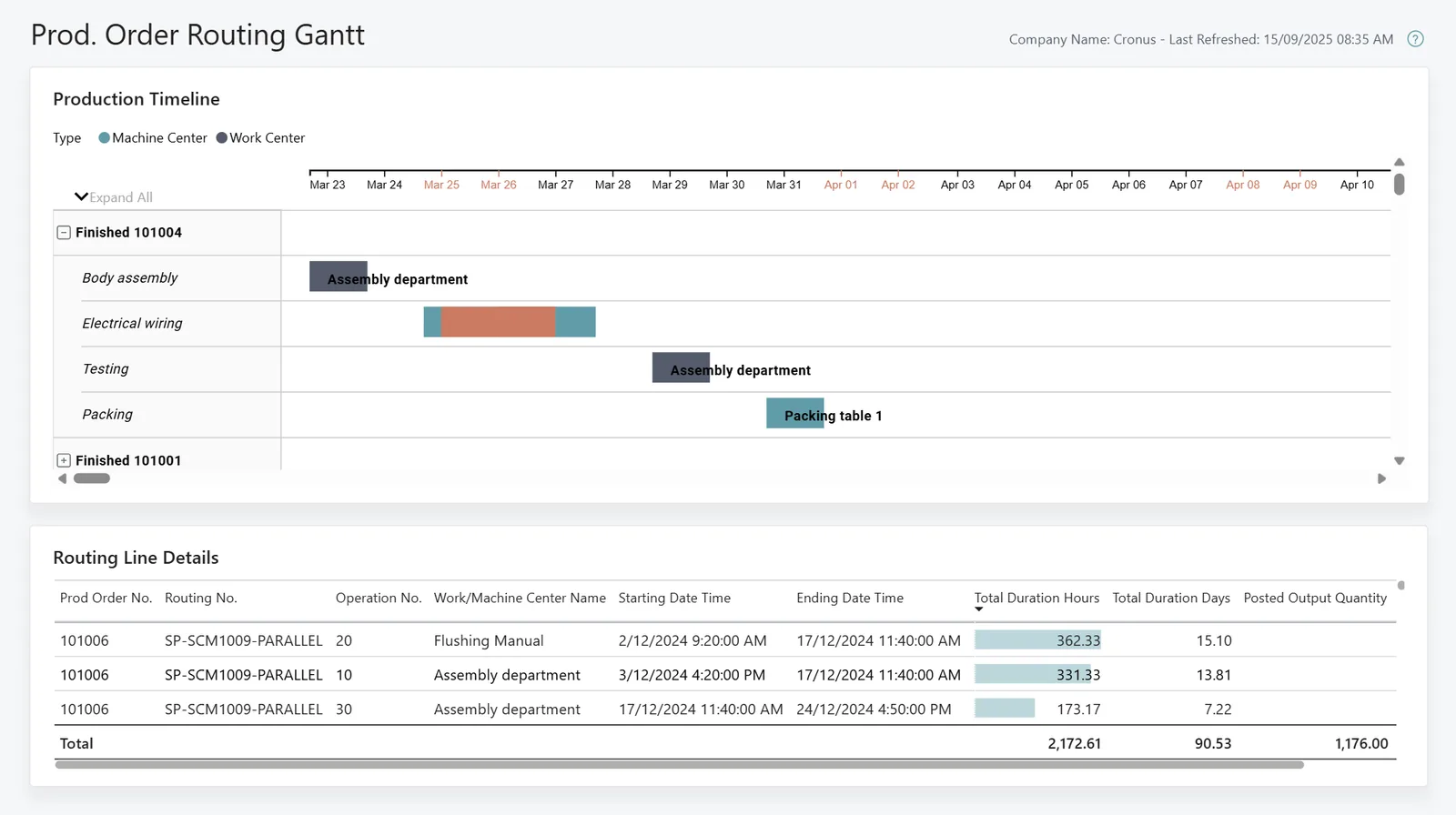
A costing dashboard compares what each order should have cost with what it did cost, so the production manager and the finance manager discuss the same numbers.
All four can produce an order-level cost; they differ in depth of standard costing and variance analysis. Confirm details for your edition and version.
| Zoho | Odoo | ERPNext | Dynamics 365 | |
|---|---|---|---|---|
| Cost roll-up | Assembly cost from component costs in Zoho Inventory composite items; labor and overhead usually via a Zoho Creator app | BoM cost structure report including operations at work center cost per hour | BOM cost from item rates plus operating cost from workstation hour rates | Standard cost worksheet and cost roll-up in Business Central; costing versions in Finance and SCM |
| Actual order cost | Limited natively; actual conversion cost typically tracked in a custom app | Cost analysis per manufacturing order from consumed components and work order time | Stock entries for manufacture value finished goods from issued materials plus operating and additional costs | Production order statistics with expected versus actual cost |
| Valuation methods | FIFO in Zoho Inventory; confirm current options for your plan | FIFO, average cost or standard price per product category | FIFO or moving average per item | FIFO, average, standard and others per item |
| Variance analysis | Report-based, often in Zoho Analytics | Standard-price products show differences on valuation; deeper analysis via reports | Report-based comparison of BOM cost with actual manufacture entries | Purchase, material, capacity and overhead variances posted to separate accounts |
| Landed cost | Landed cost allocation available in recent Zoho Inventory and Books versions; confirm for your plan | Landed costs in Inventory with automated valuation | Landed Cost Voucher on purchase receipts | Item charges assigned to receipts |
| Best fit | Light assembly and kitting | SMEs wanting integrated MRP and costing | Process and discrete SMEs wanting open-source control | Larger plants needing formal standard costing |
The cost of an order is only as good as the data captured on the shop floor and in purchasing.
Costing is an internal management tool, but the valuation it produces flows into your financial statements and tax filings. Confirm specifics with your auditor and tax advisor.
UAE corporate tax starts from accounting profit, so closing stock values directly affect taxable income. A consistent, documented costing method makes the figures easier to support; see corporate tax ERP setup.
Import VAT on raw materials is usually handled through reverse charge for registered businesses and is not part of product cost when recoverable. Keep VAT out of landed cost unless it is irrecoverable.
Keep manufacturing orders, stock entries and costing reports for at least five years under Cabinet Decision 74 of 2023, so cost of sales can be traced back to source transactions.
If you sell to related parties, actual product cost supports arm's length pricing. Master and local file documentation applies only above the published revenue thresholds.
General information, not tax or legal advice. Rules change; confirm current FTA, MOHRE and Ministry of Finance guidance with your advisor.
The benefit is better decisions on price, product mix and process, not a prettier report.
Sales prices new orders from current actual cost, including landed cost and conversion, rather than an old spreadsheet.
Monthly margin by product shows which items have slipped below target when material prices move.
Usage variances point to specific lines, shifts or materials, which links directly to scrap management.
WIP and finished goods are valued from transactions, which reduces year-end audit adjustments.
Production costing is usually part of a wider manufacturing implementation. Durations are typical ranges and depend on BOM quality and shop floor discipline.
Durations are typical ranges; your plan is agreed after discovery.
Agree valuation method, overhead basis, work center rates and variance accounts with finance and production.
Clean BOMs, add yields and routings, set work center rates and load current material costs.
Run sample orders end to end and compare ERP cost with a manual calculation for a few products.
Run costing alongside the old method for one period and explain every difference.
Review variances monthly and update standards at least once or twice a year.
We configure the system for the rules UAE businesses report against, and test it before go-live.
General information, not tax or legal advice. Confirm current requirements with the FTA, MOHRE or your advisor. See all UAE compliance guides.
On-site workshops in Dubai, Abu Dhabi and Sharjah, and remote or on-site delivery across the Northern Emirates and free zones.
Official sources and references
Facts on this page were checked against these sources in October 2026. Rules change, so confirm current requirements before acting.
Still have a question? Our consultants are happy to help.
Ask an ExpertActual cost (FIFO or moving average) is simpler and suits most UAE SMEs. Standard cost suits plants with stable, repetitive products that want variances analyzed by type. Some companies keep actual valuation and maintain standards only for quoting and comparison.
Start with routing standard times, so each order absorbs labor based on expected hours. Then add simple time booking on a tablet for the key operations. Even partial actual data shows where standards are wrong.
Most platforms add overhead through the work center hourly rate or as a percentage on the order. Choose a basis that reflects what drives cost in your plant, often machine hours, and compare absorbed overhead with actual overhead every month.
No. Production costing values repeatable products made on manufacturing orders. Project costing tracks one-off jobs against a budget, which fits contractors and engineer-to-order firms better.
Yes. Material issued and time booked so far form the open order's cost, which is the basis for valuing work in progress at month end.
It depends on size and depth. Odoo and ERPNext cover order costing well for SMEs; Dynamics 365 suits formal standard costing in larger plants; Zoho suits light assembly. We implement all four and recommend by fit.
Related Solutions
Related Industries
Related ERP Platforms
Send us one BOM and last month's purchase and payroll data, and we will show how an ERP would build its true cost per unit.
Dubai, United Arab Emirates