L
O
A
D
I
N
G


Zoho, Odoo, ERPNext, Dynamics 365 and custom ERP, delivered by one accountable team.

ERPNext's manufacturing module covers bills of materials, production planning, work orders and job cards, all tied to stock and costing. We set it up for the way your UAE plant actually runs.
Yes. ERPNext manufacturing covers multi-level bills of materials, production plans, work orders and job cards, all linked to stock and costing. It suits discrete and light process manufacturers in Dubai Industrial City, Sharjah, Ajman, Umm Al Quwain and KEZAD, such as metal fabrication, furniture, packaging, plastics, food and chemical blending. Each production step updates stock and work-in-progress values in the ledger.
ERPNext manufacturing in the UAE is the module itself: the bills of materials, routings, work orders and job cards that turn raw materials into finished goods. It suits discrete and light process manufacturers in places like Dubai Industrial City, Sharjah's industrial areas, Ajman, Umm Al Quwain and KEZAD, such as metal fabrication, furniture, packaging, plastics, food and chemical blending.
A Bill of Materials lists the components, quantities, operations and scrap for each product, and can be multi-level. Production Plans take sales orders or forecasts and calculate what to make and what to buy. Work Orders reserve materials and track progress, while Job Cards record time and quantity at each workstation. Every step updates stock and work-in-progress values in the ledger.
This page focuses on the module's features. If you want to know how a whole factory runs on ERPNext, from quoting to dispatch, read ERPNext for manufacturing companies. If you are still deciding between platforms, our ERPNext vs Odoo for manufacturing comparison may help.
The products we configure, integrate and support on projects like this one.
 ERPNext
 Frappe HR
 Frappe Framework
 Frappe CRM
Product names and logos are trademarks of their respective owners and are shown only to identify the software we implement.
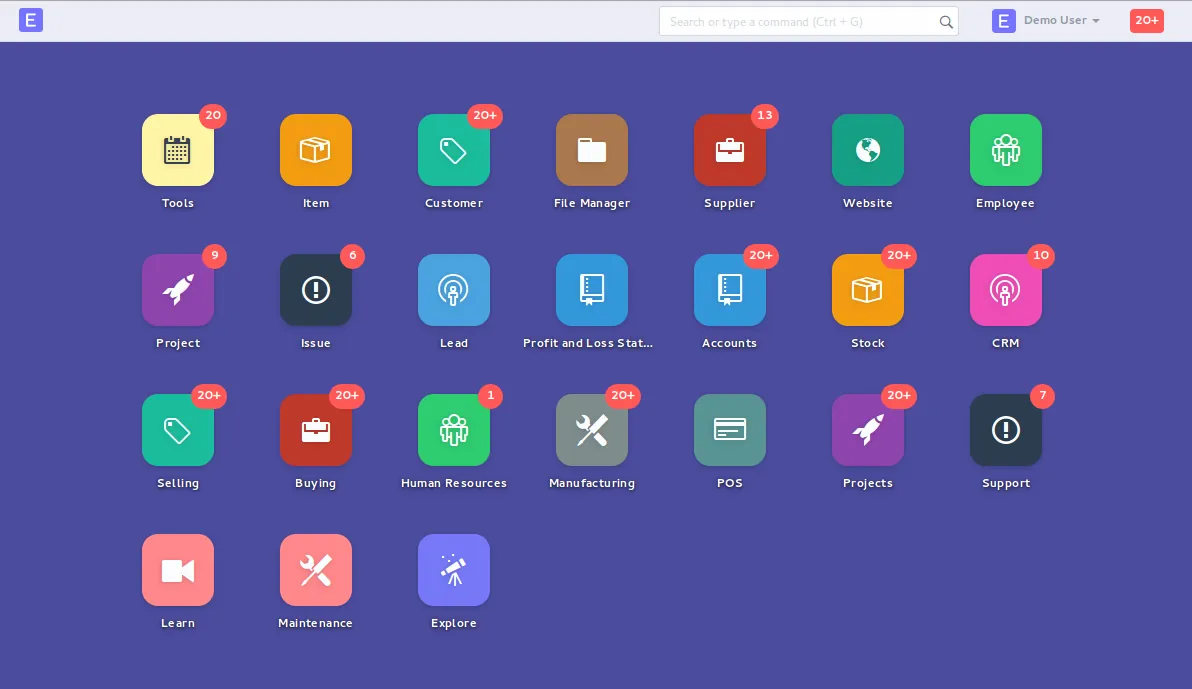
Planners and production managers see what is running, what is late and what is short.
The standard make-to-order flow in ERPNext manufacturing follows these steps.
One shared database: every step updates stock, finance and reports in real time.
These are standard features of the ERPNext manufacturing module, configured to your products and plant layout.
Multi-level BOMs with raw materials, operations, scrap items and costs, with versions kept when designs change.
Plans built from sales orders or material requests that calculate sub-assemblies and raw material needs across levels.
Orders that reserve materials, transfer them to work-in-progress and record finished quantity and actual cost.
Operations assigned to workstations with hourly rates, and job cards capturing time logs, operators and output.
Send materials to a subcontractor for coating, machining or packing, and receive finished items with costs captured.
Inspection templates with parameters and acceptance ranges, applied on receipt, during production or before delivery.
Batches and serials carried from raw material into finished goods for traceability and recalls.
Actual material, labor and overhead costs per work order compared with the BOM's planned cost.
Factories often need ERPNext to talk to machines, tools and partners on the floor.
Production data affects tax and audit figures. We set up ERPNext to support these rules; confirm the treatment with your tax advisor.
Input VAT on raw materials and 5% output VAT on finished goods are captured through tax templates on purchase and sales documents, with exports and zero-rated supplies kept separate.
Work-in-progress and finished goods values flow to the balance sheet and affect taxable income. Consistent costing methods and period closing help support your corporate tax figures.
Manufacturers in free zones such as KEZAD or JAFZA may look at Qualifying Free Zone Person status, which depends on substance and qualifying income conditions. Accounts and dimensions can separate income streams so your advisor can assess them.
Batch-level records from raw material to customer delivery give quality teams and auditors a documented chain when a product issue arises.
General information, not tax or legal advice. Rules change; confirm current FTA, MOHRE and Ministry of Finance guidance with your advisor.
Manufacturing rollouts depend on accurate data and a realistic view of the shop floor.
Compare platforms and see how ERPNext supports factories in specific sectors.
We configure the system for the rules UAE businesses report against, and test it before go-live.
General information, not tax or legal advice. Confirm current requirements with the FTA, MOHRE or your advisor. See all UAE compliance guides.
On-site workshops in Dubai, Abu Dhabi and Sharjah, and remote or on-site delivery across the Northern Emirates and free zones.
Official sources and references
Facts on this page were checked against these sources in October 2026. Rules change, so confirm current requirements before acting.
Still have a question? Our consultants are happy to help.
Ask an ExpertYes. A BOM can include sub-assemblies with their own BOMs, and production planning explodes all levels to work out what to make and what to buy.
Production Plans calculate raw material requirements from sales orders or forecasts, considering stock on hand and open orders, and create material requests. It is practical MRP for most small and mid-sized plants rather than advanced finite-capacity scheduling.
Yes. Job cards can be updated on tablets or shared terminals at each workstation, with start and stop times and completed quantities. We simplify the screen so operators only see what they need.
Yes. You can send materials to a subcontractor, track what they hold, and receive finished or semi-finished goods with the service charge added to cost.
It handles batch-based production, scrap, process loss and quality checks, which covers many food and chemical blenders. Complex formula scaling or regulated recipe control may need customization, and we assess that in discovery.
Related Solutions
Related Industries
Related ERP Platforms
Send us a sample BOM and a description of your production line, and we will show how ERPNext manufacturing would run it.
Dubai, United Arab Emirates