
L
O
A
D
I
N
G


Zoho, Odoo, ERPNext, Dynamics 365 and custom ERP, delivered by one accountable team.

Time and material contracts pay you for what you actually spend: hours at agreed rates, plus materials and expenses. The revenue is only as good as the records behind it.
Time and material billing invoices clients for approved timesheet hours at contracted rates, plus materials issued from stores and rebillable expenses at cost or with a markup. An ERP prices hours from rate cards with validity dates, lists unbilled lines on a pre-invoice review, and alerts managers before not-to-exceed caps. UAE consultancies, agencies and maintenance contractors use Zoho, Odoo, ERPNext or Dynamics 365.
Time and material billing charges a client for approved hours at contracted rates, plus the materials and expenses used on their work. In the UAE it is common for IT consultancies, engineering and design offices, MEP and facility maintenance contractors, marketing agencies and legal or audit support teams. The model is simple to agree and hard to run well, because every billable line depends on a timesheet, a stores issue or an expense claim being recorded correctly and on time.
The hours side starts with project timesheets or a time tracking tool where staff book time against a project, task and activity type. Each entry is approved, priced from the client's rate card and either billed, held or written down. The materials side is equally important for contractors: parts issued from stores, items bought for a site, and consumables, each billed at cost or cost plus an agreed markup.
Time and material billing differs from milestone billing, where you are paid on events, and from fixed fee billing, where the price is set in advance. Many UAE contracts are hybrids, for example T&M with a not-to-exceed cap, so the ERP must handle both the rates and the limits.

Most revenue leakage in T&M work happens between the timesheet and the invoice.
Staff fill timesheets on Friday afternoon from memory, or forget entirely. Unrecorded hours are hours you cannot bill.
Rates differ by client, contract and seniority, and the billing clerk picks them from an old spreadsheet. Under-billing goes unnoticed; over-billing gets disputed.
Technicians take parts from the van or store for a maintenance call, and the issue is never linked to the job. The cost lands in the P&L with no matching revenue.
Parking, travel and courier costs are added as a lump sum. Clients ask for backup, and finance cannot produce it quickly.
A not-to-exceed limit is passed mid-month and the excess hours become unbillable. The project manager learns about it from the client.
Partners reduce hours before sending the invoice, but the reduction is not recorded. Nobody can see which projects or people are regularly written down.
A weekly or monthly cycle, with approval before anything reaches the client.
One shared database: every step updates stock, finance and reports in real time.
These modules feed the billable lines and control what reaches the invoice.
Daily or weekly entry against project, task and activity, from desktop or mobile, with billable or non-billable flags.
Hourly rates by role or person, client-specific rates and validity dates, so rate increases apply only from the agreed date.
Parts and consumables issued to a project or job card, valued at cost and flagged as billable.
Employee expenses with receipts, coded to the project and marked as rebillable with or without markup.
A pre-invoice screen listing all unbilled lines, where the manager can hold, adjust or write down with a reason.
Invoices grouped by project, period or purchase order, with an attached timesheet and materials report.
Not-to-exceed caps and budget alerts per project or client purchase order.
Billable hours, realization and unbilled value per person and project.
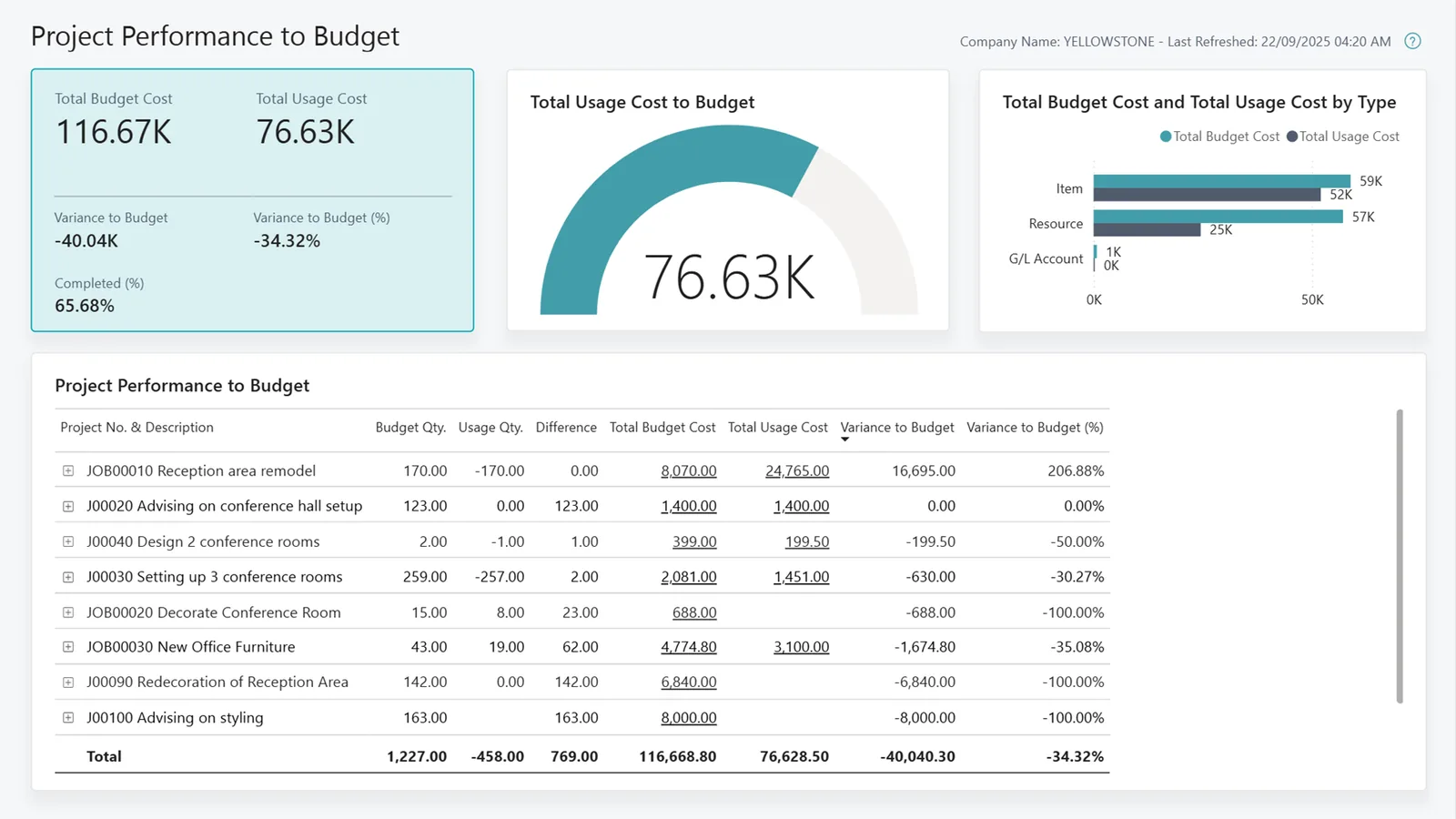
These reports support the weekly billing review between project managers and finance.
Each platform supports billing from timesheets. Material and expense rebilling and caps vary. Confirm for your edition.
| Zoho | Odoo | ERPNext | Dynamics 365 | |
|---|---|---|---|---|
| Timesheet capture | Zoho Projects timesheets with approval | Timesheets app linked to project tasks | Timesheet doctype against project and activity type | Time sheets on jobs in Business Central; time entries in Project Operations |
| Rate cards | Billing rates per user or task in Zoho Projects / Books | Rates per employee or service product on the sales order | Activity cost and billing rates per employee and activity type | Job resource prices; role-based price lists in Project Operations |
| Materials rebilling | Items added to invoices from Zoho Inventory; linking to projects needs setup | Reinvoice products at cost or sales price via the sales order | Stock issued to project; billing usually configured via sales invoice | Job item usage lines billable through job planning |
| Expense rebilling | Billable expenses in Zoho Expense / Books | Expenses re-invoiced at cost or sales price | Expense claims linked to project; rebilling by configuration | Job expenses and billable expense lines |
| Caps and limits | Budget alerts in Zoho Projects | Usually by custom alert or reporting | Custom validation or reports | Not-to-exceed limits in Project Operations; confirm for your edition |
| Pre-invoice review | Unbilled timesheet list before invoicing | Invoice from sales order with delivered quantities | Sales invoice from timesheets | Pro forma and invoice proposals |
The fewer places where hours or costs are retyped, the fewer lines go missing.
These affect how invoice lines are taxed and documented. Confirm the treatment with your tax advisor.
Costs recharged to a client as part of your service are generally part of the taxable supply and attract 5% VAT. True disbursements made as the client's agent may be treated differently, so the ERP should let you classify each expense type.
Ongoing T&M services billed periodically are often treated as continuous supplies for VAT, with the date of supply tied to invoice or payment. Agree a billing calendar that matches.
Approved timesheets and stores issue notes are the backup for each invoice line. Keep them linked to the invoice for the tax record retention period of at least five years.
Once e-invoicing applies to you, T&M invoices with many lines still need valid PINT AE data, including item descriptions and tax categories. Check the latest Ministry of Finance and FTA guidance.
General information, not tax or legal advice. Rules change; confirm current FTA, MOHRE and Ministry of Finance guidance with your advisor.
These improvements come from capturing every billable line and reviewing it before invoicing.
Hours, parts and expenses are linked to the project when they happen, not reconstructed at month-end.
Rate cards with validity dates remove manual rate selection.
Invoices are generated from approved lines with backup attached, so they go out sooner.
Every adjustment has a reason and an approver, so pricing problems can be fixed at the source.
Indicative ranges for a firm moving T&M billing into an ERP.
Durations are typical ranges; your plan is agreed after discovery.
Collect rate cards, caps and rebilling rules from active contracts and agree a standard structure.
Configure activities, rates, billable flags, expense types and invoice layouts with backup reports.
Roll out timesheet entry and approval, with reminders, before switching billing over.
Run parallel billing for one or two cycles and reconcile against the old process.
We configure the system for the rules UAE businesses report against, and test it before go-live.
General information, not tax or legal advice. Confirm current requirements with the FTA, MOHRE or your advisor. See all UAE compliance guides.
On-site workshops in Dubai, Abu Dhabi and Sharjah, and remote or on-site delivery across the Northern Emirates and free zones.
Official sources and references
Facts on this page were checked against these sources in October 2026. Rules change, so confirm current requirements before acting.
Still have a question? Our consultants are happy to help.
Ask an ExpertNo. The materials part matters for contractors. Parts and consumables issued from stores, or bought for a job through a material request, can be linked to the project and billed at cost or with a markup.
Set the cap on the project or client purchase order and alert the project manager at thresholds such as 75% and 90%. Hours beyond the cap should need a change order before they are billable.
Yes. All four platforms support client-specific prices in some form. The key is giving each rate a validity date so annual increases apply cleanly.
Yes. Recording the original value, the billed value and the reason shows which projects are underpriced or overrun, which feeds into project profitability analysis.
Monthly is most common in the UAE, and some firms bill weekly for large accounts. A regular cycle keeps WIP low and makes VAT dates predictable.
T&M is one model inside wider project billing software. The same project can have a T&M support phase after a milestone-billed implementation.
Related Solutions
Related Industries
Related ERP Platforms
We will review your current timesheet-to-invoice process and show where billable value is slipping away.
Dubai, United Arab Emirates










