L
O
A
D
I
N
G


Zoho, Odoo, ERPNext, Dynamics 365 and custom ERP, delivered by one accountable team.

A site engineer's WhatsApp message is not a purchase requisition. An ERP-based PR carries the project, cost code, specification and budget check that procurement needs to buy the right thing.
Construction companies in the UAE should raise purchase requisitions in an ERP that carries the project, cost code, specification, required date and approved submittal or BOQ item. The PR is checked against stock and remaining budget, approved through a value matrix, consolidated by procurement and converted into an RFQ or a PO against a framework agreement. Fast-track approval handles urgent site needs with a clear record.
A construction purchase requisition in the UAE is the formal request from site to buy something that is not in stock: rebar for the next slab, waterproofing membrane, a specific light fitting approved by the consultant, or a hired crane for two weeks. It should say what is needed, how much, for which project and cost code, by when, and against which approved material submittal or BOQ item. In many companies it is a photo of a handwritten note sent to the buyer.
The difference matters because the PR is the first point where cost can be controlled. Once the buyer has placed a PO, the money is committed. A proper PR is checked against the remaining budget, routed for approval by value and project, and then converted by procurement into an RFQ or a PO against a framework agreement. Urgent site needs still exist, so the process must allow fast-track approval with a clear record.
This page covers the requisition and approval stage. Issuing material that is already in the site store is a material request, not a PR, and the sourcing, RFQ and supplier side is covered under construction procurement software. For the general, non-construction version of this process, see ERP for purchase requisition.

Most procurement disputes on site start with a weak or missing requisition.
The buyer receives requests from several engineers in chat groups, with no project or cost code. Items are missed, duplicated or charged to the wrong job.
The PR says '20 rolls membrane' without brand, thickness or the approved submittal. The supplier delivers a non-approved product and the consultant rejects it.
Engineers request what they need without seeing the remaining allowance. Overspend is discovered after the PO is issued.
Every PR waits for the project manager, who is on another site. Urgent items are bought in cash to avoid delay, bypassing controls.
Material available in the main store or another site is purchased again because nobody checked before raising the PR.
Site cannot tell whether its request became a PO, when it ships or what was delivered, so it chases the buyer daily.
The workflow keeps site needs moving while every step leaves an auditable record.
One shared database: every step updates stock, finance and reports in real time.
The PR connects site, budget, stock and purchasing records.
Project, cost code, BOQ reference, item, quantity, required date, delivery location and attached submittal.
Rules by amount, project, category and urgency, with delegation when approvers are away.
Remaining budget shown on the PR, with warn or block rules for overspend.
Stock on hand in the main store and other sites shown before purchasing.
Consolidated PRs turned into RFQs with quote comparison for larger items.
Call-off orders against framework agreements for concrete, steel or aggregates.
Engineers raise and track PRs from site on a phone, with photos and drawings attached.
Delivery to site recorded against the PO so the requester sees the request fulfilled.
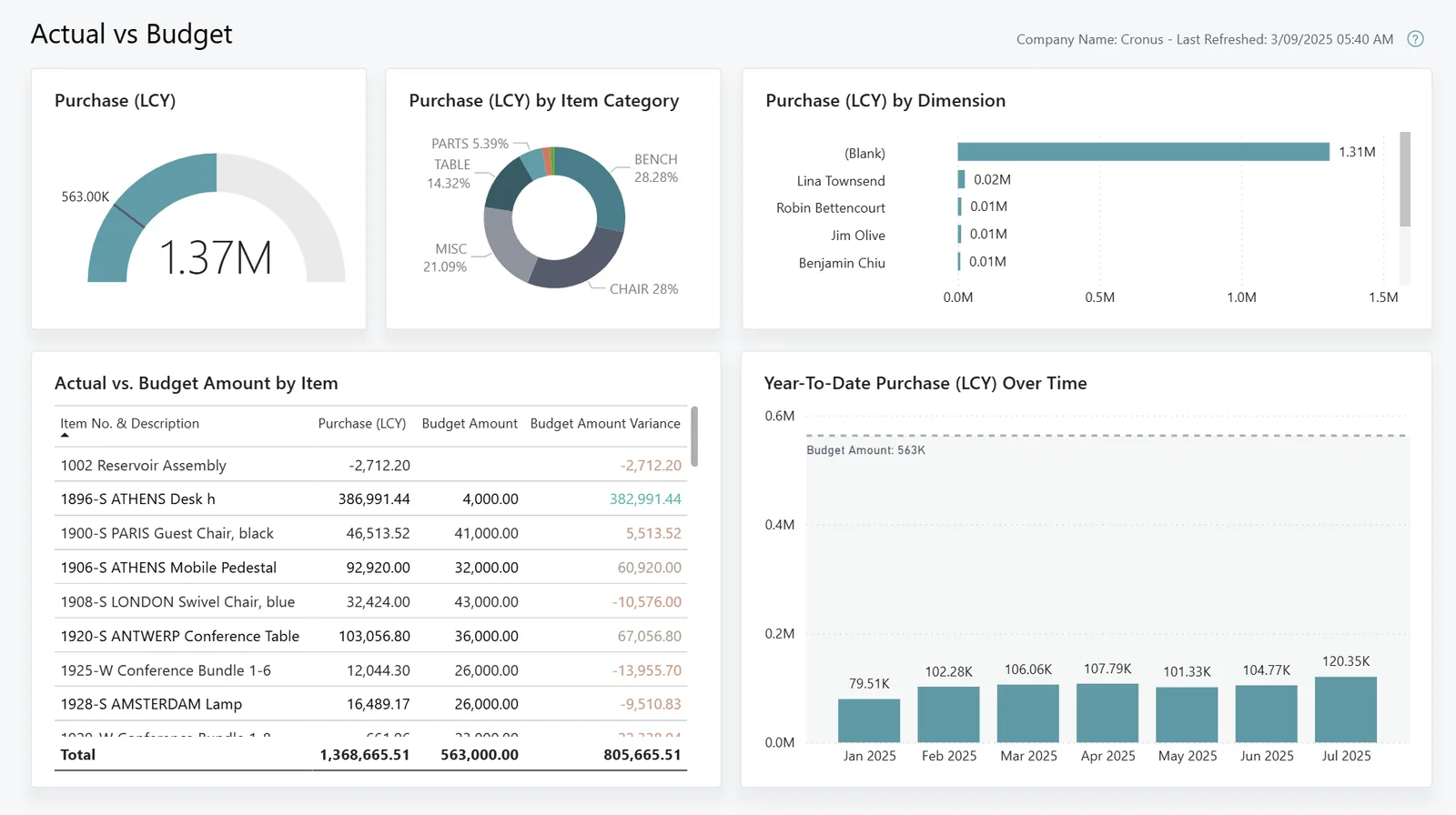
Procurement and project managers see the PR pipeline by status, age and value.
PR handling differs more between platforms than most buyers expect. Confirm for your edition and version.
| Zoho | Odoo | ERPNext | Dynamics 365 | |
|---|---|---|---|---|
| Native requisition | No dedicated PR document in Zoho Books; commonly built in Zoho Creator or via PO approvals | Purchase requests via the Approvals app or purchase agreements; apps exist for site requisitions | Material Request (type Purchase) is native | Finance and Supply Chain has purchase requisitions; in Business Central, purchase quotes or requisition worksheets are common |
| Approval rules | Approval workflows in Zoho Books / Creator | Approval rules and multi-level approvals by amount | Workflow with role-based states | Approval workflows by amount and dimension |
| Budget check | Custom logic in Creator or Deluge | Budget visibility; hard checks via configuration | Budget stop or warn on Material Request | Budget checks in F&SCM; BC via extensions |
| Project and cost code | Project field on PO; custom fields | Analytic distribution on lines | Project and cost center on lines | Job and job task on lines |
| PR to RFQ/PO | Manual or automated conversion | Generate RFQ from request | Create RFQ, Supplier Quotation and PO from Material Request | Convert quote or requisition to PO |
| Typical fit | Smaller contractors | Mid-size contractors | Contractors wanting native PRs at low cost | Larger groups on Microsoft |
These connections keep requisitions linked to what happens before and after them.
The PR itself is internal, but it starts a chain that ends in tax invoices. Confirm details with your tax advisor.
Capturing the correct supplier TRN and tax code at PO stage helps ensure supplier tax invoices meet requirements and input VAT at 5% can be recovered.
The person requesting should not approve their own PR or create the PO. Keep approval history with user and timestamp.
Supplier invoices will move to PINT AE through Accredited Service Providers. POs referenced on invoices make automatic matching easier; check the latest MoF/FTA guidance.
PRs, approvals and POs support cost and VAT records; retain them for at least 5 years.
General information, not tax or legal advice. Rules change; confirm current FTA, MOHRE and Ministry of Finance guidance with your advisor.
Outcomes depend on site adoption and sensible approval limits.
Specifications and approved submittals travel with the request to the supplier.
Budget checks happen before procurement commits money.
Mobile approvals and delegation remove waiting on one person.
Stock in other stores is visible before a new purchase.
Typical ranges for a contractor with several live sites.
Durations are typical ranges; your plan is agreed after discovery.
Agree PR fields, approval matrix, urgency rules and delegation.
Set up forms, approvals, budget checks and PR-to-PO conversion.
Give engineers mobile access and train them on one pilot project.
Switch all sites to system PRs and stop accepting chat requests.
Review approval ageing and adjust thresholds.
We configure the system for the rules UAE businesses report against, and test it before go-live.
General information, not tax or legal advice. Confirm current requirements with the FTA, MOHRE or your advisor. See all UAE compliance guides.
On-site workshops in Dubai, Abu Dhabi and Sharjah, and remote or on-site delivery across the Northern Emirates and free zones.
Official sources and references
Facts on this page were checked against these sources in October 2026. Rules change, so confirm current requirements before acting.
Still have a question? Our consultants are happy to help.
Ask an ExpertA material request asks the store to issue items that are already in stock. A purchase requisition asks procurement to buy something. Many ERPs start with a material request and convert the shortfall into a PR automatically.
Most contractors use value bands by project role, for example site engineer, project manager, then procurement or commercial manager for higher amounts. Our page on ERP for purchase approval covers approval matrix design.
Allow an urgent flag with a fast-track approver and a post-purchase review. This keeps the record while avoiding cash purchases outside the system.
Yes, on all four platforms through mobile apps or mobile web. Attaching photos, drawings and submittal references from site cuts back-and-forth with the buyer.
Not necessarily. Procurement often consolidates PRs from several sites into one RFQ or PO to get better prices, while keeping each line linked to its project and cost code.
ERPNext has a native Material Request with budget checks; Odoo offers purchase requests through Approvals and agreements; Zoho usually needs Zoho Creator. See Odoo Purchase for that module, or Zoho for construction for the Zoho approach.
Related Solutions
Related Industries
Related ERP Platforms
Walk us through how your sites request materials today and we will map a PR-to-PO workflow for your ERP.
Dubai, United Arab Emirates