L
O
A
D
I
N
G


Zoho, Odoo, ERPNext, Dynamics 365 and custom ERP, delivered by one accountable team.

MRP tells a factory what to buy and make, and when. ERP connects that plan to sales, purchasing, costing, VAT and the ledger. Here is where one ends and the other begins.
MRP (material requirements planning) is a calculation that tells a factory what materials to buy and make, how many and by when, using the bill of materials, stock, open orders and lead times. ERP is the wider business system that runs MRP as one module alongside sales, purchasing, inventory, quality, costing, accounting, VAT and HR in one database.
ERP vs MRP is less a contest than a question of scope. MRP (material requirements planning) is a calculation: take what you need to deliver, explode it through the bill of materials, subtract what you already have or have on order, and work backwards by lead time to tell purchasing and production what to release and when. ERP is the business system that runs that calculation as one module, alongside sales, inventory, purchasing, quality, costing and accounting.
The terms got blurred because MRP software came first. In the 1970s factories ran MRP on its own. MRP II then added capacity planning, shop-floor control and cost roll-ups, and ERP grew out of MRP II by bringing finance, HR and distribution into one database. Today most buyers in the UAE are really choosing between a standalone planning tool and the MRP capability inside an ERP.
UAE manufacturers have a specific reason to care. Many depend on imported raw materials with long and variable sea-freight lead times, pay customs duty that has to be added to landed cost, and serve customers across the GCC with short delivery promises. A plan that ignores purchasing lead times, landed cost or open sales orders is not much use, which is why the integration with the rest of ERP matters more here than in many markets.
A common pattern we see in UAE factories is a planner running MRP logic in a large spreadsheet: sales orders pasted in on Monday, BOM quantities looked up manually, stock copied from the accounting system, and purchase requests emailed to buyers. It works until the planner is on leave or order volume doubles. Moving that logic into the ERP keeps the same calculation but uses live data, so the planner spends time on exceptions such as late containers, supplier minimum order quantities and rush orders, instead of on copying numbers between files.
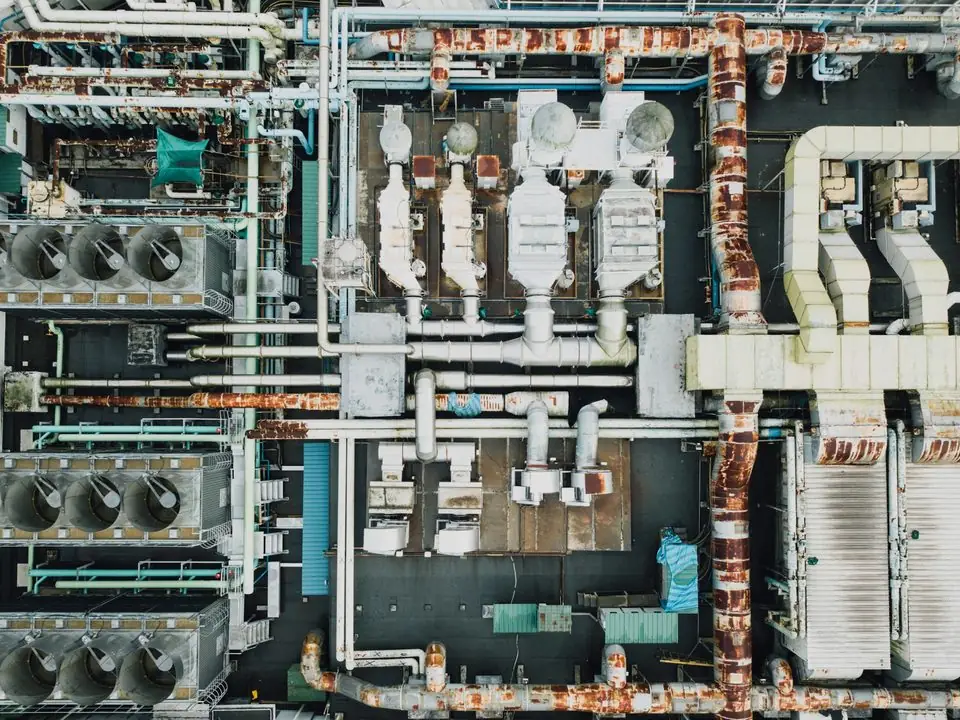
A packaging manufacturer in Sharjah receives an order for printed cartons from a food distributor in Dubai. Here is what the MRP engine does.
The confirmed sales order and the demand forecast for the next eight weeks create gross requirements for finished cartons, by due date.
The bill of materials breaks each carton into kraft board, ink, adhesive and outer packing, with scrap allowances per operation.
For each component, MRP subtracts on-hand stock and open purchase orders, then adds safety stock. Only the shortfall becomes a net requirement.
Board imported by sea needs a release date weeks ahead; locally sourced adhesive needs days. MRP schedules each planned order backwards from the production date.
The run proposes purchase orders for buyers and manufacturing orders for the production planner. People review, adjust quantities to supplier minimums, then confirm.
Late supplier deliveries or rush orders trigger reschedule messages: expedite, delay or cancel. In ERP these flow straight to the buyer's worklist and to production planning.
How a standalone MRP tool differs from an ERP that includes MRP, on the points UAE manufacturers usually ask about.
| Standalone MRP | ERP with MRP module | |
|---|---|---|
| Scope | Material planning, sometimes capacity and shop floor | Planning plus sales, purchasing, inventory, quality, costing, finance, HR |
| Demand input | Imported orders and forecasts, often by file | Live sales orders, quotations and forecasts in the same database |
| Purchasing | Produces a list of suggested buys | Creates draft RFQs and POs with supplier prices, approvals and GRN matching |
| Landed cost | Usually not handled | Freight, insurance and customs duty allocated to stock value |
| Product costing | Standard cost estimates at best | Actual material, labor and overhead posted to WIP and the ledger |
| VAT and Corporate Tax records | Out of scope | Input VAT on purchases, output VAT on sales, audit trail for tax records |
| Batch and expiry | Varies | Batch and serial tracking from GRN to delivery, useful for food and chemicals |
| Data entry | Duplicate keying between systems | One item master, one BOM, one stock figure |
| Best fit | Large plants with a separate ERP that has weak planning | Most UAE SMEs and mid-size manufacturers |
A hedged summary; features differ by edition and version, so confirm the details for your edition.
| Zoho | Odoo | ERPNext | Dynamics 365 | |
|---|---|---|---|---|
| BOM and assemblies | Composite items and assemblies in Zoho Inventory; multi-level BOM is limited | Multi-level BOMs, variants, by-products in Manufacturing | Multi-level BOMs, scrap, operations in Manufacturing | Production BOMs in Business Central; formulas and versions in Supply Chain Management |
| Material planning | Reorder points; full MRP usually needs a custom Zoho Creator app or add-on | Replenishment with MRP-style reordering rules and lead times | Production Plan generates material requests and work orders | Planning worksheet in Business Central; master planning in Supply Chain Management |
| Capacity / routings | Not native | Work centers and routings, scheduling in recent editions | Workstations, operations and job cards | Routings and capacity planning; deeper in Supply Chain Management |
| Typical fit | Light assembly and kitting | Discrete SMEs, make-to-order and make-to-stock | Cost-conscious SMEs wanting open source | Mid-size and larger, multi-site operations |
We implement Zoho, Odoo, ERPNext and Dynamics 365 and recommend based on fit, not a fixed preference. See Odoo Manufacturing and ERPNext Manufacturing for detail.
Use these before deciding whether you need a standalone MRP or a full ERP.
We configure the system for the rules UAE businesses report against, and test it before go-live.
General information, not tax or legal advice. Confirm current requirements with the FTA, MOHRE or your advisor. See all UAE compliance guides.
On-site workshops in Dubai, Abu Dhabi and Sharjah, and remote or on-site delivery across the Northern Emirates and free zones.
Official sources and references
Facts on this page were checked against these sources in October 2026. Rules change, so confirm current requirements before acting.
Still have a question? Our consultants are happy to help.
Ask an ExpertIn most modern systems, yes. Odoo, ERPNext and Dynamics 365 include manufacturing and planning modules inside the ERP. Zoho covers simpler assemblies natively and often needs extension for full MRP logic.
MRP plans materials only. MRP II (manufacturing resource planning) adds machine and labor capacity, routings, shop-floor tracking and cost. ERP then extends that to the whole company. Even then, an ERP that handles purchasing, stock and costing gives your simple BOMs a single home.
If you build to order from a small number of components, reorder points and a simple BOM may be enough at first. Once you have multi-level BOMs, imported inputs with long lead times or many open orders, a proper MRP run saves a lot of spreadsheet work.
Yes, but you will need to sync items, BOMs, stock and orders between them, and decide which system owns each. Many companies find it simpler to move planning into the ERP when they implement it.
MRP plans inside the factory. Supply chain management looks wider at suppliers, logistics and distribution. Our page on ERP vs SCM explains that boundary.
Not directly. The tax value comes from the ERP around it: correct input VAT on raw material purchases, landed cost in inventory valuation and an audit trail for Corporate Tax records. Confirm treatment with your tax advisor.
Related Solutions
Related Industries
Related ERP Platforms
Share your BOMs and a typical order and we will show how an MRP run would look on the platform that fits your factory.
Dubai, United Arab Emirates